
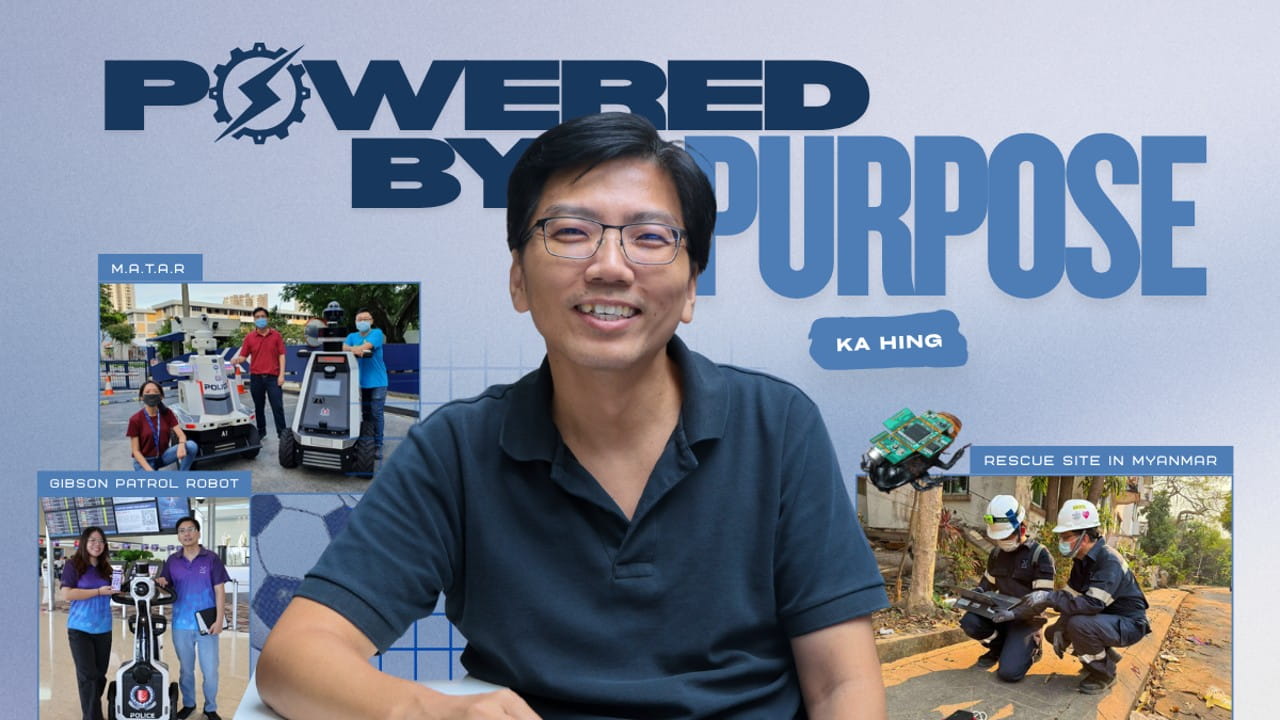
 Ong Ka Hing is a Deputy Director at HTX’s Robotics, Automation & Unmanned Systems (RAUS) Centre of Expertise (CoE). (Photo: HTX/Ethan Wong)
When Ong Ka Hing was asked to be a part of Operation Lionheart and aid the Singapore Civil Defence Force (SCDF) in their efforts to search for earthquake survivors in Myanmar in 2025, no one would’ve blamed him if he had hesitated.
After all, putting his life on the line in a disaster zone filled with hazards was never part of his job as a robotics engineer. But doubt never crossed his mind.
“I knew I had to go. The only thought in my head was to just chiong,” laughed Ka Hing.
“This deployment was a golden opportunity for us to better test what we have been working on in a real-world operation. I knew it would be somewhat dangerous, but this opportunity was simply too rare to miss,” he explained.
For 10 gruelling days, the Deputy Director of Ground Systems at HTX’s Robotics Automation & Unmanned Systems Centre of Expertise (RAUS CoE) worked alongside frontliners from the SCDF, operating a cyborg cockroach to search for survivors following the 7.7 magnitude earthquake in Myanmar.
The working conditions were dire. Besides having to work amid collapsed buildings, Ka Hing also had to deal with the constant stench of rotting corpses. But it was under these harrowing conditions that Ka Hing and his team made history, executing the world’s first deployment of cyborg insects in a humanitarian search-and-rescue operation.
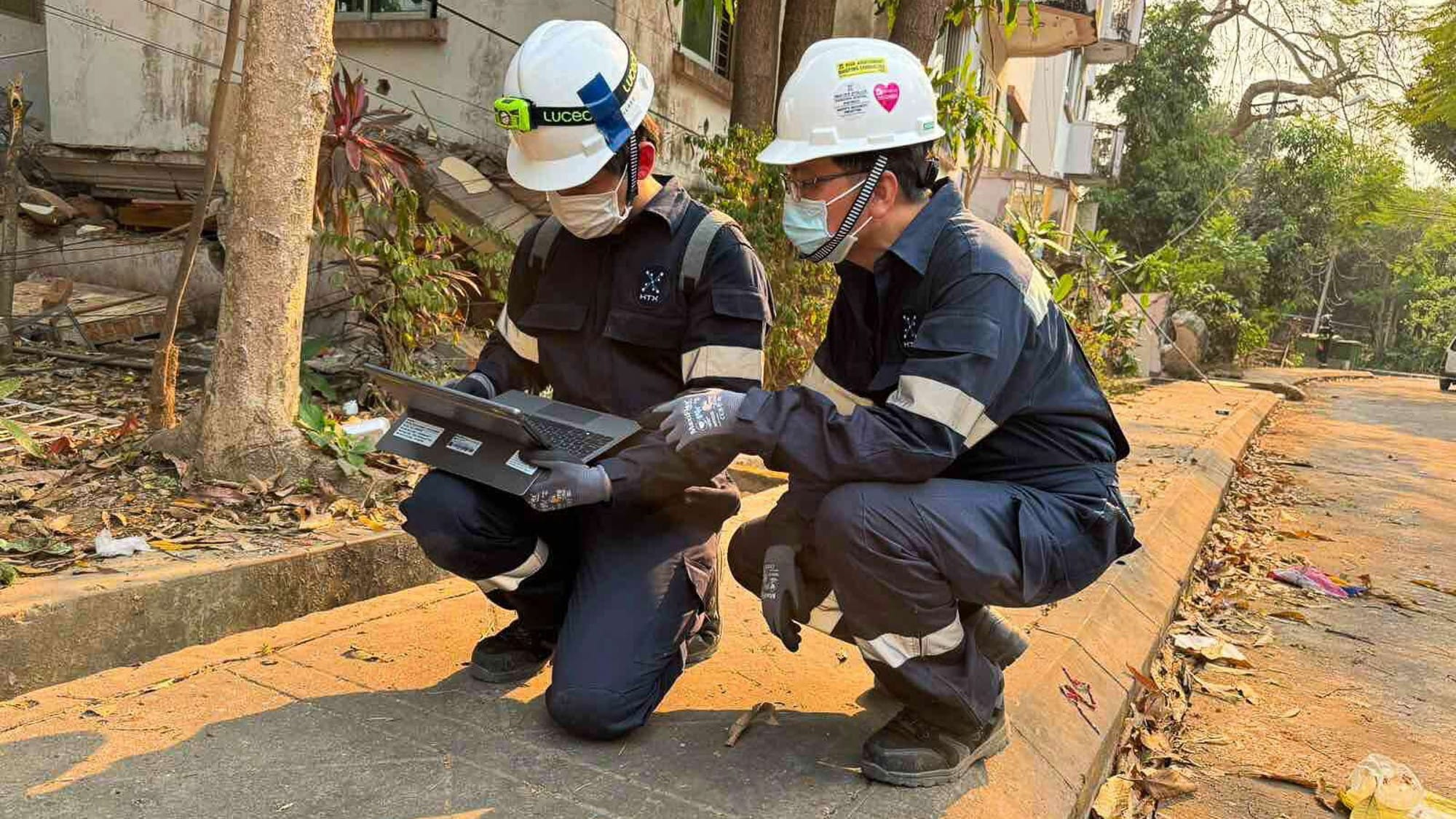 RAUS engineers Ong Ka Hing (right) and Yap Kian Wee in full PPE attire working at a rescue site in Myanmar. (Photo: SCDF)
Although the team did not find survivors, the deployment left a deep impression on him.
“As engineers, we usually work behind the scenes,” he said.
“Being deployed to the frontline in Myanmar gave me a much clearer sense of purpose, and of why our work matters.”
Finding his way in life
Smiling as he reminisced about his adolescent years, Ka Hing described himself as “a very average kid” who had no grand ambitions or clear idea of what he wanted to be. All he knew was that he was good at mathematics and science.
Outside of school, he enjoyed playing football and was a fervent Arsenal fan. He also had a fascination with computers, and this saw him making frequent trips to Sim Lim Square to pick up various components to build his own personal computer.
Picking electrical engineering as the discipline to study in university, according to him, was simply a practical choice.
But at the back of his mind, he knew he wanted to do something that could make a difference to society.
“I wanted to do something meaningful,” he said. “I wanted to know that my work and effort were going towards something bigger than myself.”
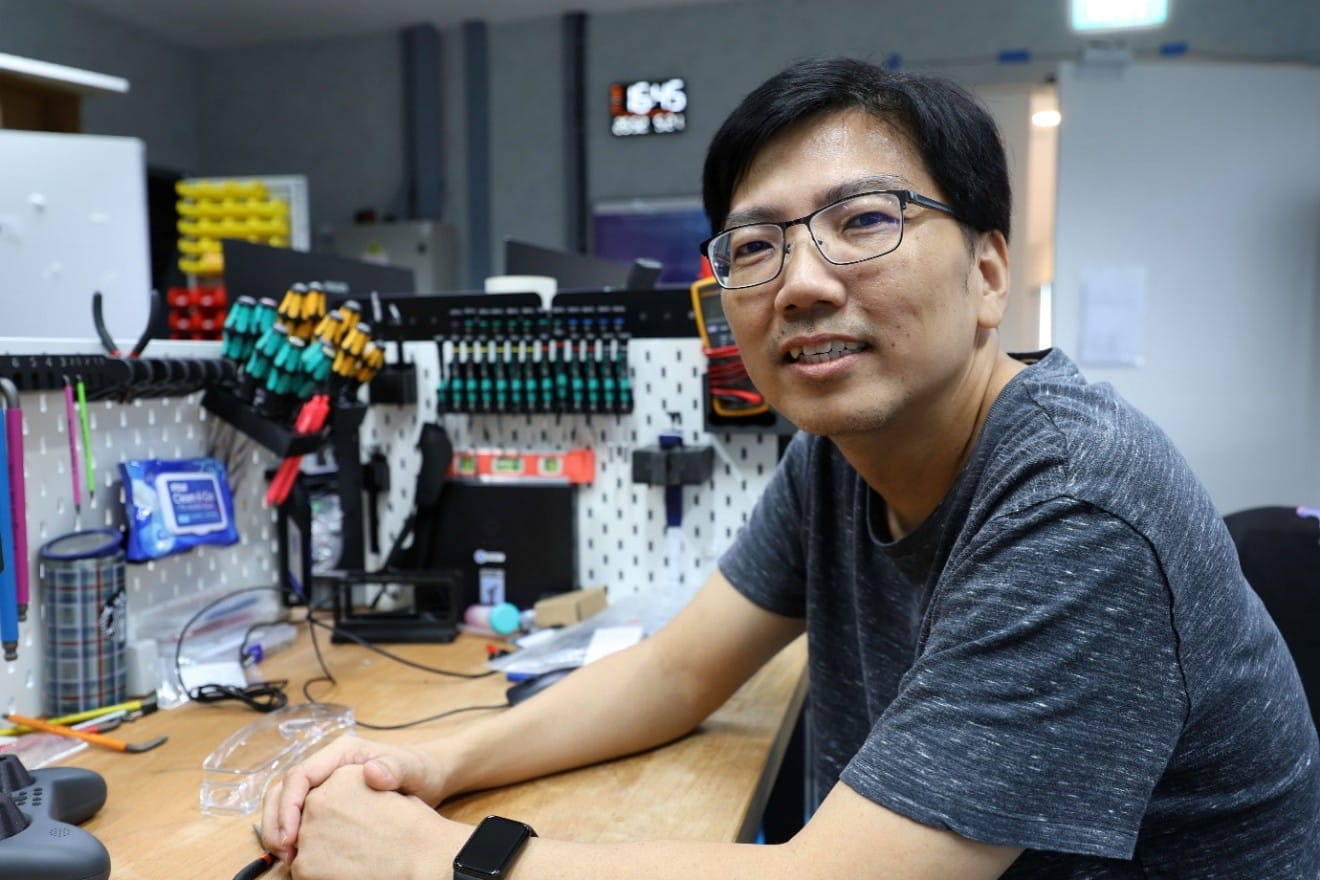 Ka Hing at a workbench in the RAUS lab. One of the team’s first engineers, he remains proud of how far they’ve come since its humble beginnings. (Photo: HTX/Ethan Wong)
This desire eventually drew him to the public service, where he started his career at the Ministry of Home Affairs. Here, he worked with cameras and video analytics meant to improve public safety. But this job scope changed when he was recruited to work on robotics in 2015.
Though robotics was still a nascent field then, Ka Hing saw the immense potential that robots had in reducing risk to frontline officers by taking on dangerous tasks.
“As a longtime Arsenal supporter who has waited 22 years to see the club lift the Premier League title again, I have a penchant for supporting the underdog. Robotics was the underdog then,” he joked.
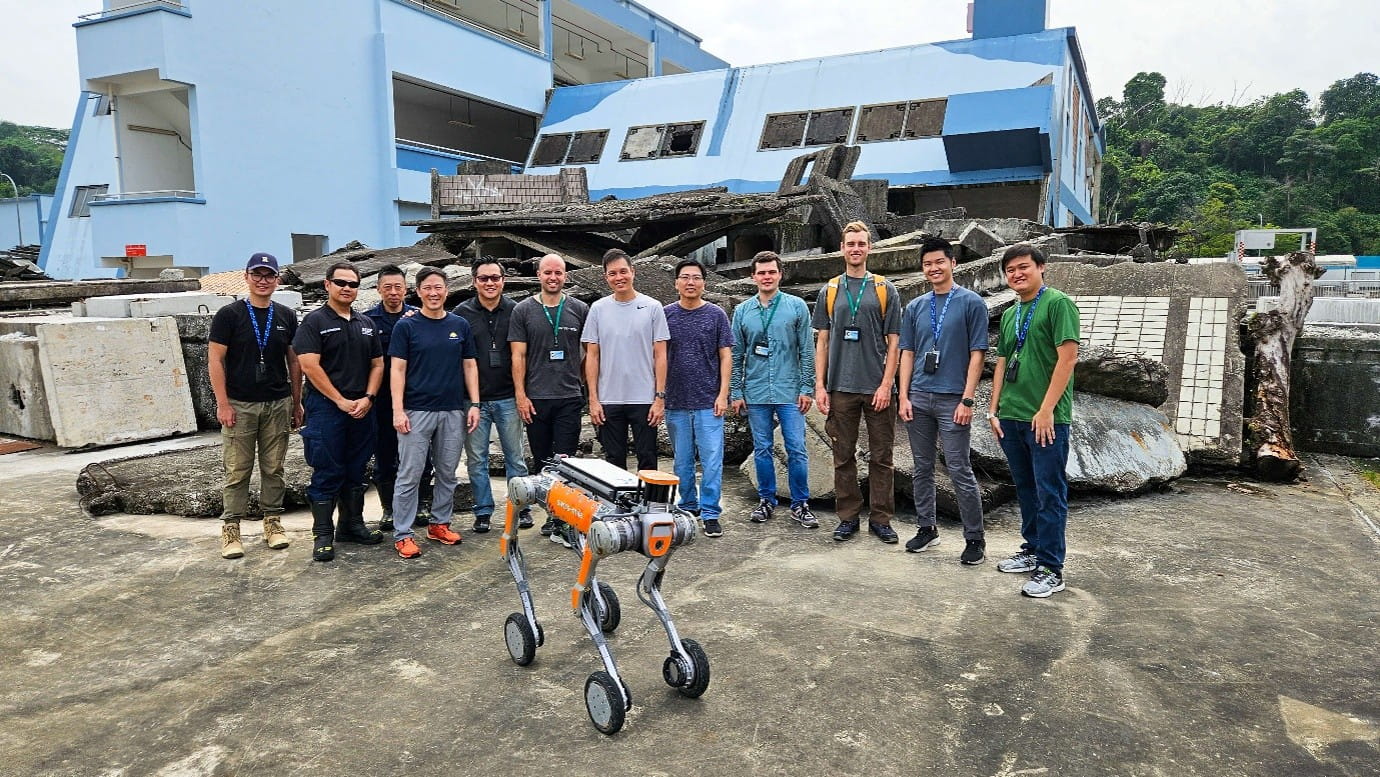 Ka Hing (5th from right) at the trial of a Swiss-made quadruped. (Photo: HTX/Law Yong Wei)
Making a difference, one robot at a time
Ka Hing placed his bets right. Since joining the team, the passionate engineer got to work on several exciting projects, including M.A.T.A.R (Multi-purpose All-Terrain Autonomous Robot), which the team had conceived in 2016. The robot has since undergone a few iterations and is now the patrol robot that can sometimes be seen in public.
After joining HTX in 2019, Ka Hing worked on Rover-X, a robotic dog developed for high-risk missions such as hazardous material (HazMat) monitoring incidents. While quadruped robots are commonplace today, the Rover-X was considered a groundbreaking innovation back then as it could navigate stairs, kerbs and other terrain that were difficult for wheeled or tracked robots.
His most notable project to date? Few would argue that it is the cyborg cockroaches, which have drawn the attention of people around the world. Media outlet NHK World Japan, for instance, once featured Ka Hing and the creatures in a documentary.
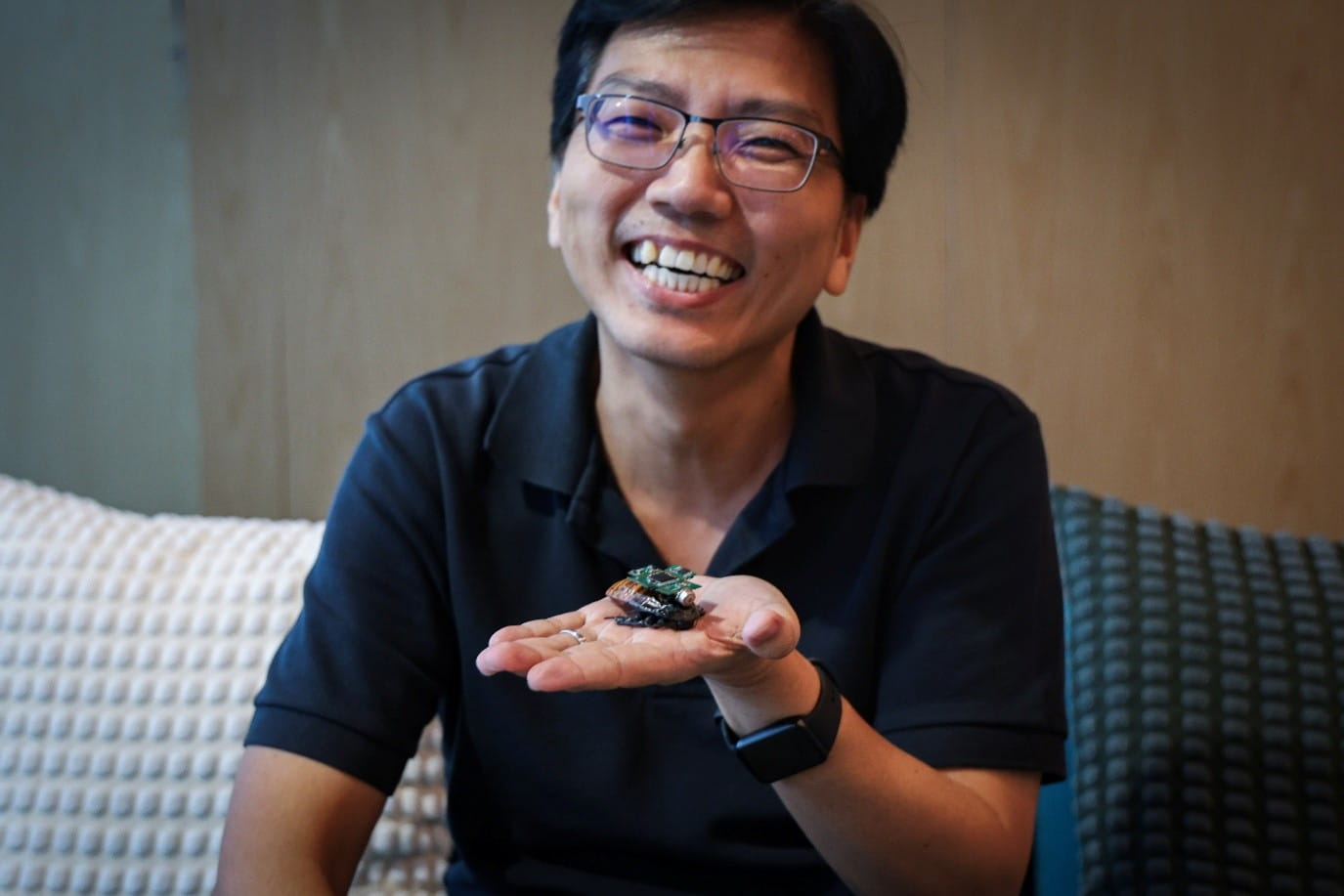 Ka Hing holding a replica of the first iteration of the cyborg cockroach. (Photo: HTX/Ethan Wong)
Looking back, Ka Hing finds the rapid growth of HTX’s robotics capabilities in such a short span of time surreal.
“When HTX was formed, nobody really expected us to achieve all this,” he said.
“But we were given the mandate to explore our ideas, while staying focused on what the Home Team needed. Together with efforts to continuously test and refine our ideas and work with our partners, we now have an innovation like the cyborg cockroach that can make a difference in real world operations.”
More exciting times are just round the corner. In September 2026, RAUS CoE will unveil the Home Team Humanoid Robotics Centre (H2RC), which will supercharge HTX’s efforts to leverage humanoids and artificial intelligence to augment Home Team operations.
No robotics background? No problem
When asked what one needs to become a good engineer, Ka Hing’s answer was concise: a sense of purpose.
“You don’t need to have studied robotics to get a job as a robotics engineer. I’ve seen engineers from different backgrounds find their place at HTX. Some came from other fields. Some are mid-career switchers. Not all started out with a robotics background,” he shared.
“What you need to excel in engineering is a love for solving problems and, more importantly, a sense of purpose. Having purpose helps you to stay focused and go the distance when the going gets tough.”
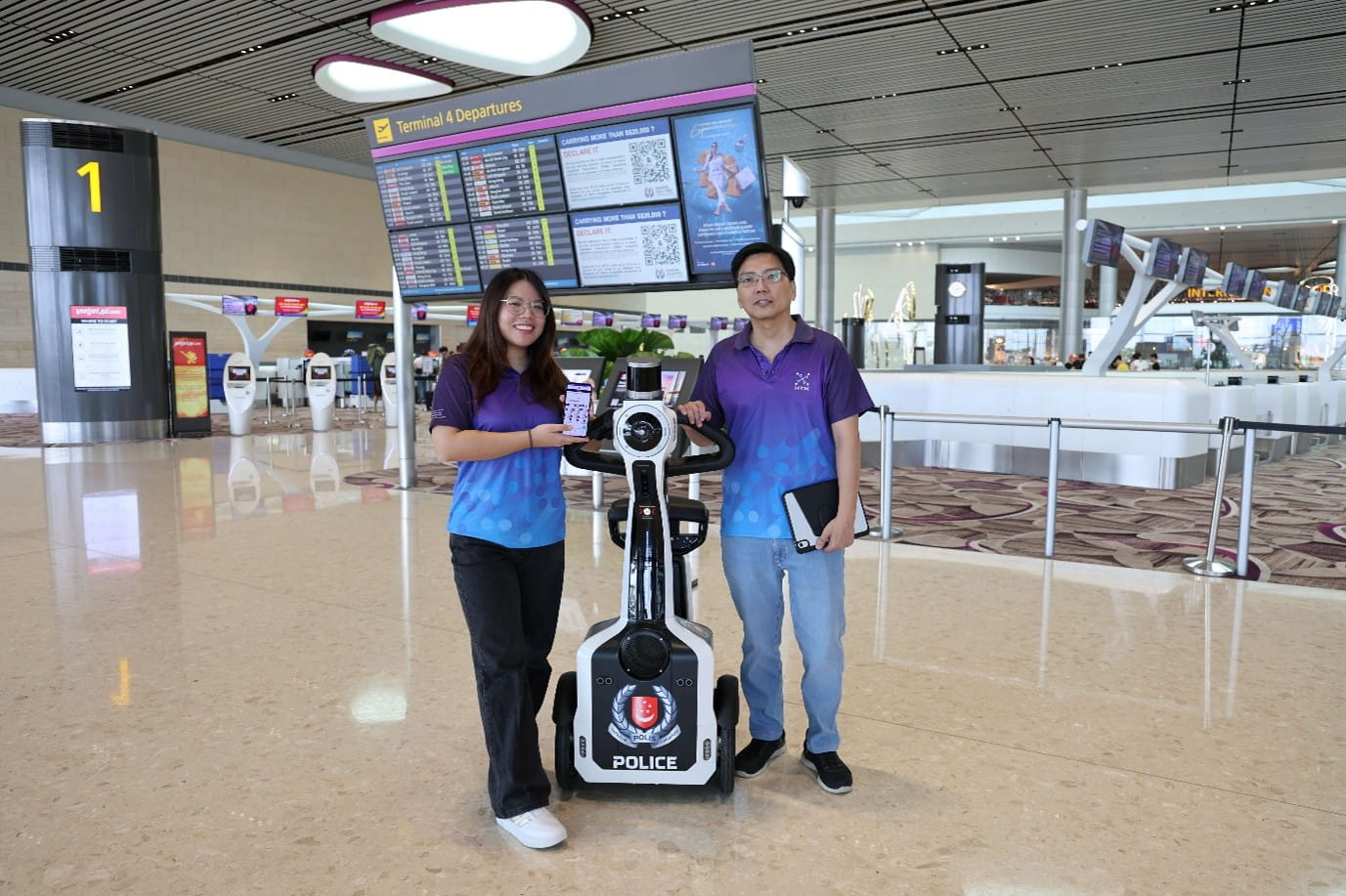 Ka Hing (right) and his colleague Qi Yan pose beside Gibson, a robot that police officers can ride on as well as perform autonomous patrols. (Photo: HTX/Law Yong Wei)
Take the man’s word for it.
Despite undergoing a procedure for a health condition after the Myanmar deployment, Ka Hing gamely threw his name into the hat when there was talk about another potential deployment to the Philippines following an earthquake in Cebu in October 2025.
He also shared that he would jump at the chance to go on another deployment if the chance presented itself.
“I will go. But I don’t think my bosses will allow me to. They’ve been telling me to rest,” he laughed.
“But yeah, I’ll go if I can. I want to make a difference in whatever way I can!”
We are always seeking inquisitive and innovative individuals to co-create extraordinary solutions with us.
Join us to be at the forefront of the finest tech capabilities in the field! Join us