
 Left or right? (Photo: Unsplash)
In this story:
- Stress can alter how we make decisions and lead us to make very different choices.
- AI isn’t here to replace our decision-making process – it’s here to lend a hand, especially when we need it the most.
- Through cutting-edge AI-driven research at XPLORE, HTX is helping Home Team officers make faster and smarter decisions in high-stakes situations.
Coffee or tea? Go out or stay in? Take a risk or play it safe? Every day is a decision marathon.
Some studies estimate that we make tens of thousands of decisions each day. Most of these are processed so fast, we might not even register them happening.
But with that many questions to think about, how exactly do we always end up landing on an answer? What goes on in our heads when we’re faced with options, and why do some decisions feel instinctive while others feel impossible?
The architecture of choice – and how stress changes it
When it comes to making a decision, a flurry of activity goes on inside our brains. The prefrontal cortex (PFC) – located at the very front of the brain – interacts with other deeper-set brain regions such as the basal ganglia, thalamus and cerebellum, to plan, organise new and past information and experiences, consider pros and cons, and reason things out.
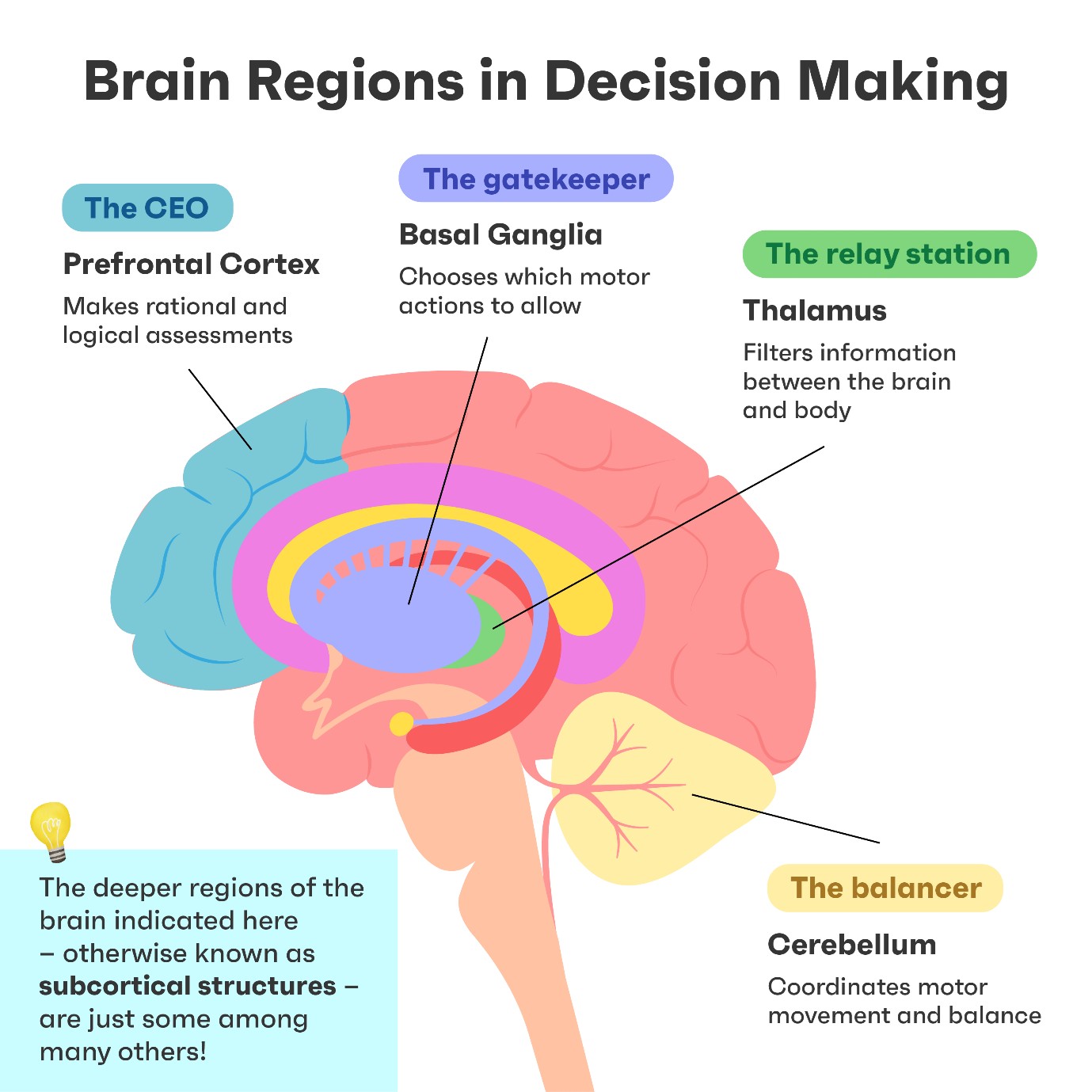 (Infographic: HTX/Nicole Lim)
Environmental and social factors can also affect how we come to a decision. For example, social norms could lead to peer pressure or groupthink, and time or resource constraints could create an urgency to decide without fully considering consequences.
 There’s a tug-of-war happening in your mind right now as you decide whether or not to read on. (Photo: Pexels)
And what happens when stress becomes a factor, too?
You see, stress causes our bodies to release hormones such as adrenaline and cortisol, which can disrupt the balance of chemicals across the brain. What this means is that when pressure hits, we may think, choose and react very differently.
Yong Xueyi, a scientist with HTX’s Human Factors and Simulation Centre of Expertise (HFS CoE), explains this further.
“Different types of stresses, be it physical, emotional or even environmental, such as when there’s intense heat, can impair our cognitive functions. These include but are not limited to memory, attention, decision making and problem solving,” she said.
Decision-making in the age of AI
Being able to make a sound decision under stress is something that is critical for frontline officers, because, well, lives are often at stake.
Here at HTX, scientists from the Human Factors and Simulation (HFS) Centre of Expertise (CoE) are studying ways to augment decision-making.
The tool? Artificial intelligence (AI).
 It’s no surprise that people turn to AI solutions to help make decisions. (Photo: Unsplash)
For the record, this isn’t about letting AI make the decisions. This is about leveraging AI to create tools that help officers make better decisions.
“Understanding decision making through the lens of cognitive science – how our brains process information and weigh options and behaviours – can provide insights into why we make the choices that we do. Incorporating AI into this process can help us make even sharper, faster and more informed choices,” explained Deputy Director, Modeling and Simulation, HFS CoE Dr Saravana Kumarasamy.
Much of this work is done in XPLORE (Human Performance ModeLling and SimulatiOn REsearch Facility), the world’s first human factors and simulation facility dedicated to advancing human performance, resilience, and human-AI collaboration for public safety.
"XPLORE aims to show how human-AI teaming can synergistically supercharge the Home Team’s critical decision-making, enabling swift, accurate, and reliable responses even in the most demanding situations," said Dr Saravana.
“This will translate into safer and more resilient deployments, and smarter and more adaptive training for frontline officers.”
Helping the Home Team make better decisions
Ever seen a video of a policeman chasing an armed suspect?
“The increased threat perception would trigger the officer’s fight-flight-freeze response. Their amygdala – that’s the part of the brain responsible for emotions – becomes highly active and it can overpower their PFC,” expounded HFS scientist Juliana Koh.
“This may lead to impulsive reactions or excessive focus on the immediate threat such as the weapon, and cause the officer to miss other important contextual details or alternative solutions. The result? Potentially hasty, instinctive decisions made without considering longer-term consequences, like misfiring.”
And this is exactly why Home Team officers undergo rigorous training for life-saving, crime-solving or border-securing operations. Training includes scenario-based drills and simulation exercises which not only build experience, but also expose officers to operation scenarios often enough to develop automatic responses and effective heuristics, or “mental shortcuts” – so when they’re out on the frontline, making sound decisions under pressure becomes second nature.
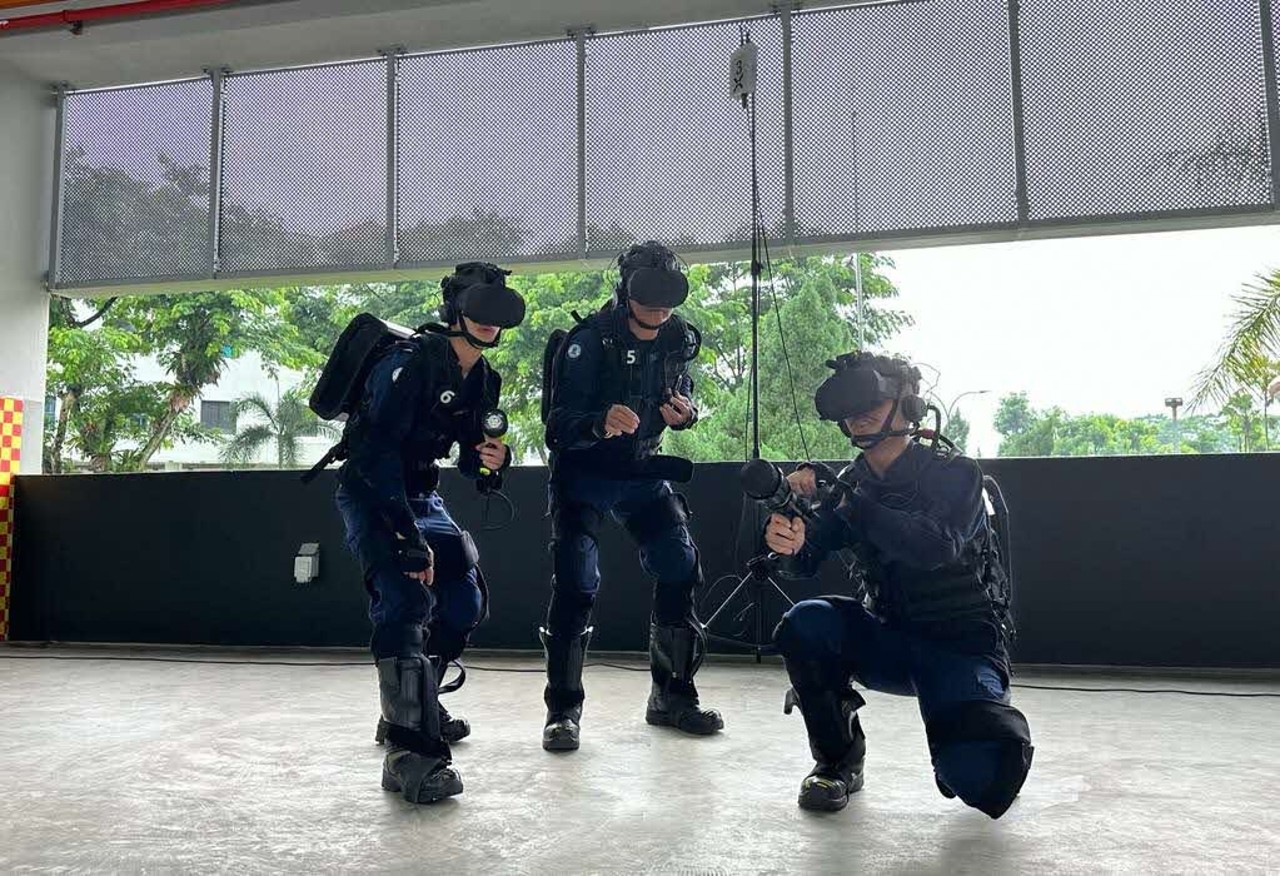 Home Team officers undergo intensive drills and exercises that help prepare them to make sound choices during operations. (Photo: HTX)
But we can augment this even further by measuring officers’ physiological responses during trainings or simulated drills, using AI to analyse the data collected, and recommending more targeted interventions.
An example? You’d find HTX’s scientists doing this in XPLORE’s CorteX lab, which caters to Close Quarter Battle (CQB) training.
Featuring augmented reality (AR) headsets, body sensors and mock firearms to replicate the operational environment and the form, weight and recoil of actual weapons, the CorteX lab allows the scientists to analyse real-time data such as physiological signals, weapons handling behaviour and communication abilities using AI.
From there, insights can be drawn on how officers think and act in such stressful operations, and appropriate recommendations such as adaptive stress-exposure training can be developed to improve the officers’ decision making and performance.
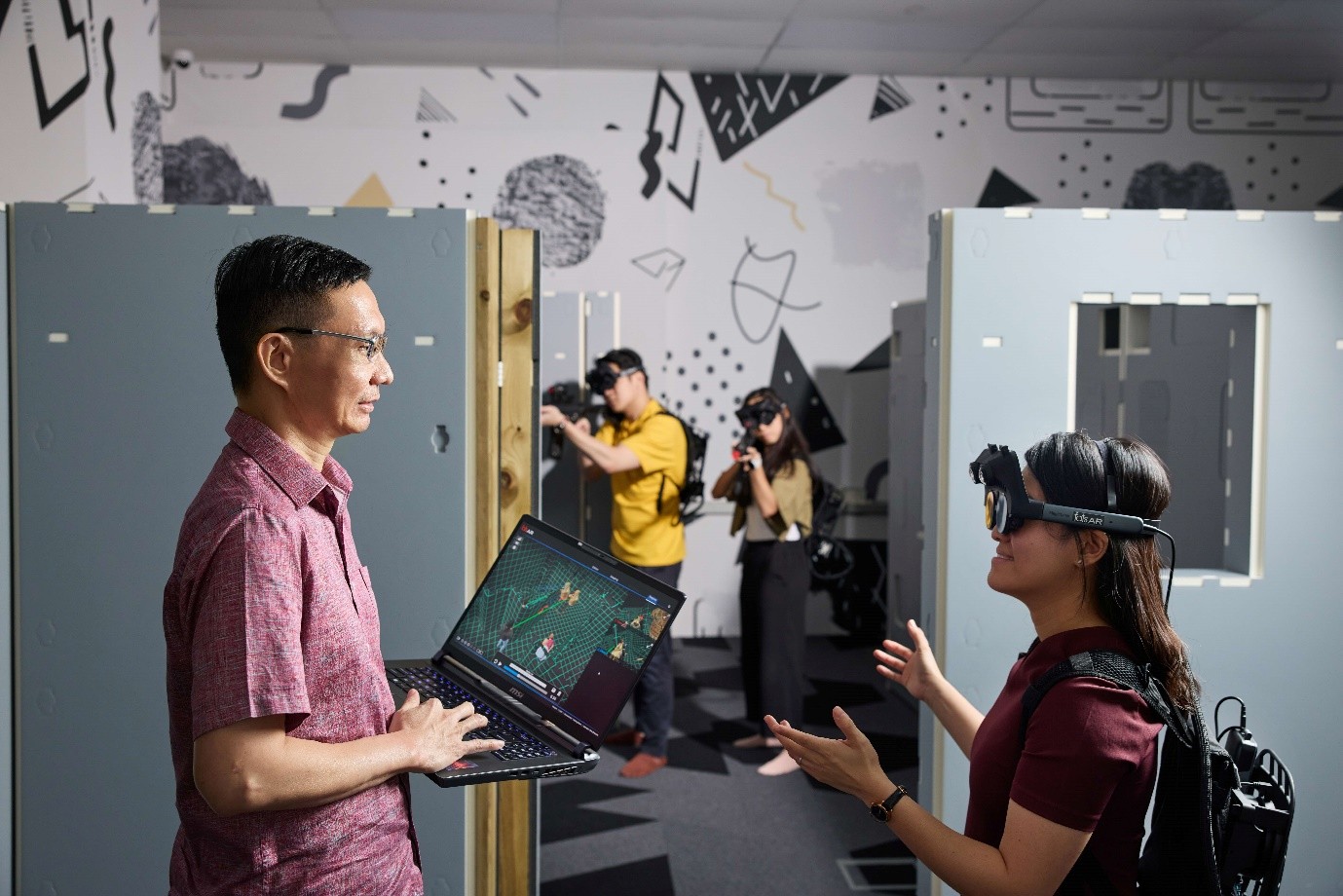 The labs in XPLORE, such as CorteX (pictured), enable the AI-facilitated study of real-time human biophysical and cognitive science data, to better understand how Home Team officers analyse information and make decisions, especially under pressure. (Photo: HTX)
What other kinds of data are collected in the work of these scientists? Think brainwaves, alertness levels and attention changes gathered through electroencephalography (EEG), where small sensors are used to pick up tiny electrical signals in the brain.
But what do they do with all this information?
“We clean the data and analyse it, then use it to develop intervention strategies and recommendations for officers to assess and improve decision making,” explained Juliana.
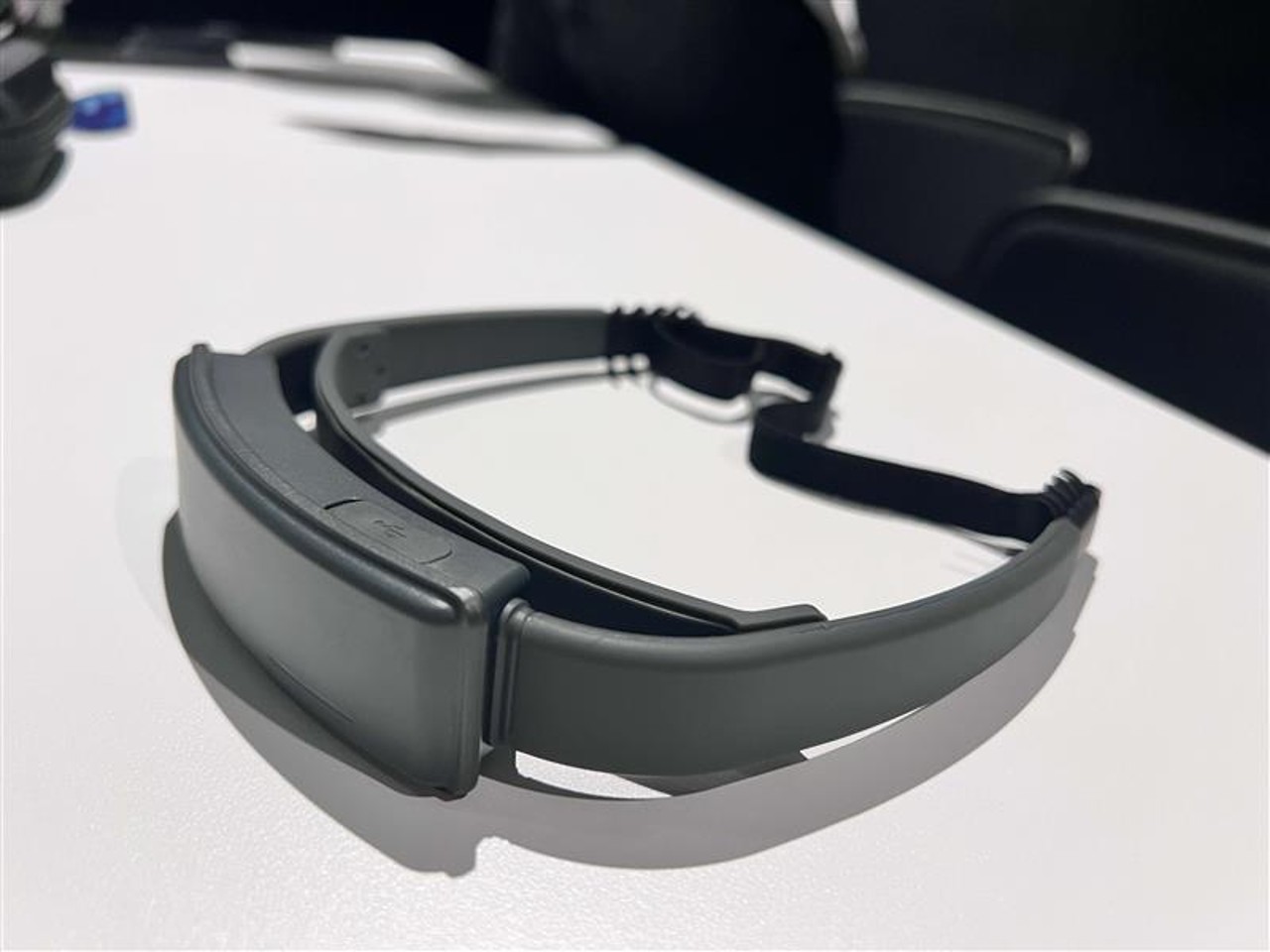 An EEG headset worn by Home Team officers during the cognitive studies. (Photo: HTX/Yong Xueyi)
“For instance, after recording the brain activity of Home Team officers during simulated stressful scenarios, we clean the data to get rid of noise, then put it through machine learning models to pick out patterns of electrical activity that show stress, fatigue or inattention.”
Such real-time monitoring, she added, would help team leaders identify the points of an operation at which team members might become at risk of reduced cognitive capacity. The scientists can then introduce timely interventions, such as the redistribution of workloads or adjustment of work-rest cycles to optimise recovery and maintain operational performance.