
What Bloodstain Pattern Analysis can tell forensic specialists
HTX forensic specialists perform Bloodstain Pattern Analysis to enhance investigators’ understanding of the possible events and positions of subjects in crime scenes.
By Cara Yap | Published on 1 July 2026
SCROLL DOWN
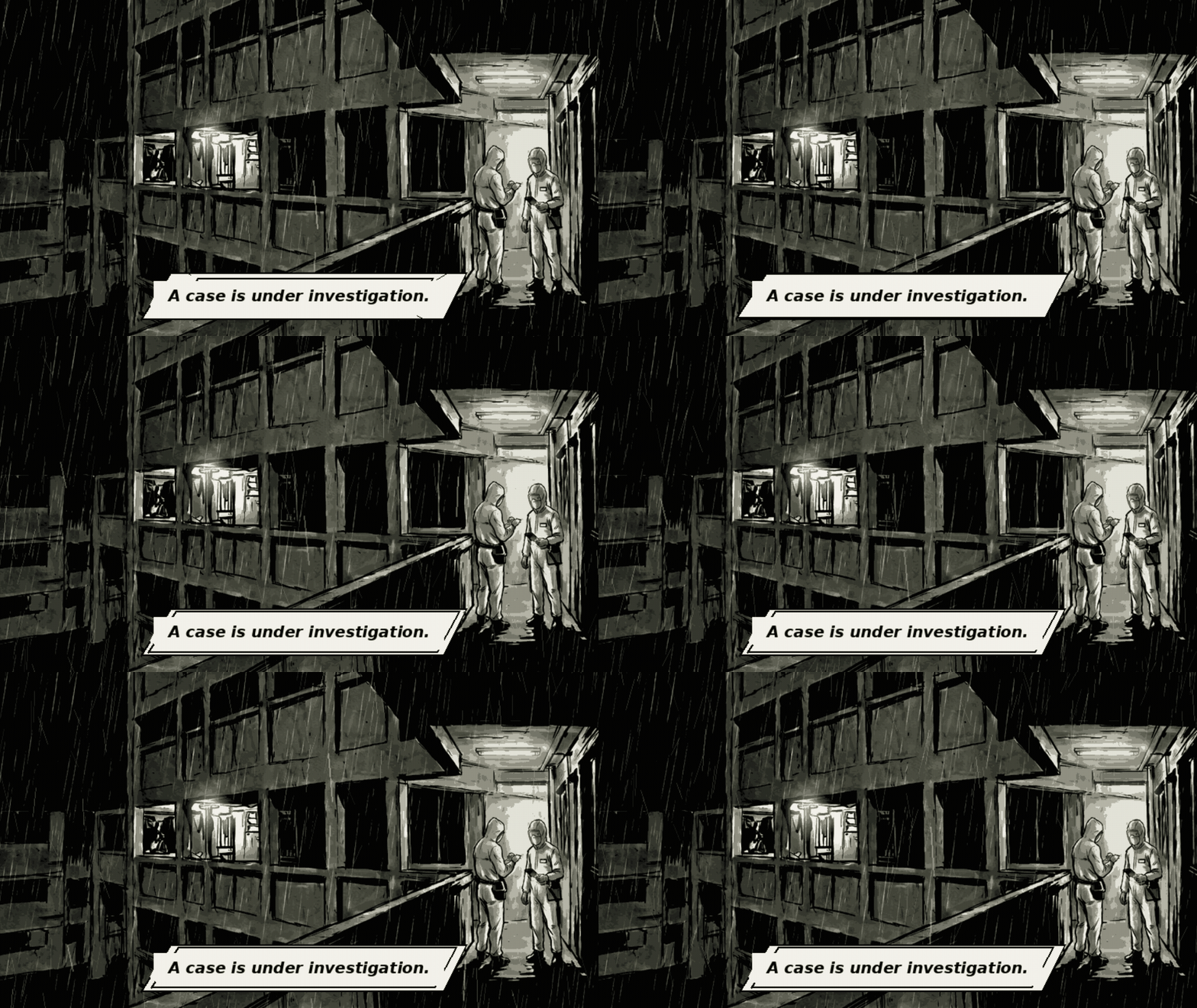
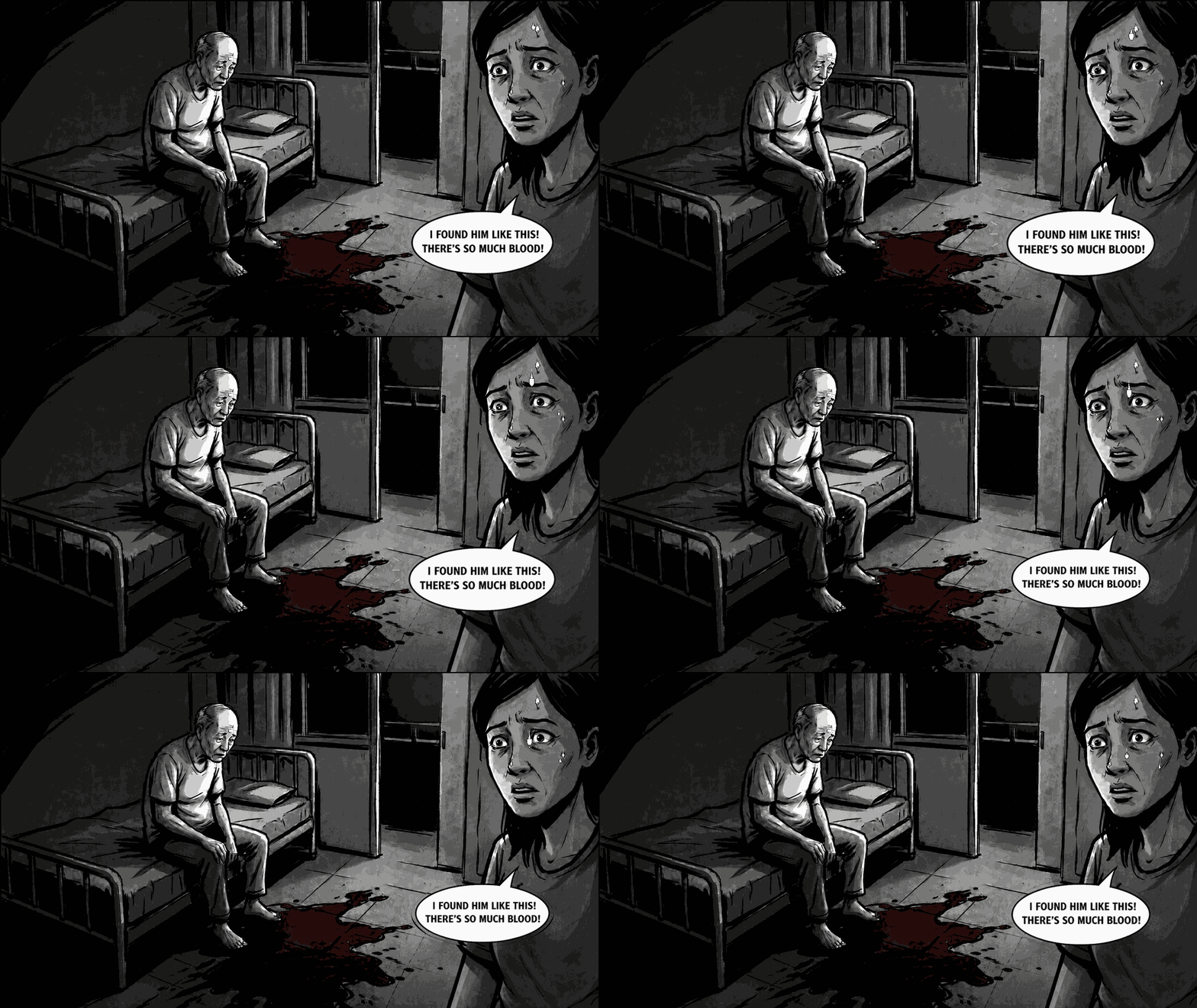
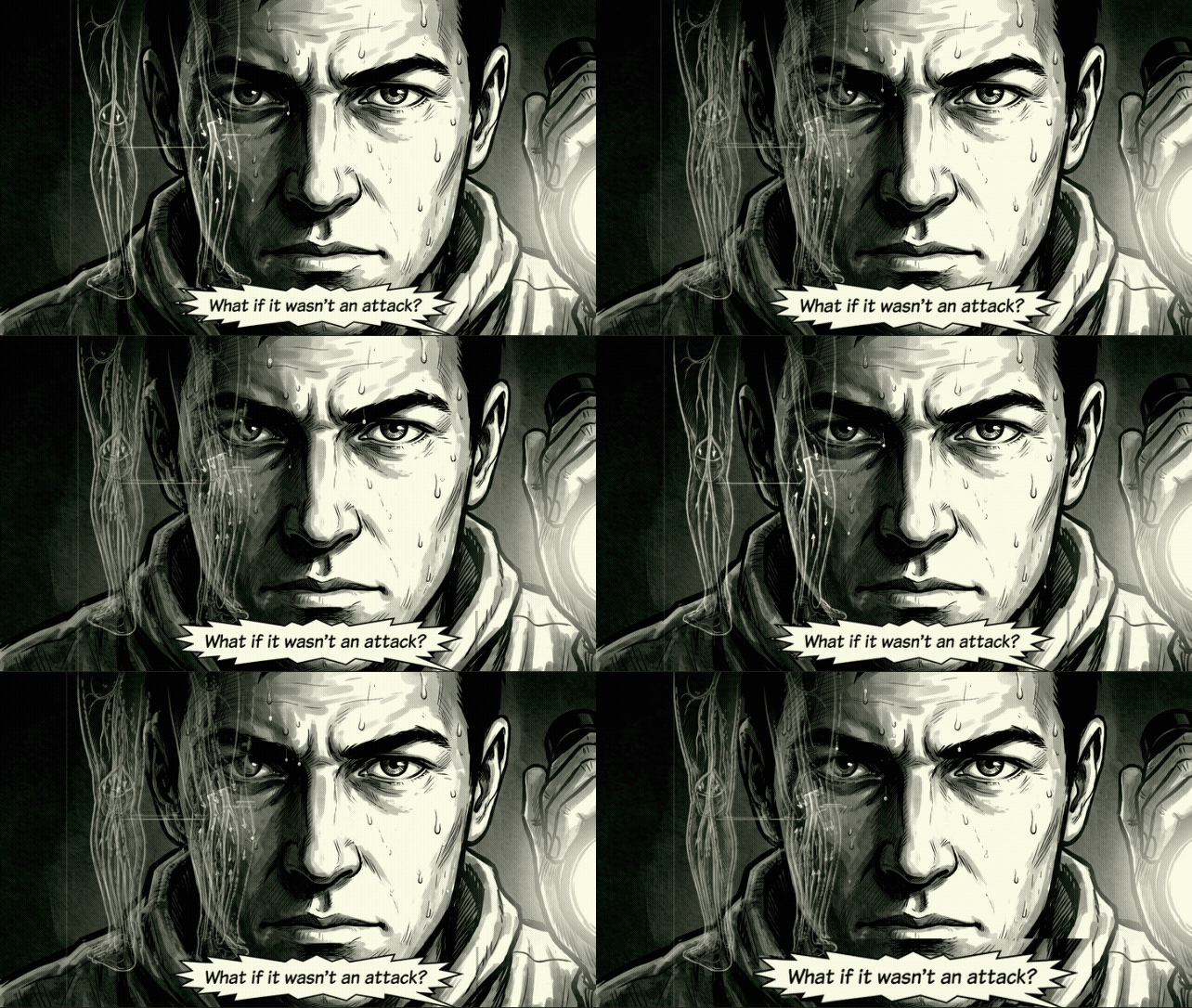
Forensic investigations aren’t always cut-and-dried affairs,
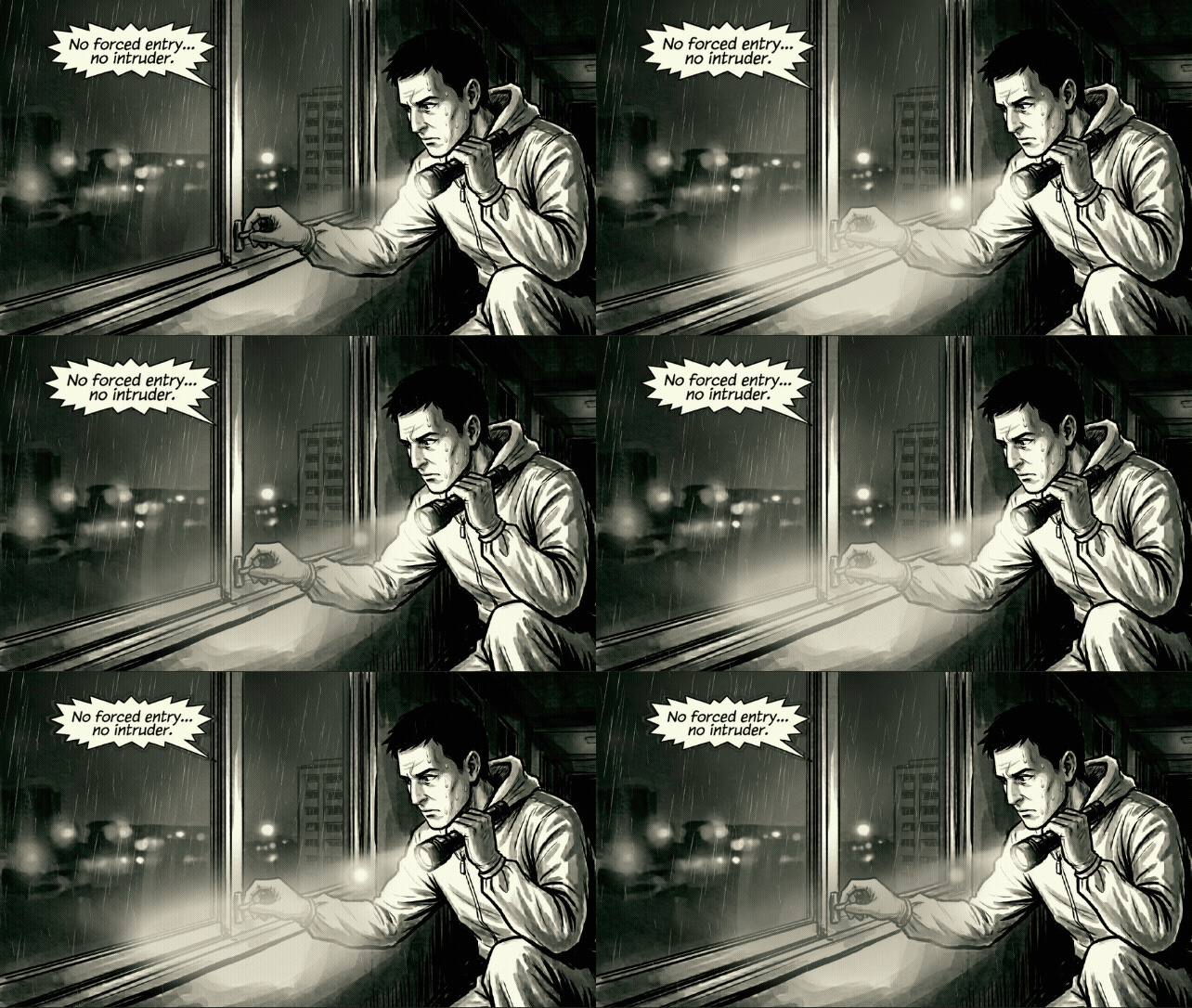
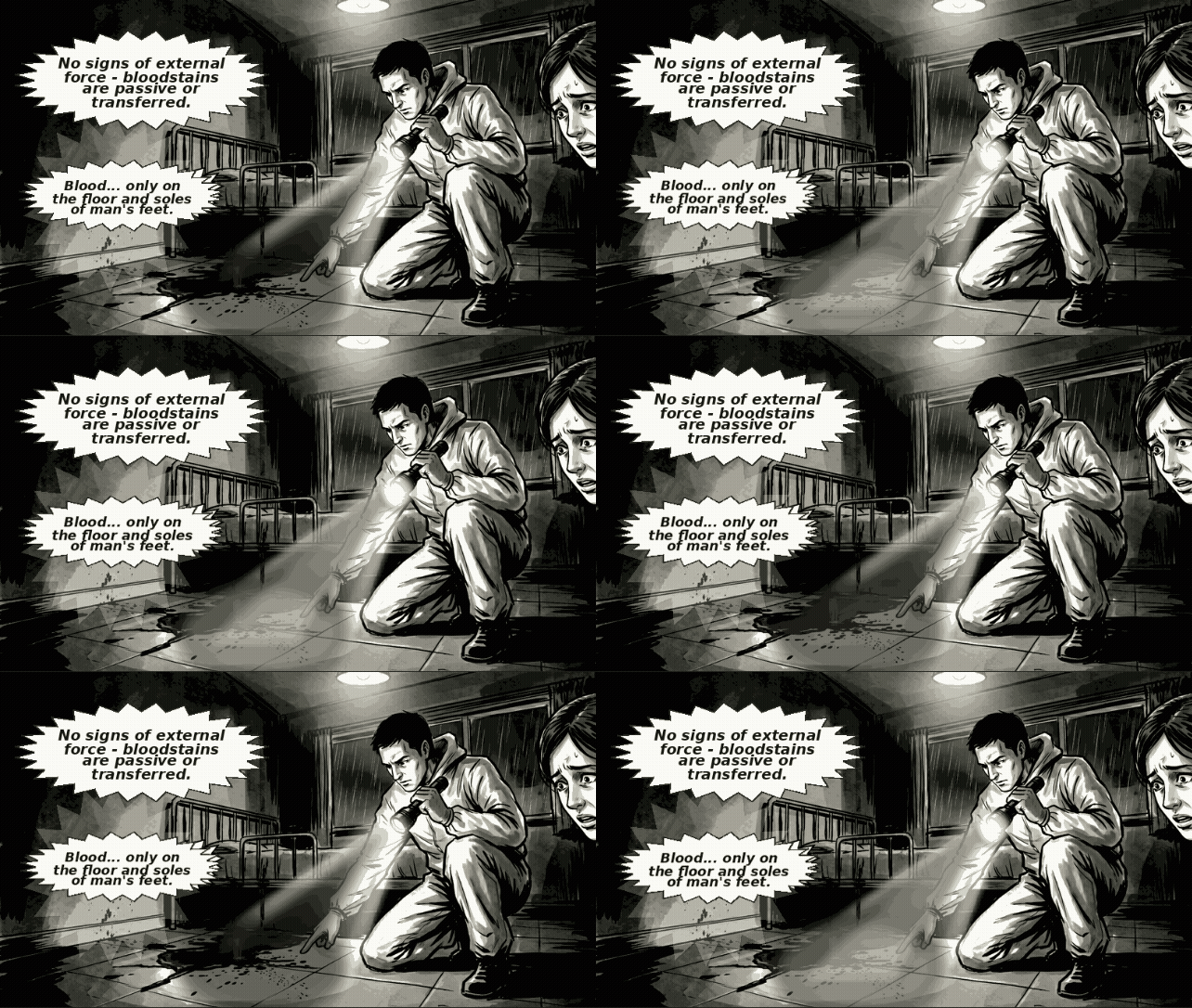
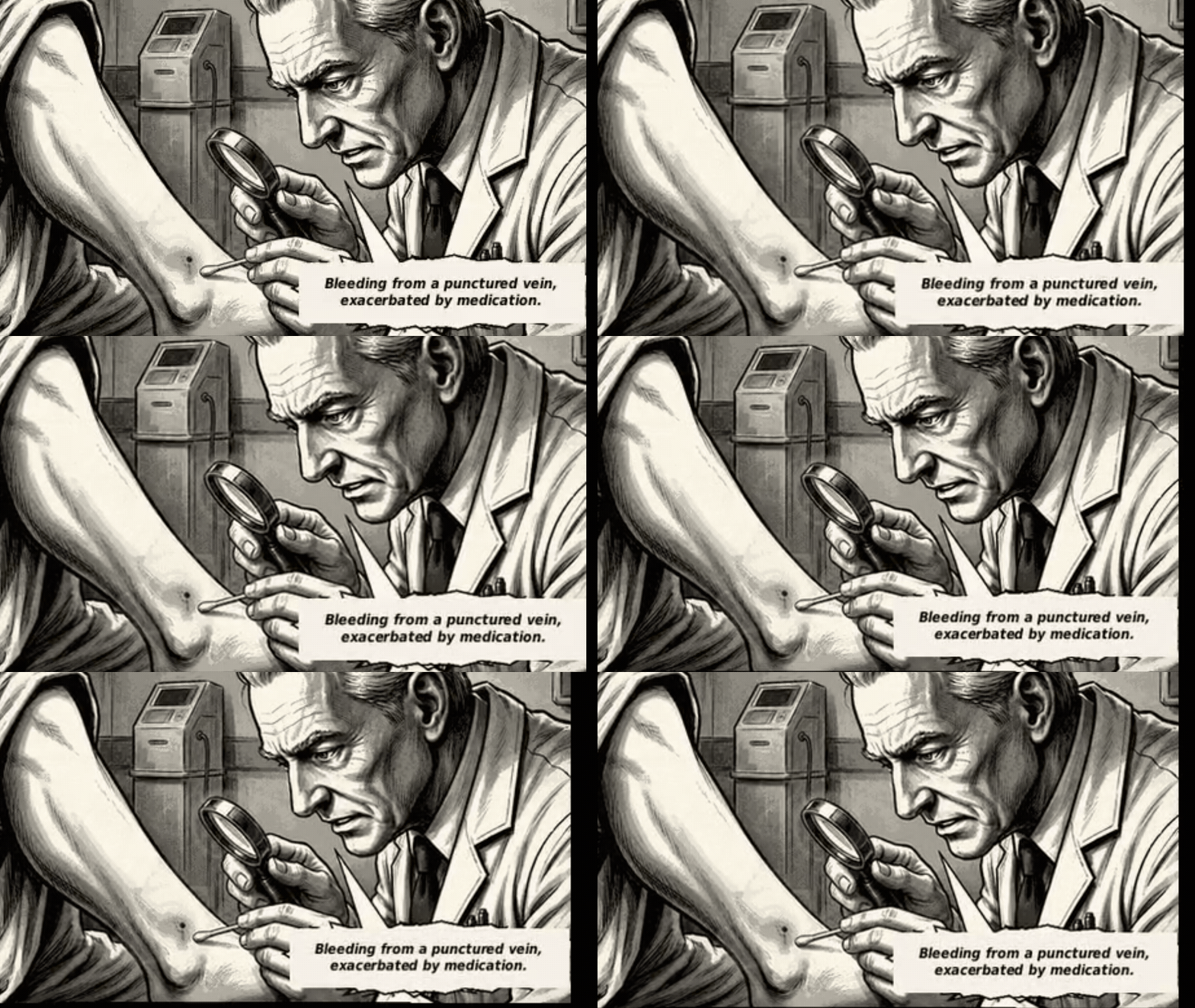
as the animation based on a real-life case demonstrates. Here, a senior with dementia could not recall how he was injured. However, Bloodstain Pattern Analysis (BPA) combined with evidence ruling out criminal trespass led crime scene specialists
to suspect that the bleeding was caused by a punctured varicose vein. This was later corroborated by a medical professional, who further attributed the significant blood loss to the man’s blood-thinning medication.
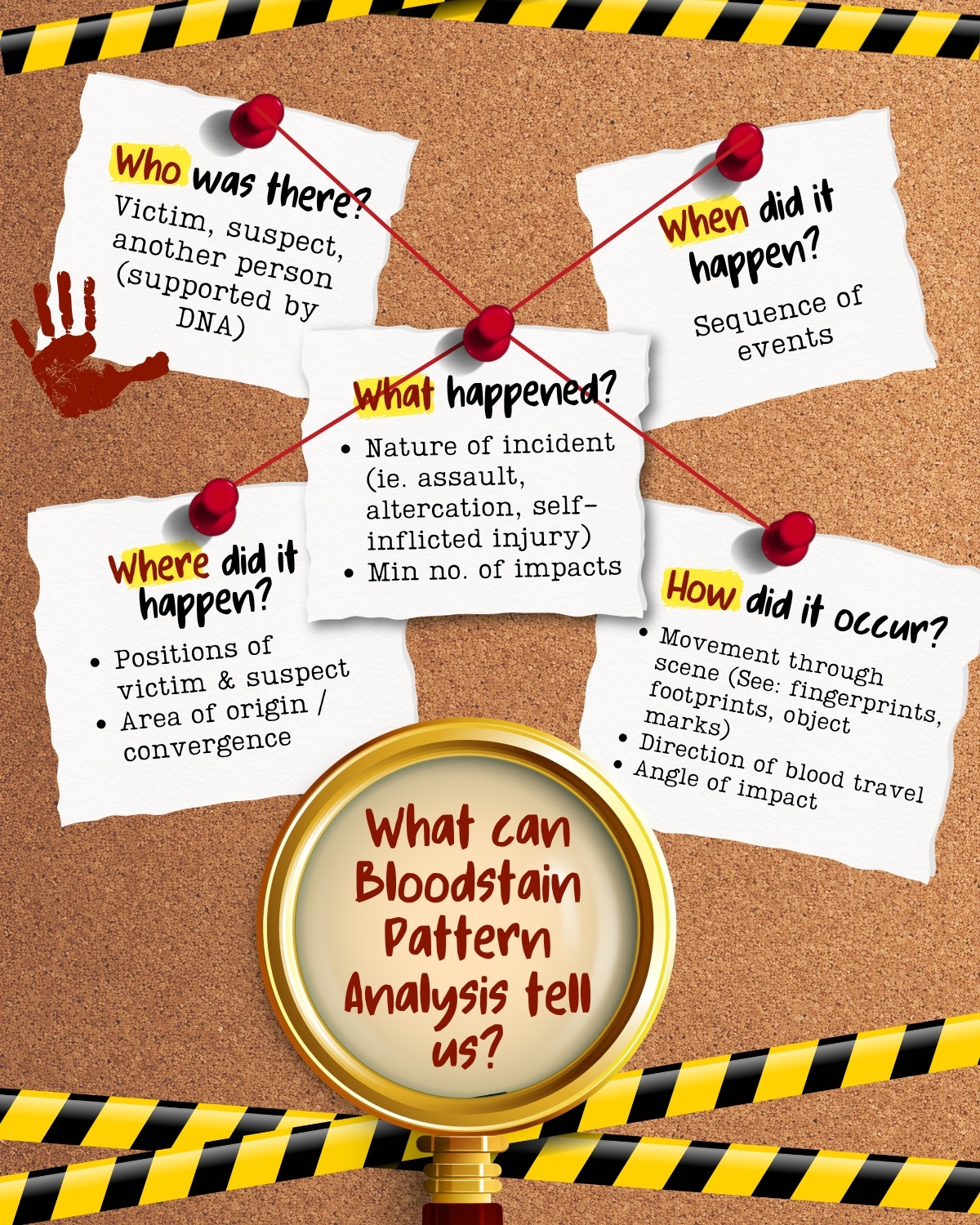
BPA is a forensic method that examines the size, shape, distribution and location of bloodstains at a scene to recreate a fuller picture of what transpired.
 (Infographic: HTX/Nicole Lim)
Foo Siong Chun (Shawn), Head, Forensics Operations Management, Integrated Forensics Service (IFS) – whose team helped solve the case – stressed that BPA knowledge helps enhance investigators’ understanding of the possible events and positions of subjects in crime scenes, rather than providing a definitive reconstruction.
“It’s not about looking at a bloodstain and saying, “This person was hit 23 times”,” he said. Instead, he explained that BPA is about understanding how blood behaves as a type of fluid, moving in ways that are reproducible and repeatable.
Once blood leaves the body, it travels through air and responds to factors such as gravity, air resistance, velocity and surface tension. That means the bloodstain patterns we see are rooted in scientific principles.
“By drawing on those principles, we can explain why a stain formed in a particular way and what conditions may have produced it,” he added.
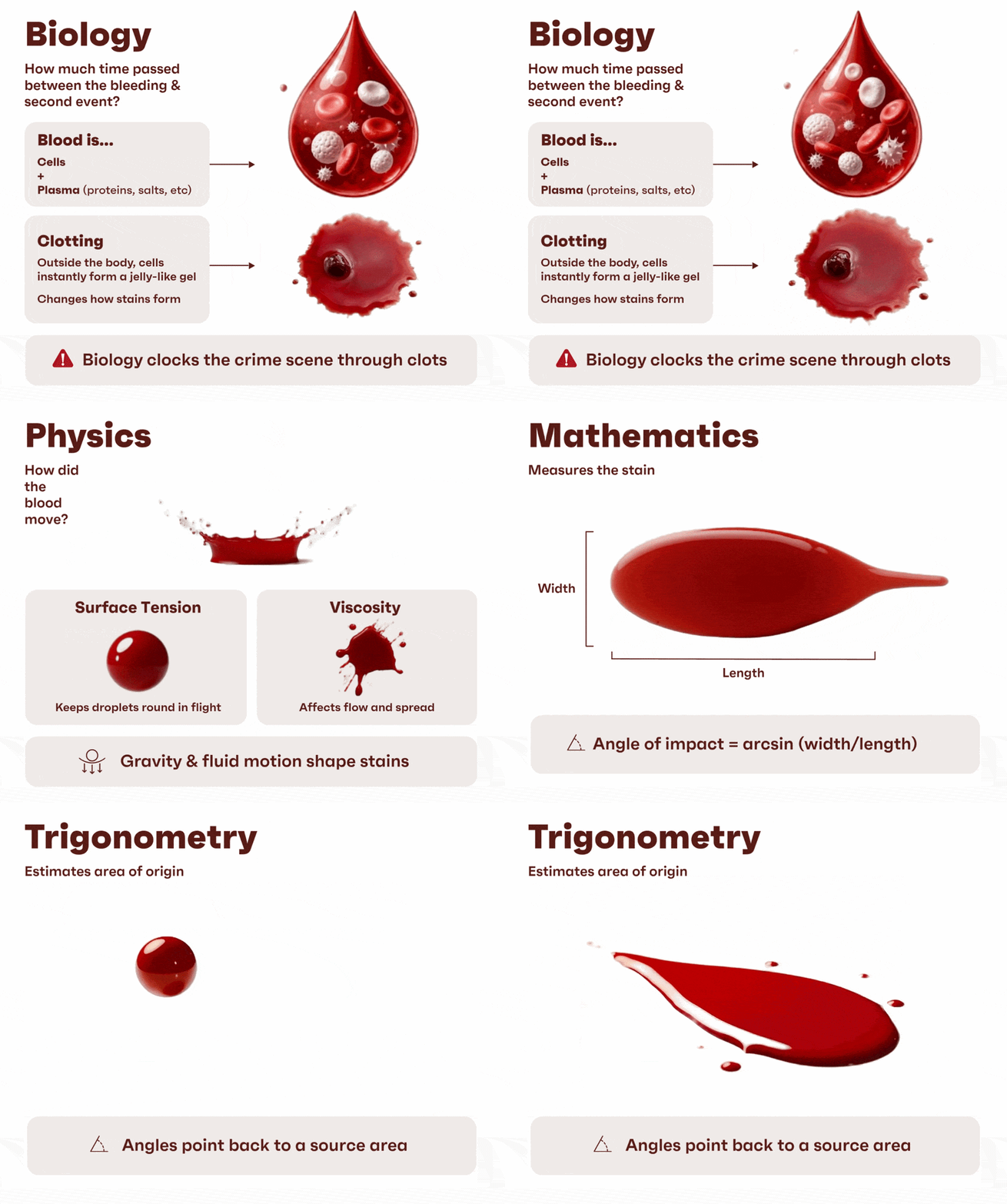 (Gifographic: HTX/Nicole Lim)
Bloodstain Pattern Analysts are typically deployed to investigate sensitive cases such as suspected homicide or those where the circumstances of injury remain unclear. In such cases, BPA is used to complement other forensic disciplines such as pathology and DNA analysis.
“DNA analysis tells you the source of the blood, whereas BPA offers insights such as how it got there, thus helping to piece together the activity surrounding an event,” said Shawn.
“We are talking about statistics and the likelihood of one hypothesis over another.”
This information is subsequently used to guide investigators on what to prioritise in gathering additional evidence, and adduced as court evidence in legal proceedings.
BPA is a forensic method that examines the size, shape, distribution and location of bloodstains at a scene to recreate a fuller picture of what transpired.
(Infographic: HTX/Nicole Lim)Foo Siong Chun (Shawn), Head, Forensics Operations Management, Integrated Forensics Service (IFS) – whose team helped solve the case – stressed that BPA knowledge helps enhance investigators’ understanding of the possible events and positions of subjects in crime scenes, rather than providing a definitive reconstruction.
“It’s not about looking at a bloodstain and saying, “This person was hit 23 times”,” he said. Instead, he explained that BPA is about understanding how blood behaves as a type of fluid, moving in ways that are reproducible and repeatable.
Once blood leaves the body, it travels through air and responds to factors such as gravity, air resistance, velocity and surface tension. That means the bloodstain patterns we see are rooted in scientific principles.
“By drawing on those principles, we can explain why a stain formed in a particular way and what conditions may have produced it,” he added.
The science behind the stain
(Gifographic: HTX/Nicole Lim)Bloodstain Pattern Analysts are typically deployed to investigate sensitive cases such as suspected homicide or those where the circumstances of injury remain unclear. In such cases, BPA is used to complement other forensic disciplines such as pathology and DNA analysis.
“DNA analysis tells you the source of the blood, whereas BPA offers insights such as how it got there, thus helping to piece together the activity surrounding an event,” said Shawn.
“We are talking about statistics and the likelihood of one hypothesis over another.”
This information is subsequently used to guide investigators on what to prioritise in gathering additional evidence, and adduced as court evidence in legal proceedings.
Types of bloodstain patterns




Working with limitations in BPA
While BPA may point investigators in the right direction, it can be constrained by factors such as contamination, to a large extent.
“Crime scenes are dynamic, with many factors beyond our control,” shared Zhang Weiwei, an IFS Senior Crime Scene Specialist (Forensic Lead) who’s forward deployed to the Singapore Police Force’s Criminal Investigation Department.
“We may also receive information from investigating officers once they’ve conducted witness interviews, which will help us better understand the scene and inform which evidence to prioritise while there.”
When faced with highly ambiguous bloodstains, the team uses animal blood in controlled experiments to recreate relevant pattern-forming conditions, allowing specialists to test possible scenarios and compare the resulting patterns against those observed at the scene.
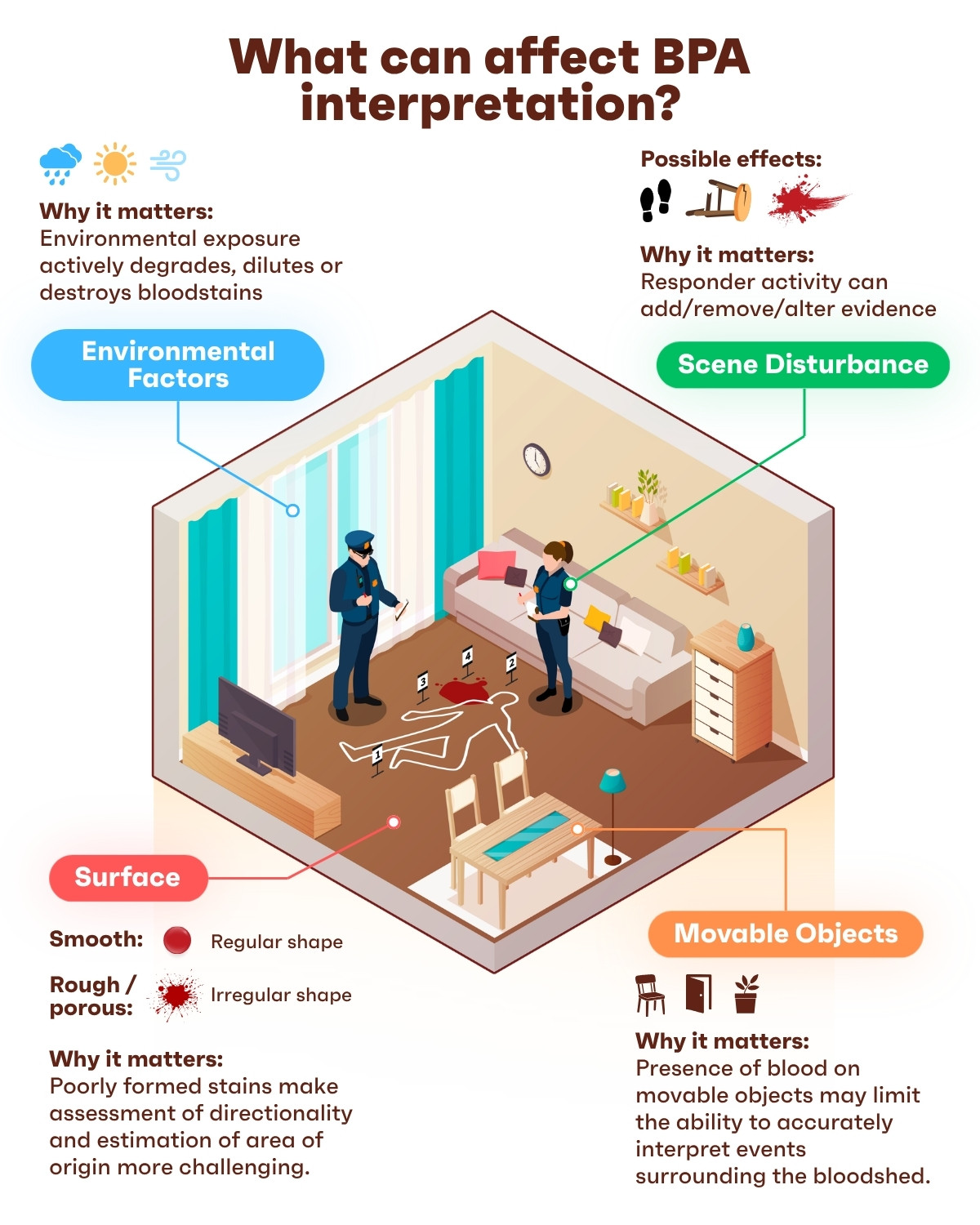 (Infographic: HTX/Nicole Lim)
Stringing operates on the physics assumption that airborne blood droplets travel in straight lines over short distances, allowing analysts to use individual impact angles to project lines backward to a shared area of origin.
With multiple variables at play, Weiwei stressed the importance of rigorous crime scene documentation, including the capturing of details through photography and the use of 3D scanning technology.
Her team follows established processes in gathering and assessing evidence, using reconstruction methods such as stringing for impact patterns to predict where the victim was attacked.
“BPA documentation is very similar in principle to regular crime scene documentation, though BPA requires additional measurements or scales to determine the dimensions of bloodstains,” explained Weiwei.
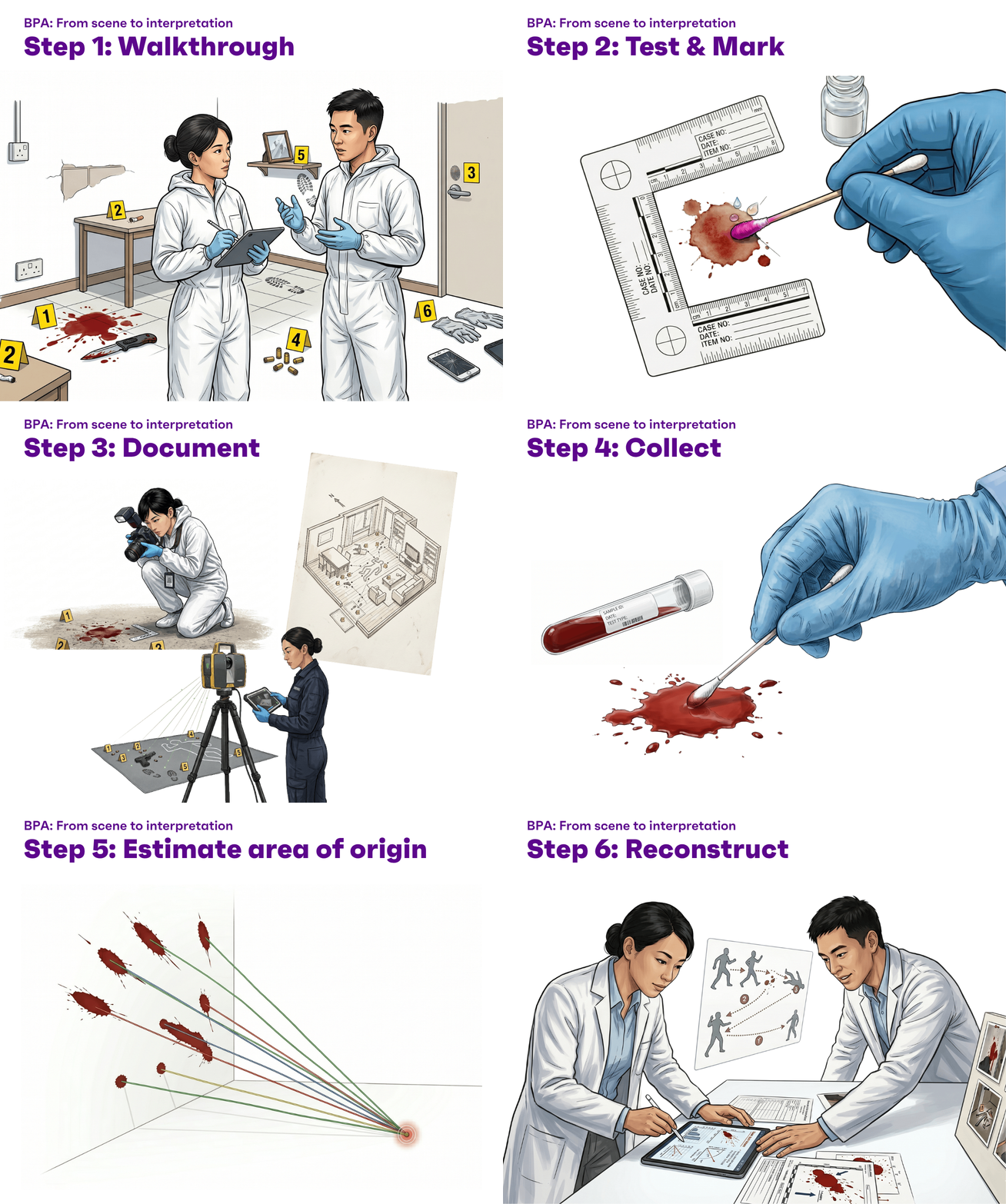 (Gifographic: HTX/Nicole Lim)
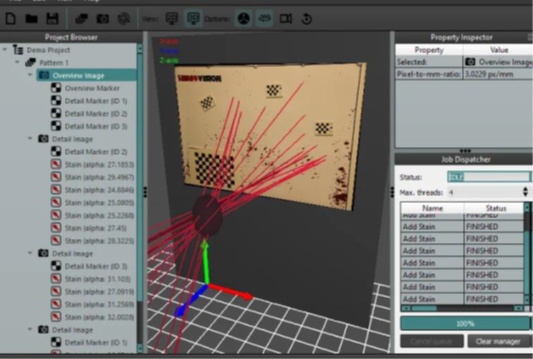 AI-powered forensic software tools such as HemoVision are used to digitally reconstruct crime scenes. (Photo: HTX)
While BPA experts have traditionally relied largely on manual documentation, technological advances are transforming their field. For instance, Weiwei shared that modern 3D scanning technology crunches down the documentation time for a four-room HDB flat from an hour to around 30 minutes.
Separately, they’re also evaluating HemoVision, a software that pieces together standard scene photographs to create a 3D view. It can also digitally calculate a bloodstain's area of origin without the need for physical stringing.
But even with technology as a powerful tool, Weiwei stressed that human judgement is critical.
“You still need a human to assess what direction the blood was travelling in and define the margin (of the bloodstain),” she said.
 Shawn (seated, second from left) and Weiwei (standing, right) with their teammates from HTX’s Integrated Forensics Service. (Photo: HTX/Zhang Weiwei)
Furthermore, computer vision software that processes and analyses digital images or videos to extract data-driven insights can struggle with colour segmentation on dark, low-contrast surfaces – whereas a human can effectively manipulate lighting to better discern stains. HTX’s Forensics Centre of Expertise (CoE) is currently developing software to overcome this issue.
Despite the technical limitations, Weiwei is optimistic that such collaborations can help drive improvements in BPA.
“I envision a future where bloodstain pattern analysis evolves beyond experience-driven interpretation into a discipline strengthened by data. With HTX’s relentless pursuit of scientific excellence, I have confidence that the current limitations of BPA will become future opportunities, driving more robust and scientifically defensible interpretations,” she concluded.
Her team follows established processes in gathering and assessing evidence, using reconstruction methods such as stringing for impact patterns to predict where the victim was attacked.
“BPA documentation is very similar in principle to regular crime scene documentation, though BPA requires additional measurements or scales to determine the dimensions of bloodstains,” explained Weiwei.
(Gifographic: HTX/Nicole Lim)The high-tech future of BPA
AI-powered forensic software tools such as HemoVision are used to digitally reconstruct crime scenes. (Photo: HTX)
While BPA experts have traditionally relied largely on manual documentation, technological advances are transforming their field. For instance, Weiwei shared that modern 3D scanning technology crunches down the documentation time for a four-room HDB flat from an hour to around 30 minutes.
Separately, they’re also evaluating HemoVision, a software that pieces together standard scene photographs to create a 3D view. It can also digitally calculate a bloodstain's area of origin without the need for physical stringing.
But even with technology as a powerful tool, Weiwei stressed that human judgement is critical.
“You still need a human to assess what direction the blood was travelling in and define the margin (of the bloodstain),” she said.
Shawn (seated, second from left) and Weiwei (standing, right) with their teammates from HTX’s Integrated Forensics Service. (Photo: HTX/Zhang Weiwei)
Furthermore, computer vision software that processes and analyses digital images or videos to extract data-driven insights can struggle with colour segmentation on dark, low-contrast surfaces – whereas a human can effectively manipulate lighting to better discern stains. HTX’s Forensics Centre of Expertise (CoE) is currently developing software to overcome this issue.
Despite the technical limitations, Weiwei is optimistic that such collaborations can help drive improvements in BPA.
“I envision a future where bloodstain pattern analysis evolves beyond experience-driven interpretation into a discipline strengthened by data. With HTX’s relentless pursuit of scientific excellence, I have confidence that the current limitations of BPA will become future opportunities, driving more robust and scientifically defensible interpretations,” she concluded.