
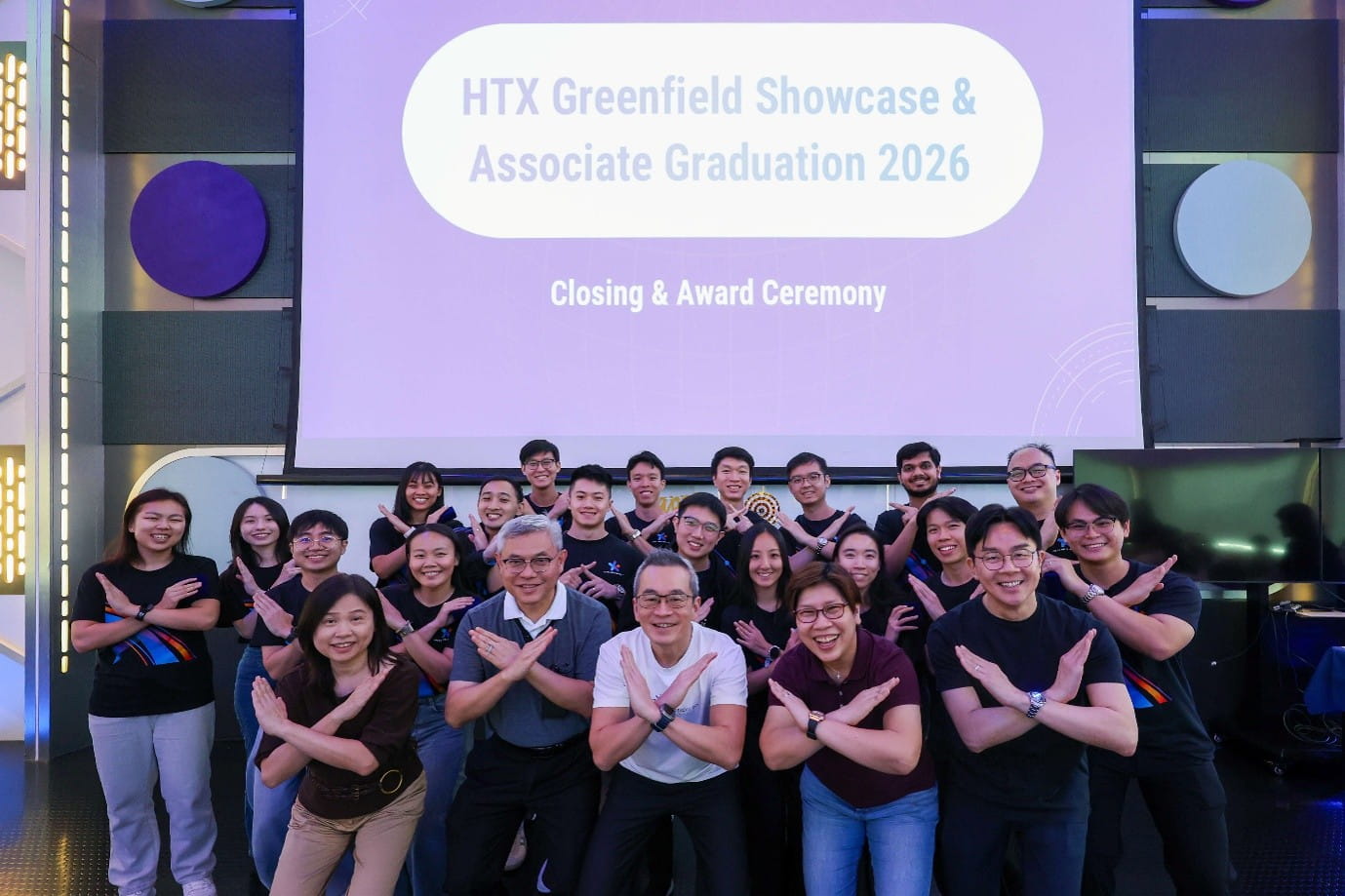
 Front row (left to right): ACE (Science) Lim Chin Chin, ACE (Operational ICT) Dr Lim Kia Yong, CE Chan Tsan, former HR director Lim Puay Sze and HR director Koh Chee Keat with the associates and scholars. (Photo: HTX/Damian Koh)
- 19 graduates of the 2023 HTX Associates and Scholars programme showcased innovations addressing real-world public safety challenges.
- One award-winning idea enables multiple drones to autonomously explore and map unfamiliar indoor environments, potentially shortening search times and improving situational awareness for first responders.
- NOVA uses AR-assisted scene capture, computer vision and 3D reconstruction to streamline crime-scene documentation.
- LumineX test strips provide a simple, portable means of rapidly screening for an explosive precursor, helping to address gaps in existing on-site detection capabilities.
Imagine a not-too-distant future where Unmanned Aerial Vehicle (UAV) swarms autonomously help first responders navigate unfamiliar indoor environments, while police officers harness AI to reconstruct crime scenes in 3D and analyse crucial evidence on the spot.
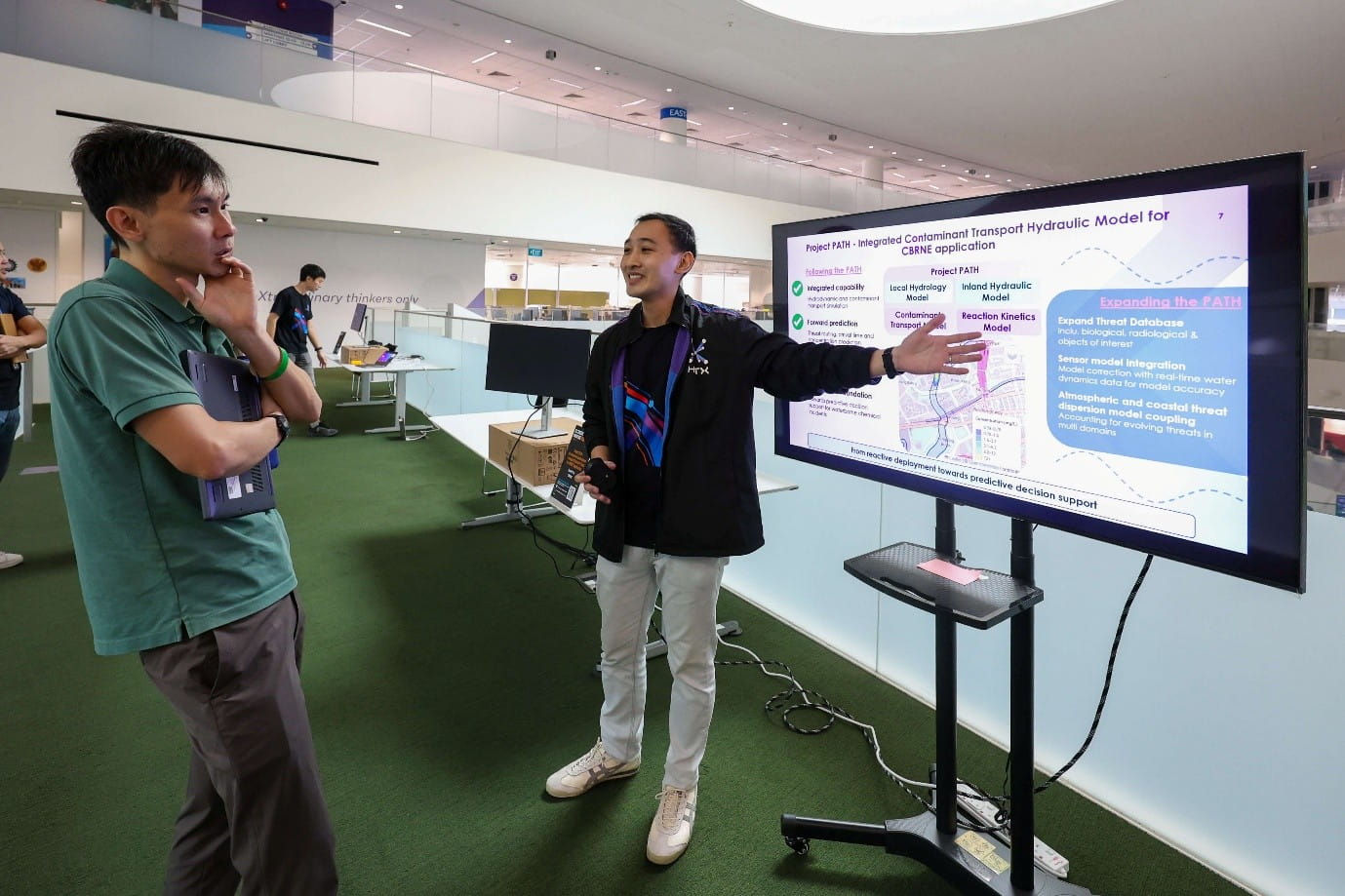 CBRNE Engineer Daniel Tan explaining his innovation. (Photo: HTX/Damian Koh)
These blue-sky visions were conjured up by the latest graduates of the HTX Associates and Scholars programme, which challenges young Xponents to develop innovative solutions to Singapore’s public safety challenges.
Their three-year journey as associates culminated in the HTX Greenfield Showcase and Associates’ Graduation Ceremony held on 30 October, where 19 of them pitched their ideas across a range of science and tech categories.
Swarm welcome
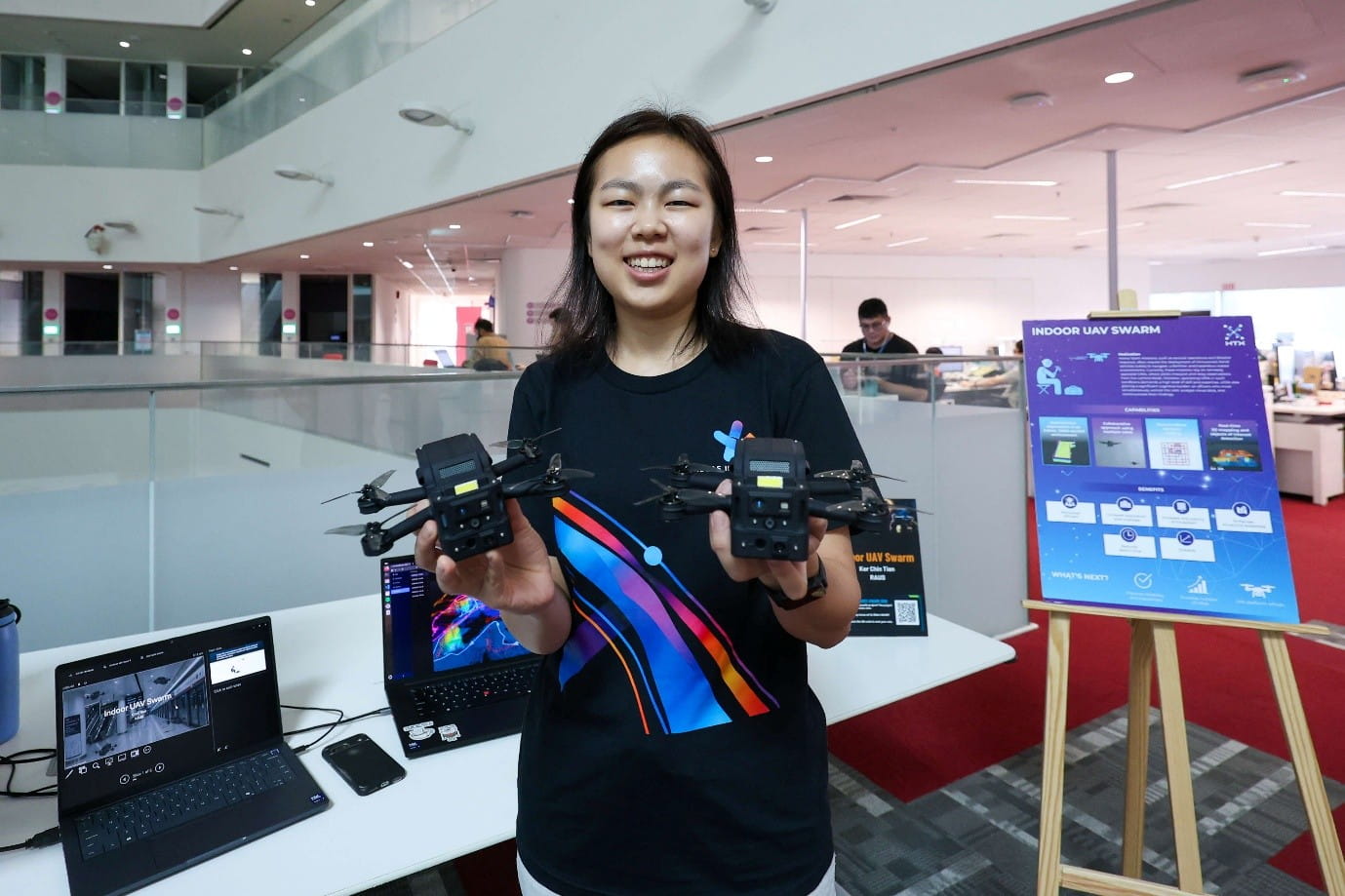 Ker Chin Tian developed a UAV swarm system to make indoor reconnaissance more effective. (Photo: HTX/Damian Koh)
For Ker Chin Tian, an Engineer from the Robotics, Automation & Unmanned Systems (RAUS) Centre of Expertise (CoE), the challenge she sought to tackle was making indoor reconnaissance more effective.
During tactical operations and disaster response, remotely operated UAVs require officers to simultaneously navigate unfamiliar environments, analyse live camera feeds and communicate their findings. To lessen the cognitive load on officers, she devised a solution that would let the drones handle the navigation.
The solution involves a system that enables multiple UAVs to autonomously explore and map unfamiliar indoor environments – potentially covering more ground, shortening search times and giving responders better situational awareness.
Her concept won the LearnXpreneur Award, which recognises resourcefulness in the face of adversity.
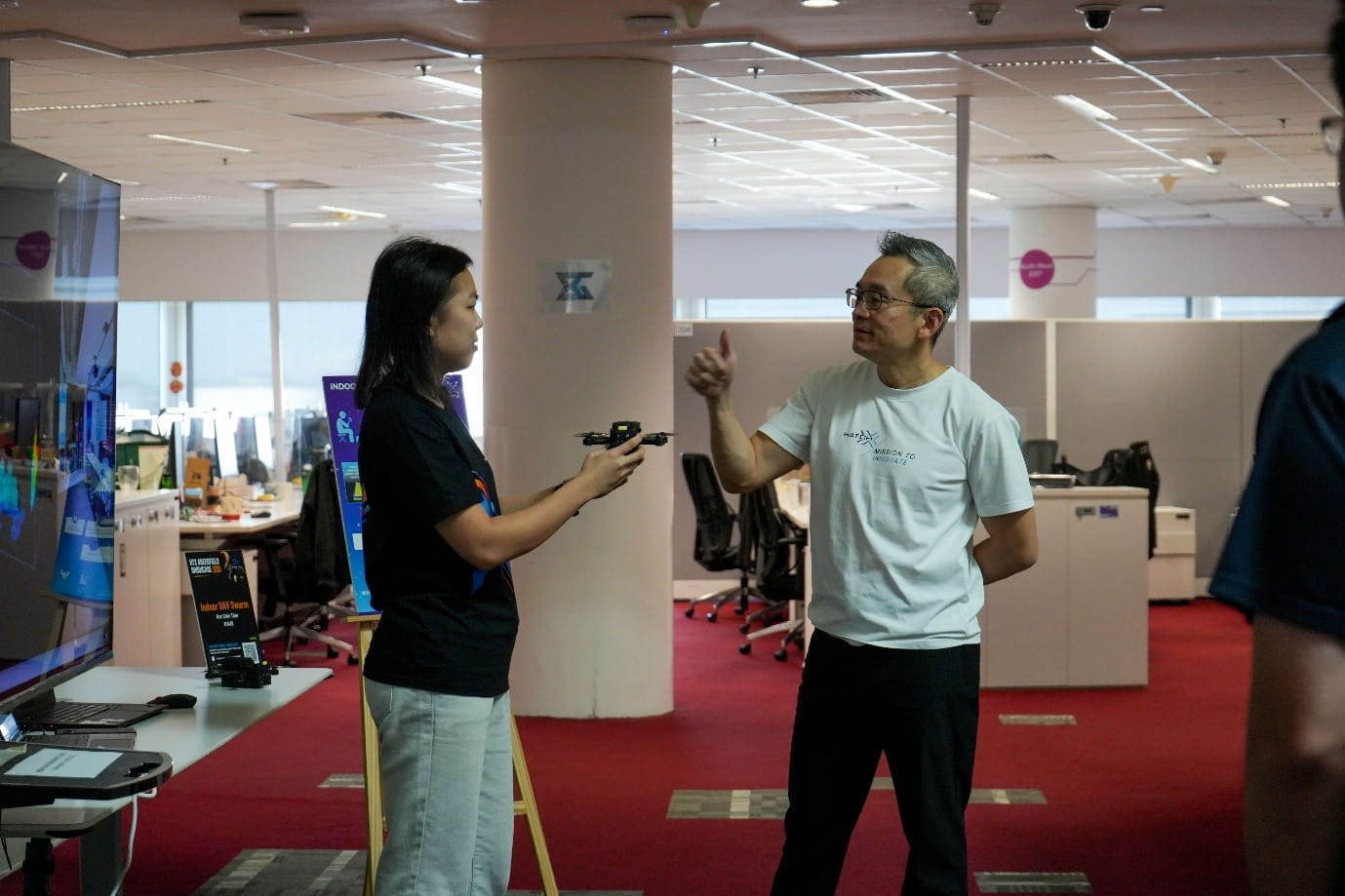 Ker Chin Tian demonstrates her winning concept to Chan Tsan. (Photo: HTX/Isabelle Lee)
And there were plenty of hurdles to overcome. Unlike outdoor drones that can rely on GPS and fly above obstacles, indoor UAVs must manoeuvre through cluttered, GPS-denied environments while avoiding walls, pillars and one another. Chin Tian also had to bridge simulation and reality – ensuring algorithms tested virtually could work on physical drones with different computing architectures.
Looking back, she said this experience had boosted her confidence.
“I am surprised by how much I can achieve through consistent effort, which can amount to something bigger,” she shared. Her concept will be spun off into another project for further development.
Tech transforms forensics
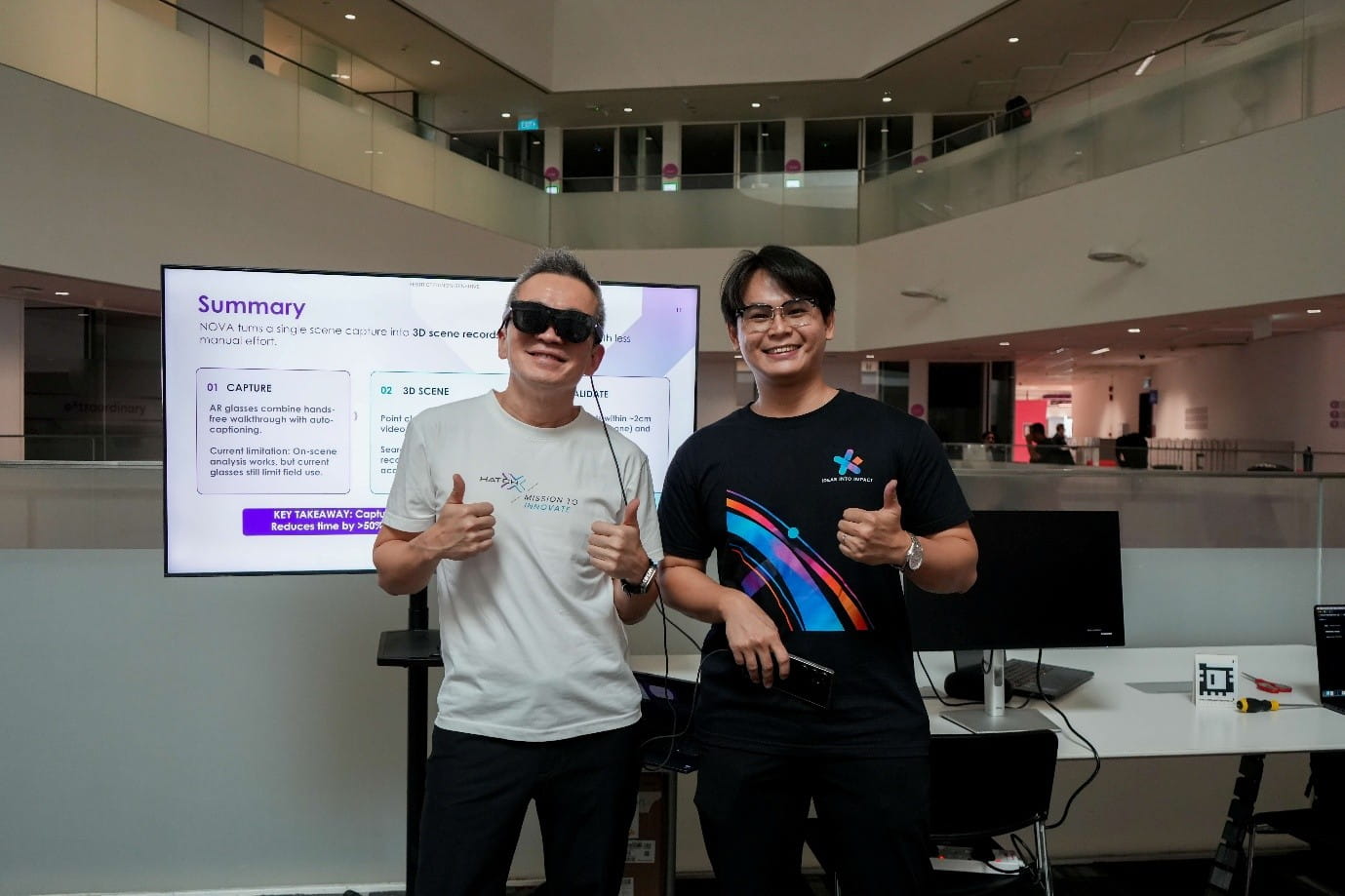 Chan Tsan gets an insider look at Sherwin Ng’s innovation. (Photo: HTX/Isabelle Lee)
The Greenfield showcase also demonstrated how AI could take on the heavy lift of labour-intensive tasks, freeing frontline officers to focus on work requiring human expertise and judgement.
One example is crime-scene processing, where crime scene specialists currently rely on different tools and manual processes to document a scene. Presently, creating a 3D map of the scene involves lugging around and placing a bulky LiDAR (Light Detection and Ranging) scanner at multiple locations, followed by hours of back-end processing.
To address this, Sherwin Ng, a Forensic Scientist from the Forensics CoE, has found a way to streamline this process with his Next Gen On-scene Virtual Assistant (NOVA) system.
Using this system, officers move through the scene wearing Augmented Reality (AR) glasses, which digitally record and caption evidence. The footage is then fed into AI-powered computer vision and 3D reconstruction models to create a digital replica of the scene, with the captured evidence mapped to its location within it. All these are done hands-free and within a matter of minutes.
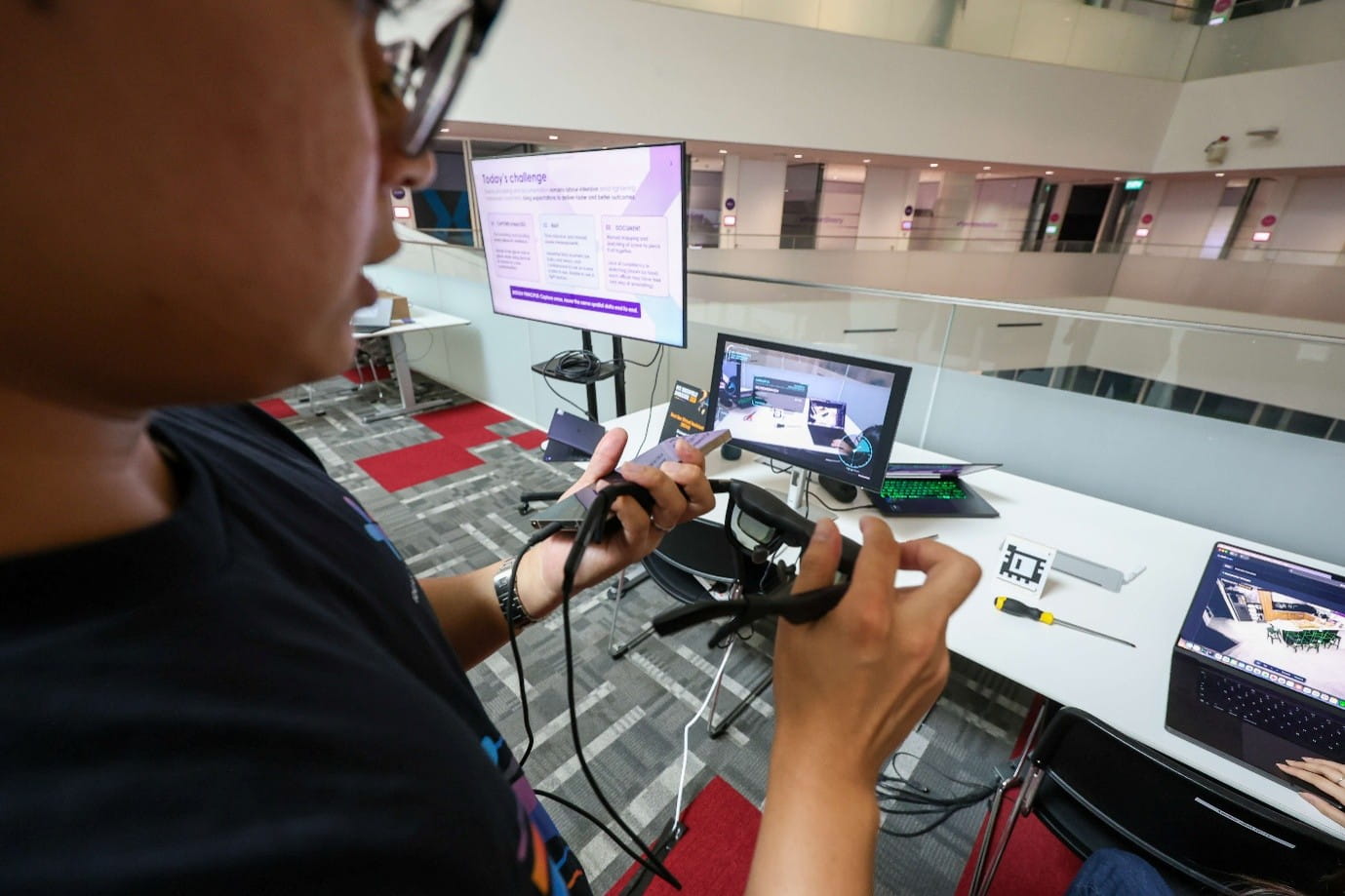 Sherwin Ng’s system uses AR glasses to help police officers capture evidence. (Photo: HTX/Damian Koh)
The amount of time saved using NOVA is remarkable: in one test involving a 100-sqm room, NOVA cut the end-to-end 3D capturing and processing of the scene from around four hours to just under 20 minutes.
Equally remarkable is the fact that Sherwin, a chemist by training, taught himself computer vision and a programming language he’d never used before for the project.
“All this technology is out there. It’s just that nobody repurposes it for forensic use,” he said.
Beyond scene processing, NOVA is also being developed to support on-scene bloodstain pattern and fingerprint analysis, which could provide useful insights at the scene itself.
His solution earned him the Enterprising eXplorer Award, which recognises innovation in the exploration and application of science and technology.
Outsized impact
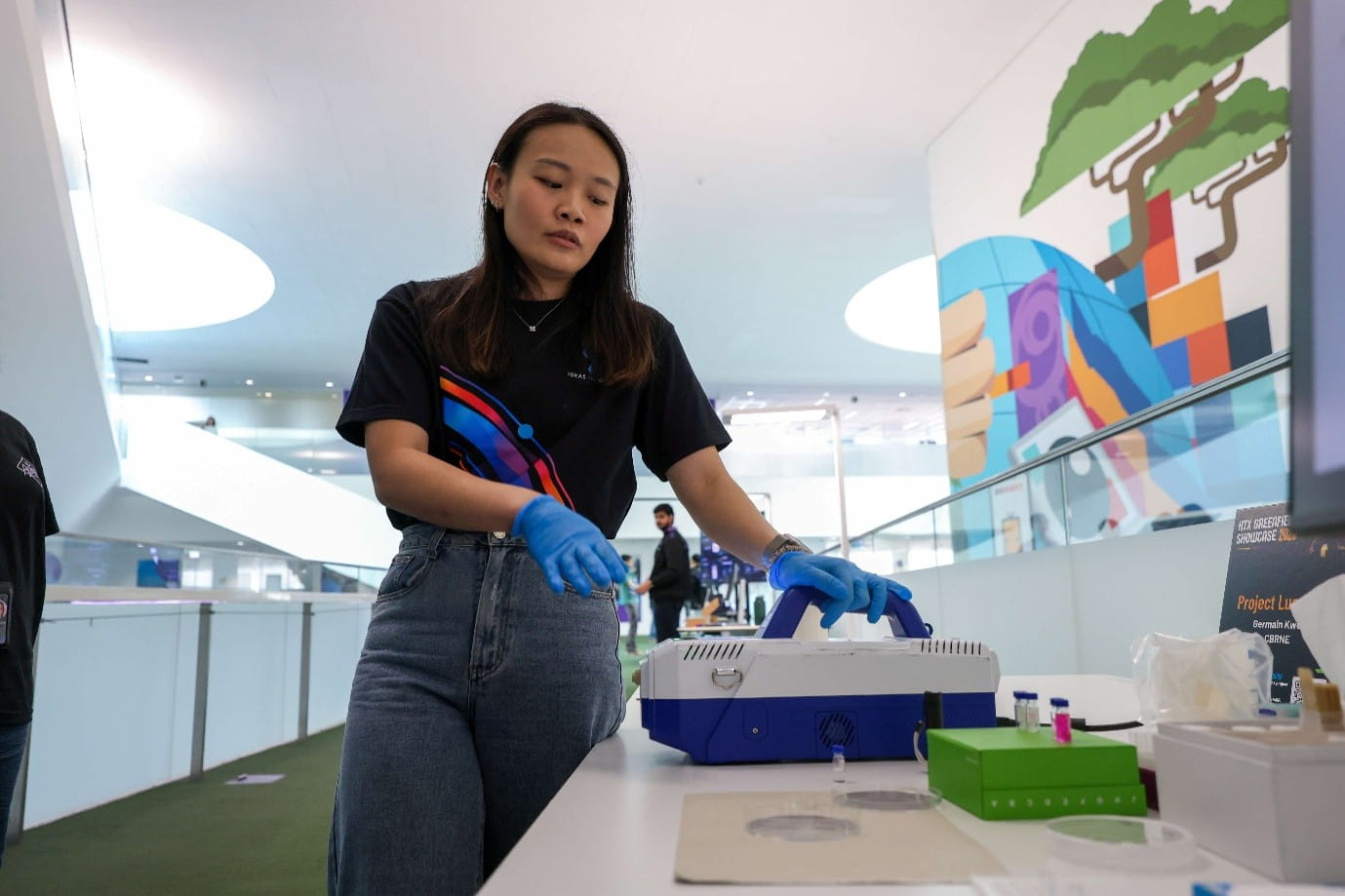 Germain Kwek’s chemical test strip can detect the presence of an explosive precursor. (Photo: HTX/Damian Koh)
At the other end of the spectrum is a decidedly low-tech solution with outsized potential impact – a chemical test strip designed to give frontline officers a quick, on-site indication of the presence of perchlorates – an explosive precursor typically found in homemade explosives.
Developed by Germain Kwek, a scientist from the Chemical, Biological, Radiological, Nuclear, and Explosives (CBRNE) CoE, LumineX can complement commercial off-the-shelf detectors already used by the Home Team.
The idea emerged after Germain realised that handheld detectors aren’t great at identifying perchlorates. This is because most handheld detectors are designed to identify specific organic vapour signatures.
Perchlorates, in contrast, are inorganic, salt-based precursors, and have virtually no vapour pressure.
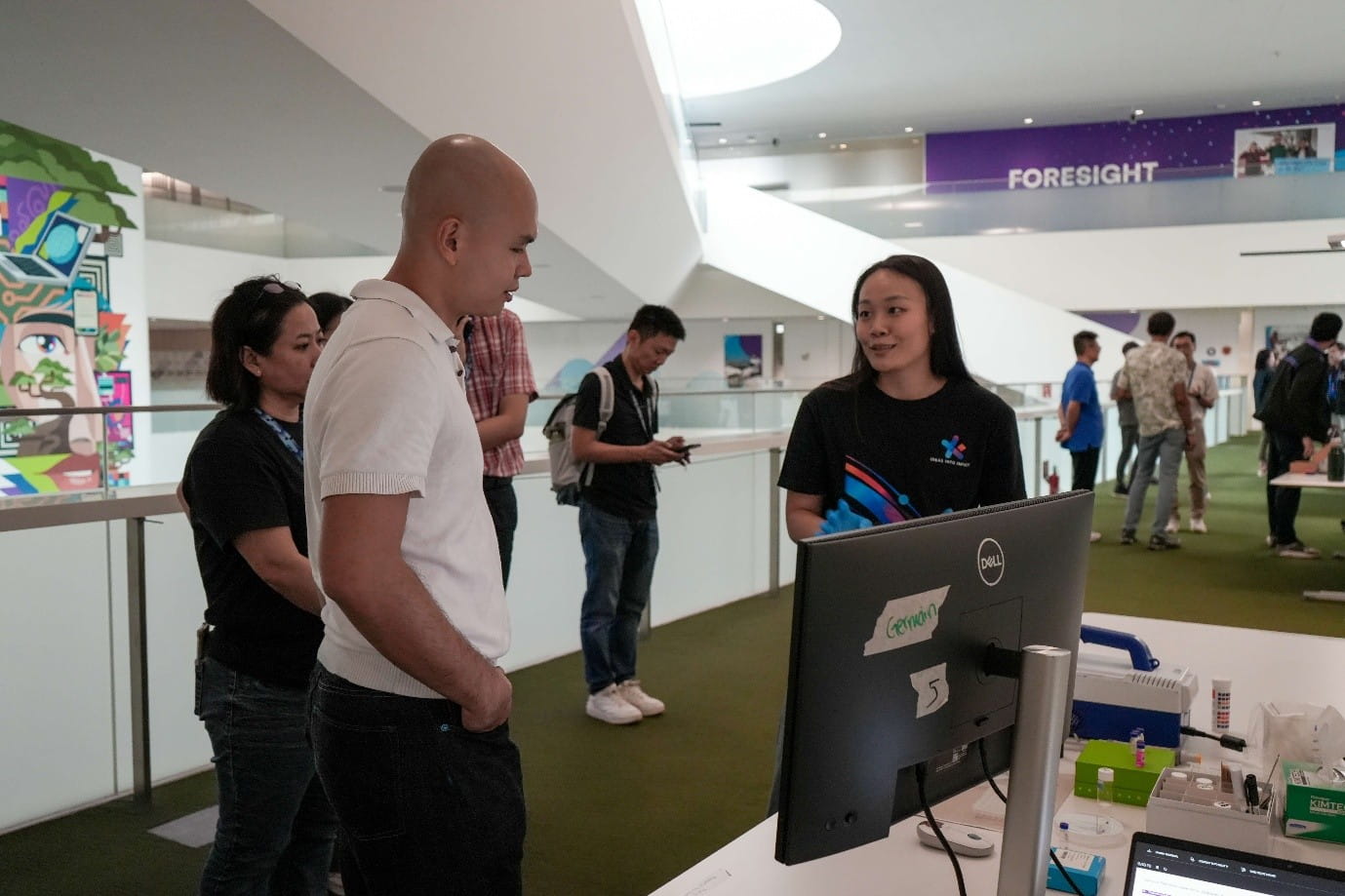 Germain demonstrating her innovation to a rapt audience. (Photo: HTX/Damian Koh)
The journey from literature to a working solution was far from straightforward. After identifying a promising dye through published research, Germain found that the reported synthesis method could not be successfully reproduced. She then went back to the chemistry, troubleshooting and refining the approach until she developed her own three-step synthesis process.
The prototype still requires optimisation, but its preliminary results have been promising. Looking ahead, Germain hopes to integrate the new test with commercially available tests for other explosive precursors into a single strip, providing frontline officers with a compact and cost-effective means of screening for multiple explosive precursors at once.
Her nifty solution won the Potentialx award that recognises game-changing projects with potential to impact the Home Team.
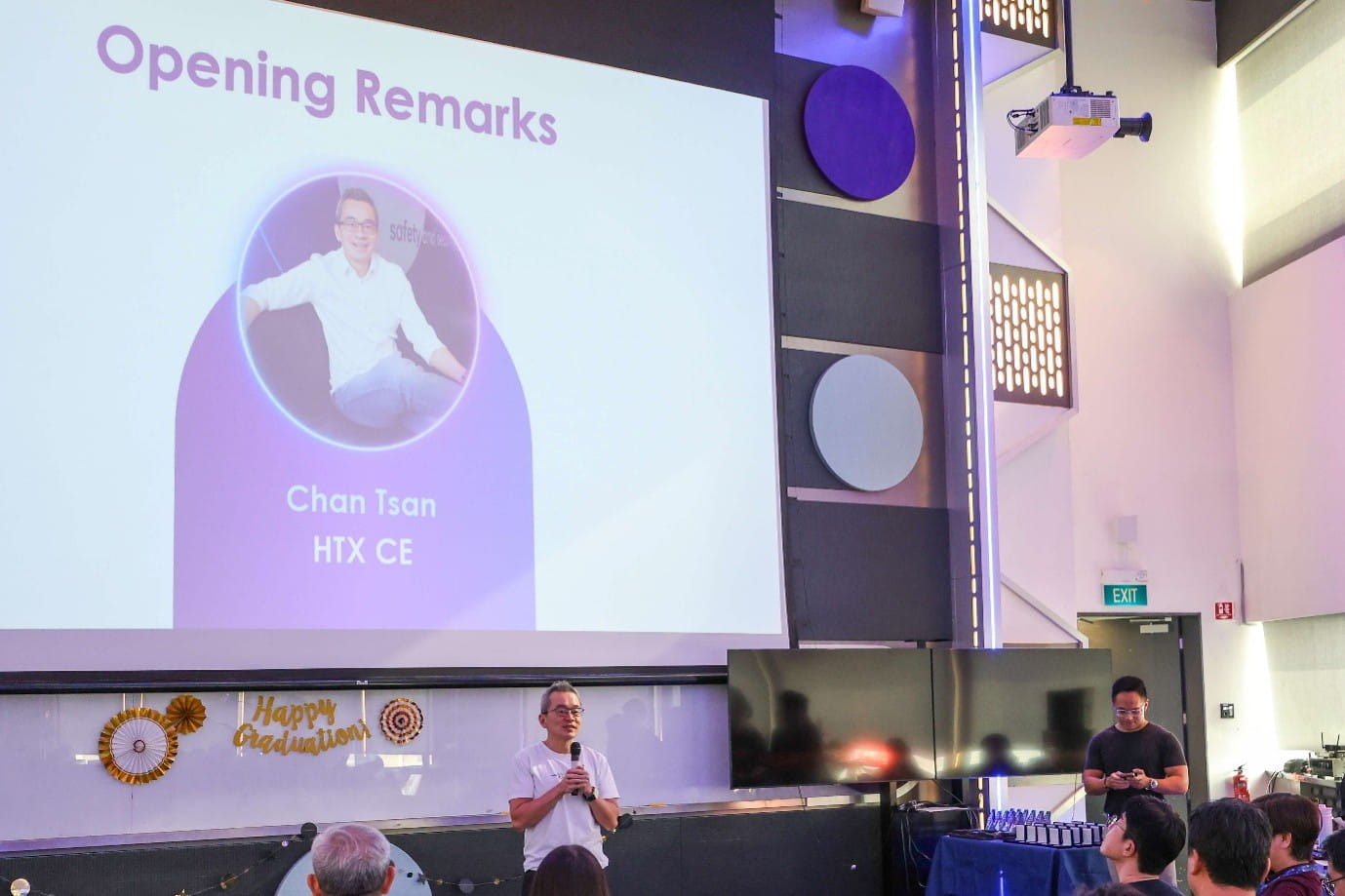 Chan Tsan emphasised the importance of an innovative mindset. (Photo: HTX/Damian Koh)
Other award-winning Greenfield projects include a modelling tool that predicts how hazardous substances could spread through Singapore’s drains and waterways, as well as a smartphone app that could combine face, iris and fingerprint authentication.
Speaking to associates at the showcase, HTX Chief Executive Chan Tsan highlighted the importance of experimentation, regardless of whether their projects were taken further.
“The important thing is that you have the innovative spirit and curiosity to ask questions, challenge assumptions and then just give it a try,” he said.