
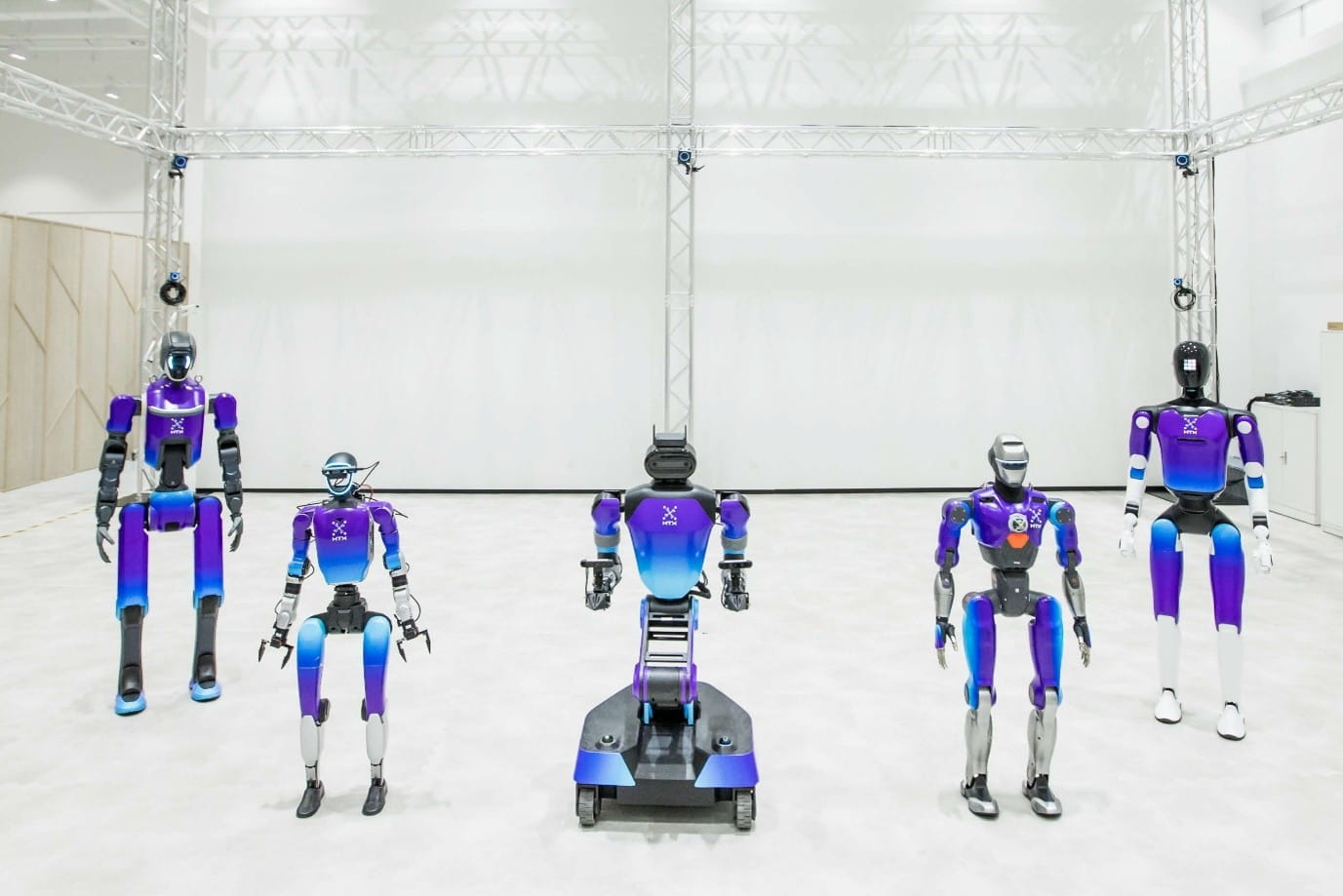
 Some of the many humanoid robots being used for Embodied AI development in H2RC. (Photo: HTX)
- HTX has launched H2RC, a new engineering facility dedicated to training Embodied AI humanoid robots for public safety use cases
- Minister for Law and Second Minister for Home Affairs Mr Edwin Tong launched the new facility and reiterated that humanoid robots are meant to augment Home Team operations and not replace officers
- HTX signs an MOU with ST Engineering to strengthen existing collaborations to advance robotics and Embodied AI capabilities during the launch event
Autonomous humanoid robots are poised to work alongside Home Team officers as soon as 2028 thanks to HTX’s new Home Team Humanoid Robotics Centre (H2RC), which was launched on 30 September by Minister for Law and Second Minister for Home Affairs Mr Edwin Tong.
The new facility, run by engineers from HTX’s Robotics, Automation and Unmanned Systems (RAUS) Centre of Expertise, is dedicated to training humanoid robots with Embodied AI capabilities to handle a variety of public safety tasks that are routine, physically demanding or dangerous.
For example, a humanoid robot could be tasked with hazardous material (HazMat) containment, hence putting officers out of harm’s way. The humanoid robots could also be used to take on physically demanding or routine jobs to free up officers and allow them to perform tasks that require empathy, human judgement and leadership.
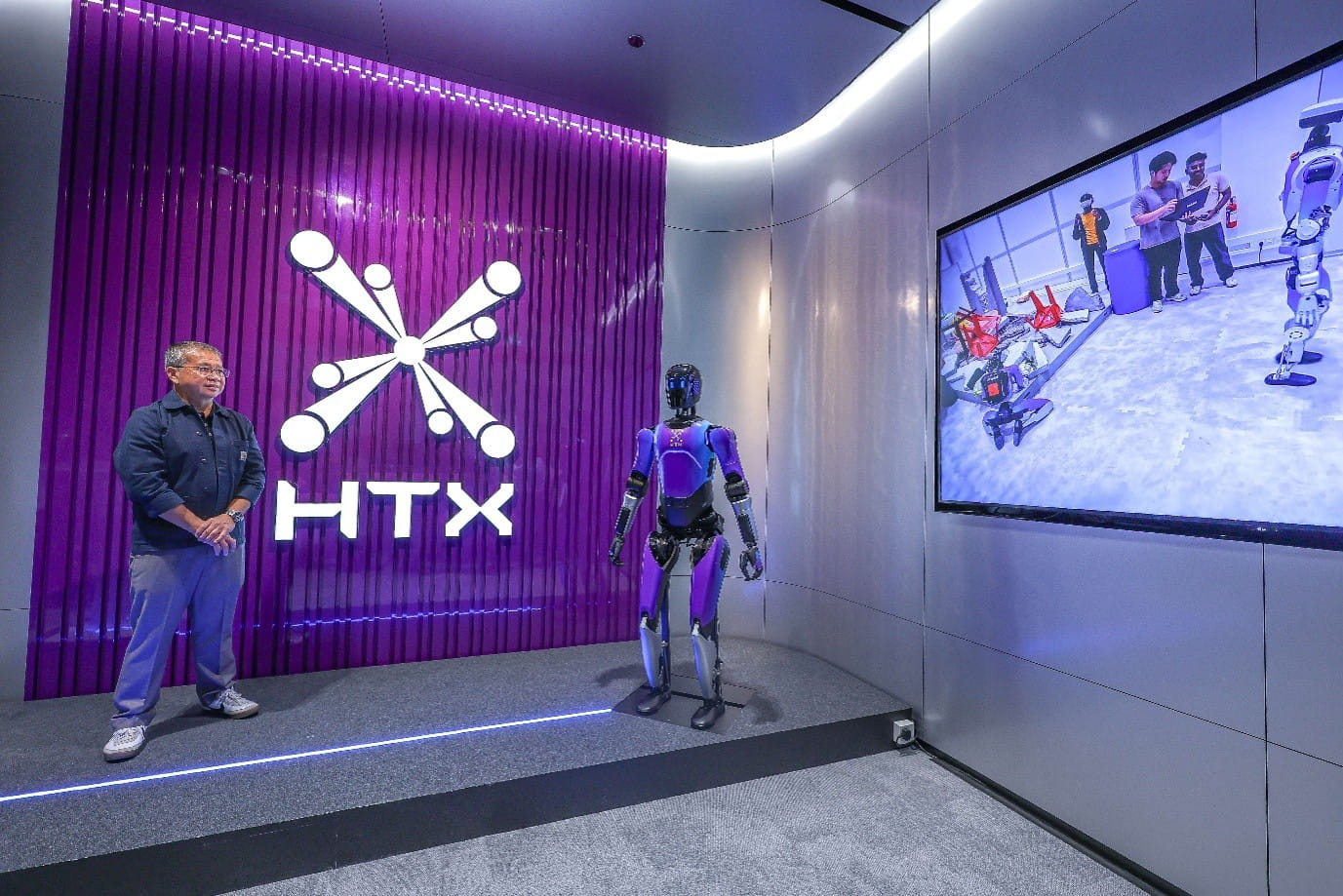 Minister for Law and Second Minister for Home Affairs Mr Edwin Tong watches a video about H2RC’s features after giving his speech. (Photo: HTX/Law Yong Wei)
In his speech, Minister for Law and Second Minister for Home Affairs Mr Edwin Tong described the opening of H2RC as “the next step forward on how we support our Home Team officers through new frontiers, and how we can continue to keep Singapore safe and secure, whilst at the same time, keeping our officers safe and secure.”
He explained that technology must be an integral part of the solution to the challenges Singapore faces, before citing how the nation’s workforce is ageing and how the Home Team draws from the same limited pool of talent as every other sector.
“Over the years, we have used science and technology to strengthen situational awareness, to improve our decision-making, and support our officers on the ground. Now, I think, it’s time for us to think about taking the next leap: to bring AI out of the digital world and into the physical world, through intelligent robots that can work alongside our officers in real operational environments,” he added.
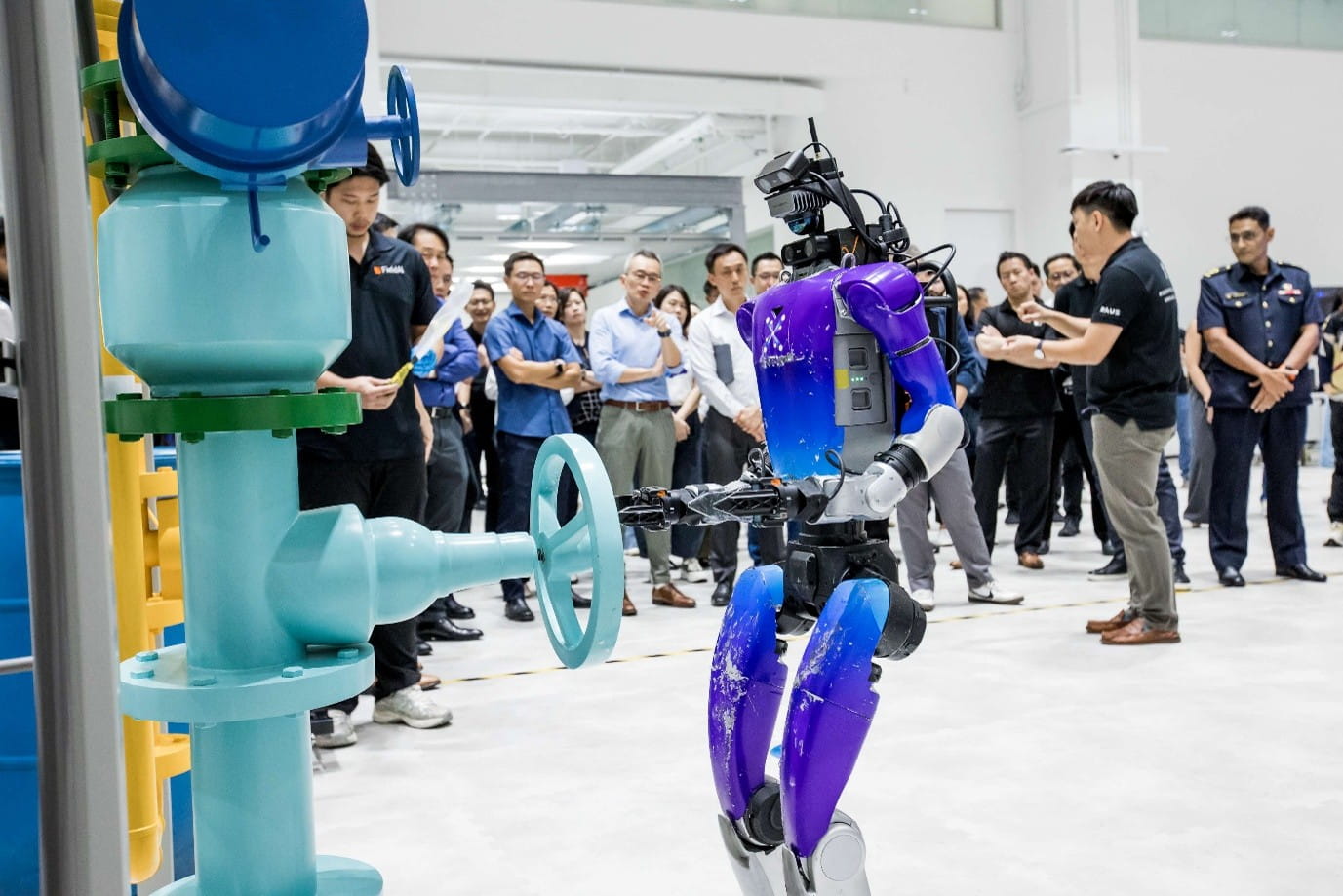 A humanoid robot prepares to turn a valve during a demonstration. (Photo: HTX)
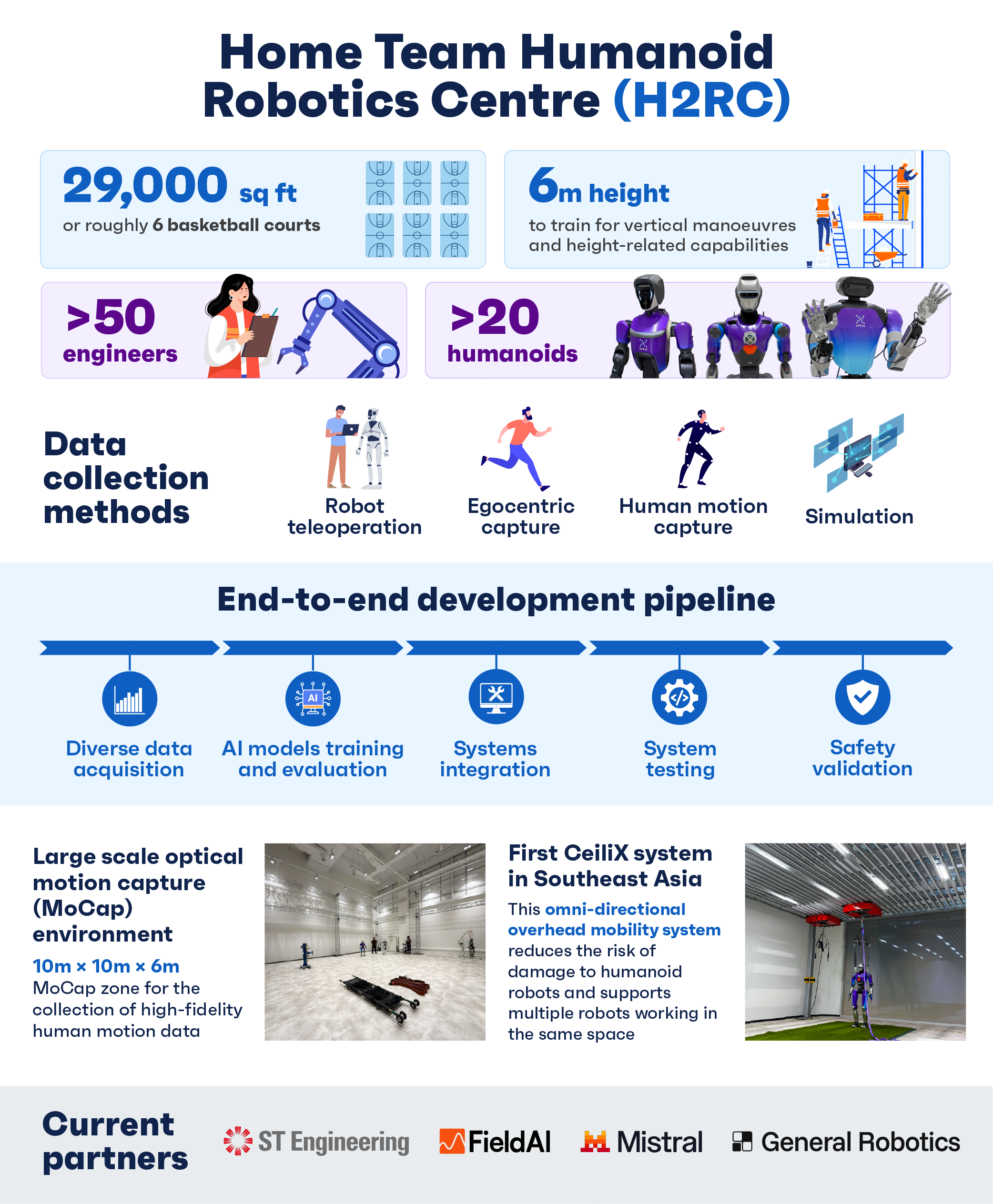
Measuring 29,000 square feet, H2RC is equipped with mock-ups of public safety scenarios that are necessary for the collection and verification of data, including an uneven post-blast scene filled with “debris” as well as”, replicas of industrial pipes and valves.
The facility also has an omni-directional, multi-robot overhead mobility system that enables safe and dynamic humanoid testing by reducing the risk of damage during development. Used by the European Space Agency to train astronauts and test equipment for reduced-gravity environments, this system in H2RC is the first in Southeast Asia.
 (Infographic: HTX/Nicole Lim)
Data is king
To support the end-to-end Embodied AI development cycle, H2RC has zones dedicated to data generation approaches including motion-capture, teleoperation, human demonstration and simulation.
Harnessing data to train AI models requires secure and scalable computing resources, and this is why HTX has partnered Singtel RE:AI to upgrade its sovereign AI infrastructure NGINE (Next Generation Infrastructure) with Singapore’s first operationalised NVIDIA Grace Blackwell GB300 GPUs, which power H2RC’s Embodied AI and multimodal model training
Beyond data collection, H2RC also enables the training and evaluation of Vision–Language–Action (VLA) models, the development of agentic AI for multi-step mission execution, and the integration and validation of embodied AI capabilities for public safety operations.
A collaboration hub
H2RC will also serve as a sandbox and collaboration platform that brings Home Team Departments, industry and academia together to co-develop Embodied AI solutions for public safety.
One of the centre’s industry partners is ST Engineering, which signed a Memorandum of Understanding with HTX during the launch event to strengthen existing collaborations to advance robotics and Embodied AI capabilities through joint research and development, technology and platform integration, strategic industry and academic partnerships, and cybersecurity collaboration.
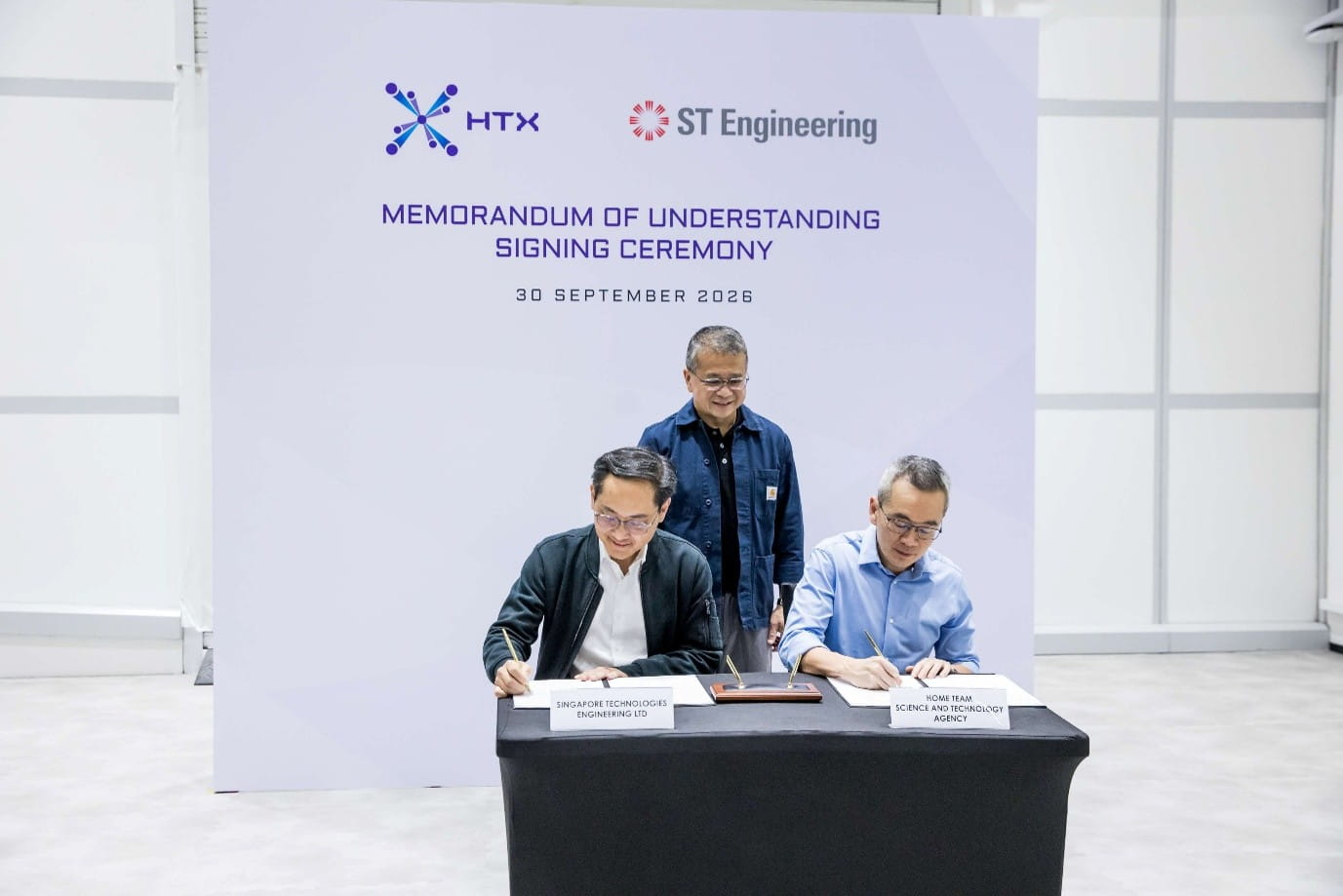 Minister Tong witnesses the signing of an MOU by HTX Chief Executive Chan Tsan (right) and ST Engineering Group Chief Operating Officer (Technology & Innovation) Mervyn Tan. (Photo: HTX)
Other H2RC partners include Mistral AI, Field AI and General Robotics, all of which are working with HTX to develop the humanoid robot capabilities needed for Home Team use cases.
H2RC reflects HTX’s commitment to always be on the front foot and seize the initiative when it comes to developing new public safety solutions for the Home Team. We are very excited to work with strong partners to develop new robotics capabilities for public safety at H2RC.
Four Home Team use cases were showcased during the launch event, and are in development:
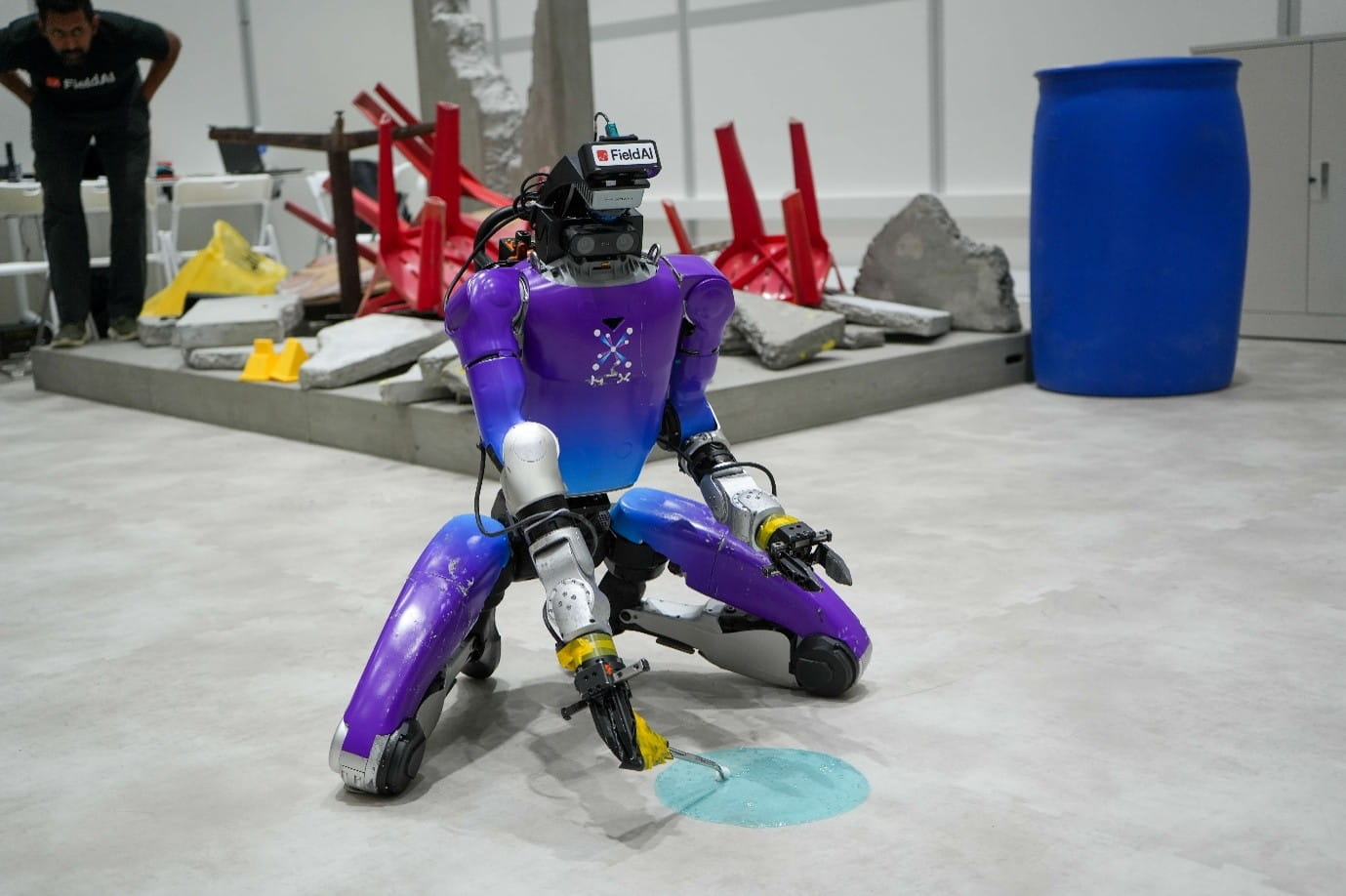 A humanoid robot takes a sample of a “hazardous” chemical during a demonstration. (Photo: HTX/Law Yong Wei)
Emergency medical services (EMS) ambulance resupply for SCDF
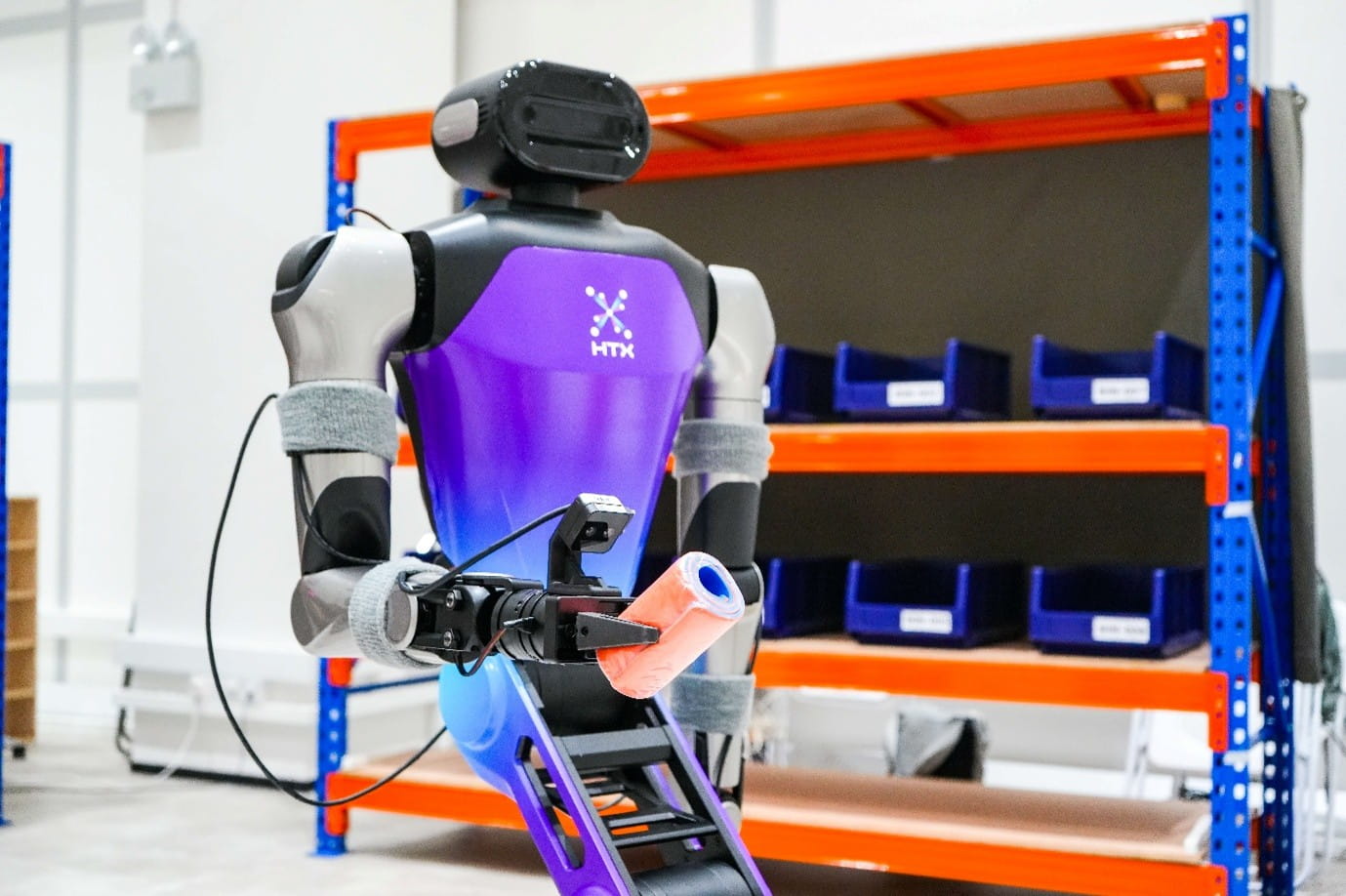 A humanoid robot delivers supplies from shelves during a demonstration. (Photo: HTX/Law Yong Wei)
Post-blast investigation for the Singapore Police Force (SPF)
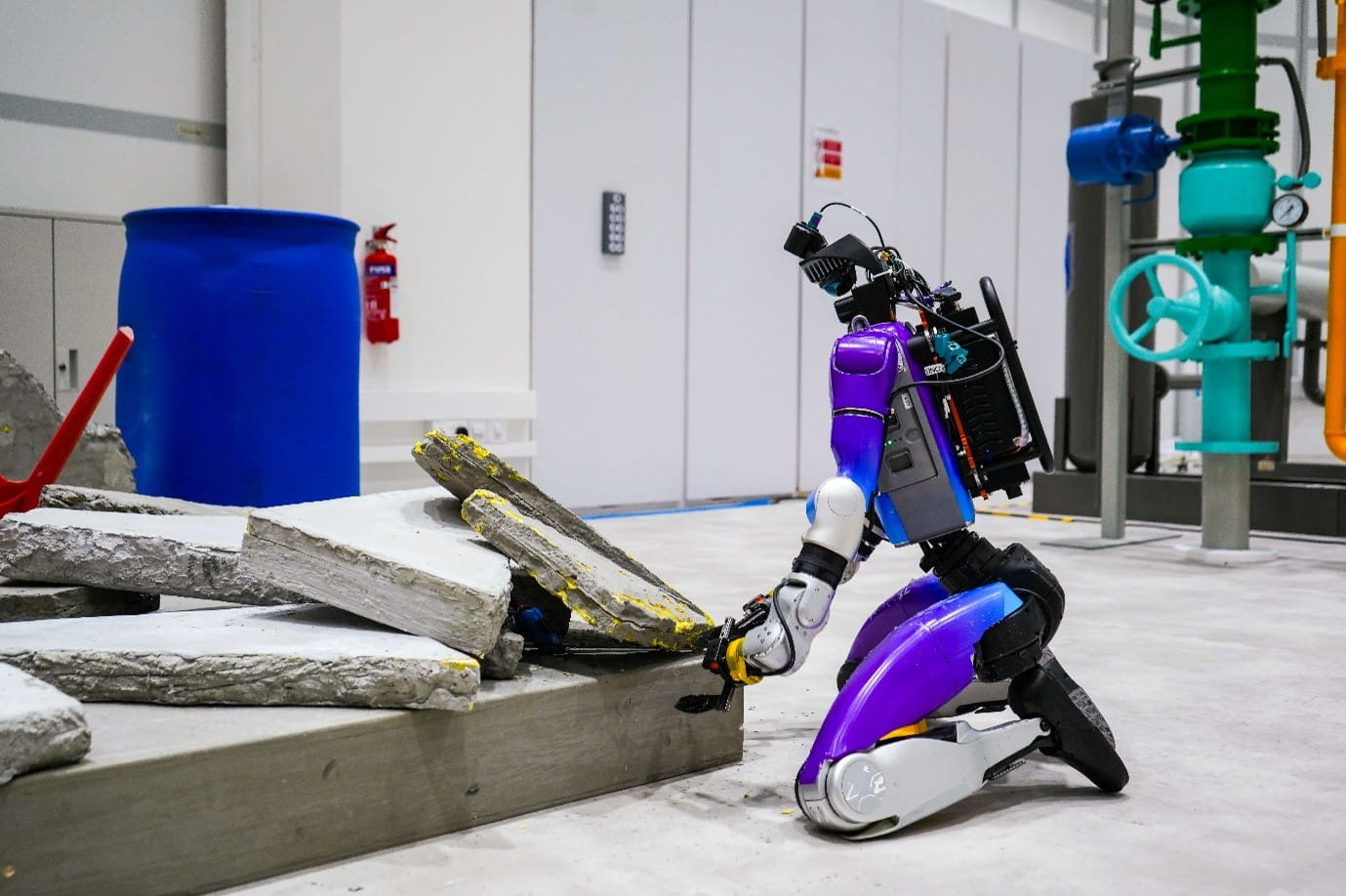 A humanoid robot removing a piece of “rubble” during a demonstration in a mock post-blast investigation scene. (Photo: HTX/Law Yong Wei)
Cell searches for the Singapore Prison Service (SPS)
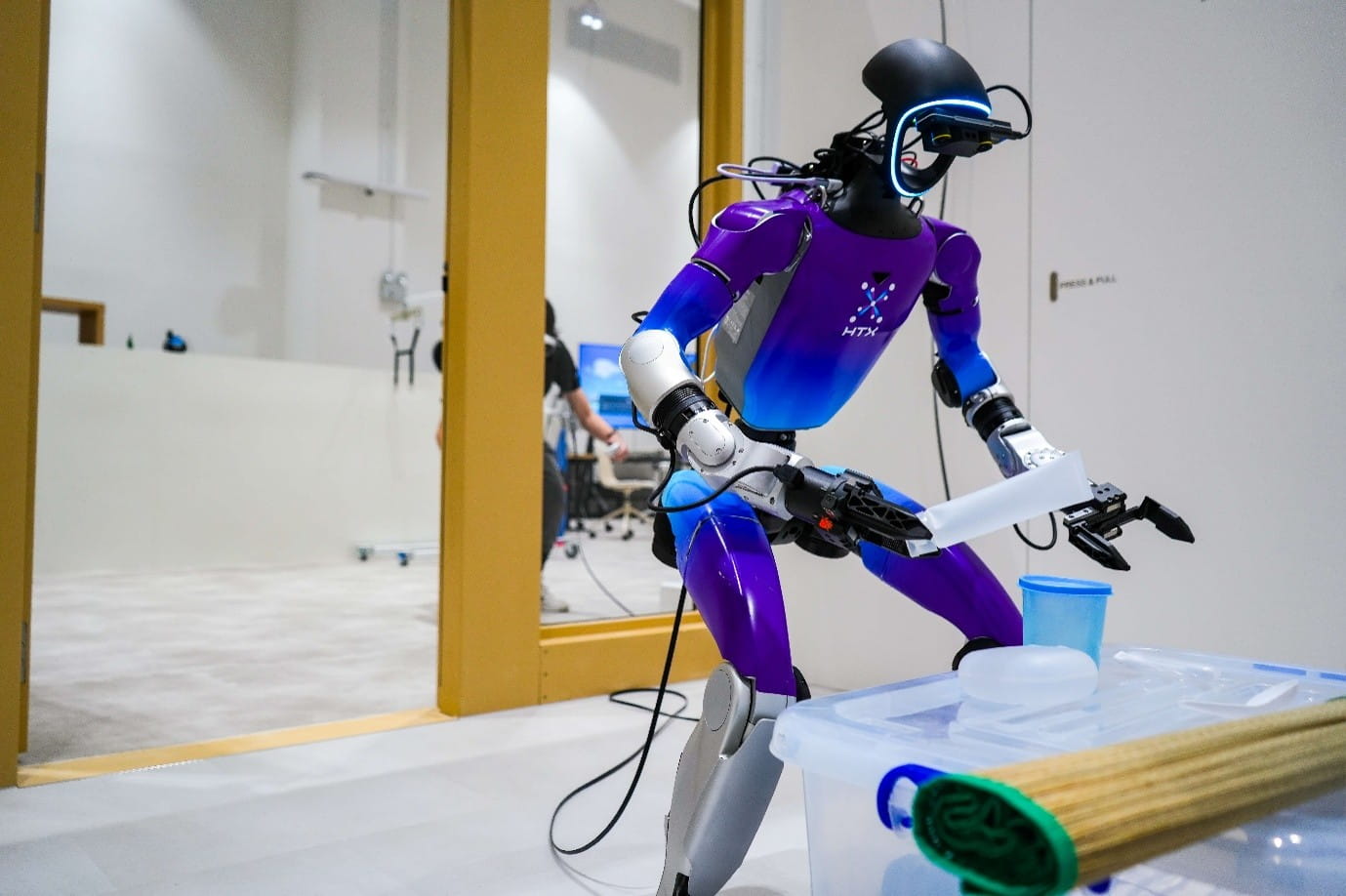 A humanoid robot checks an inmate’s personal artifacts for contraband in a mock prison cell setting. (Photo: HTX/Law Yong Wei)
Why humanoid robots?
The reason why humanoid robots are becoming increasingly commonplace isn’t because manufacturers are simply jumping on the bandwagon of the “next big thing”.
In a nutshell, humanoids simply adapt to this world, which is designed for humans, better than other types of robots.
We are augmenting our officers, not replacing them – so that they can do more, and so that they can do more, safely, as well.
Take for example the act of climbing a flight of stairs. A humanoid robot would be able to perform this task better then say, a quadruped robot, simply because the former can mimic how a human would climb the stairs.
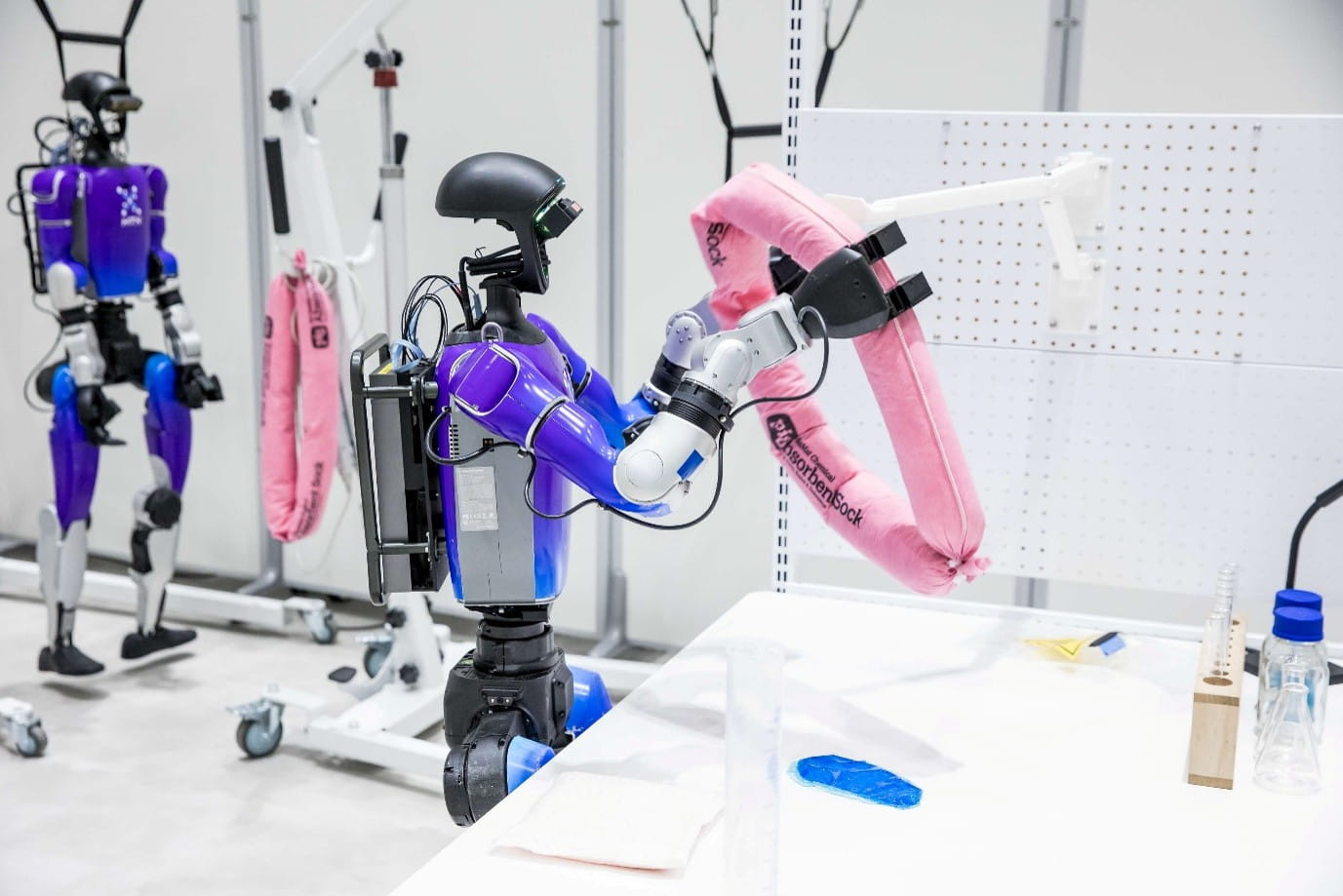 A humanoid robot demonstrates its ability to process verbal instructions before carrying out an action. (Photo: HTX)
If you’re wondering why the Home Team can’t just procure commercial robots – the answer is simple: most commercial robots aren’t trained to do what is required of them in dynamic public safety scenarios.
Imagine a scenario where a humanoid robot needs to enter a room and sample a potentially hazardous pool of chemical on the ground. Getting past the door would first require it to turn a doorknob. It would then need to kneel or squat to get closer to the ground before it can extend its arms to sample the chemical using a swabber its hand is grasping onto.
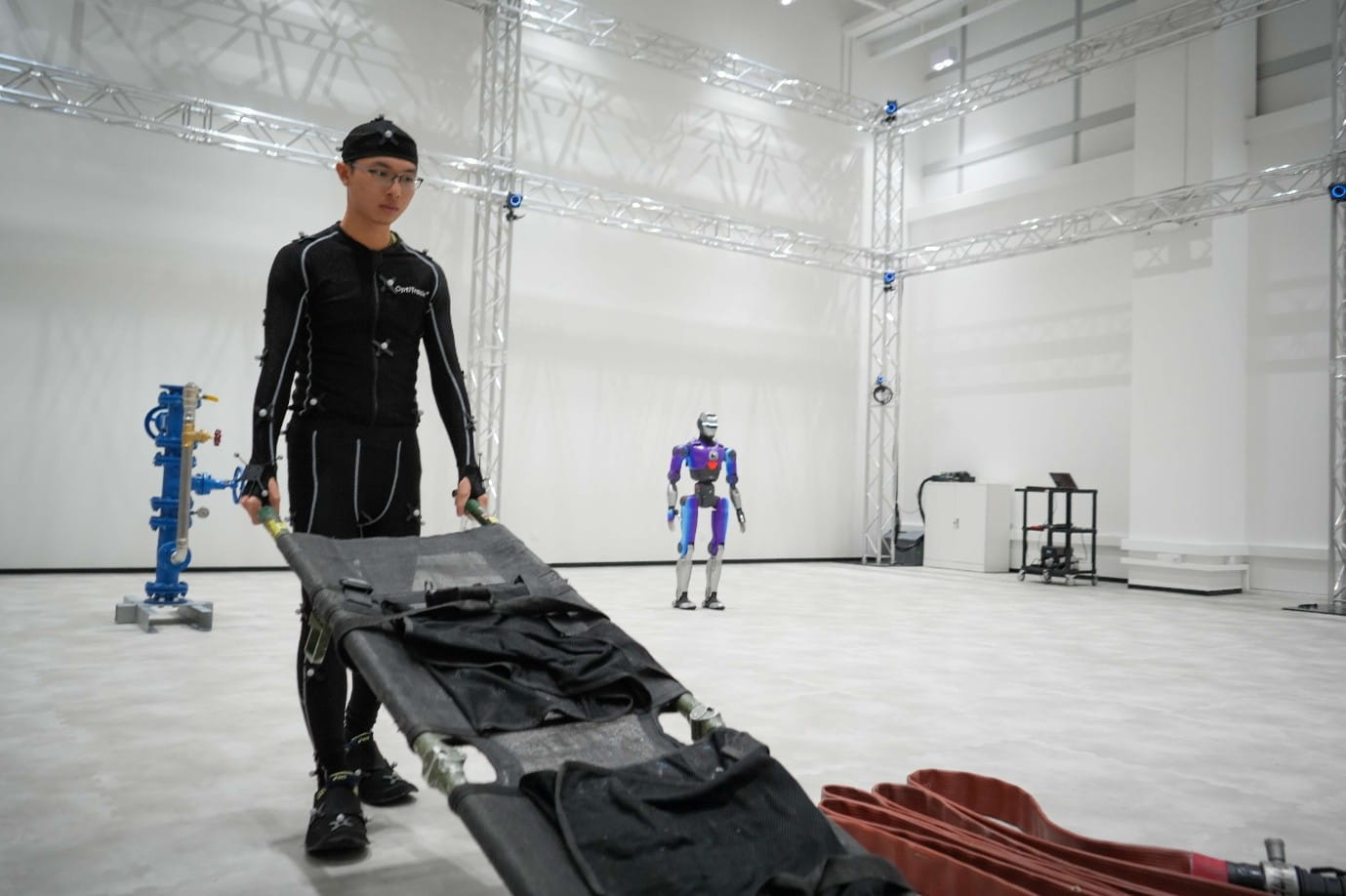 A view of the Motion Capture zone within H2RC. Transferring motion data to humanoid robots compared to other forms of robots is also easier because humanoid morphologies match human skeletal structures, allowing the direct reuse of large-scale human motion datasets and video demonstrations. (Photo: HTX/Law Yong Wei)
It might surprise you to learn that virtually no commercial robot comes from the factory with this combination of seemingly simple everyday actions like turning a doorknob, grasping a swabber, as well as kneeling or squatting.
Complicating the challenge is the fact that in real Home Team operations, there’s no way to guarantee ahead of time the specifics of any scenario humanoid robots might be sent into (for example: the height/width/height of stairs, the type of doorknob, etc).
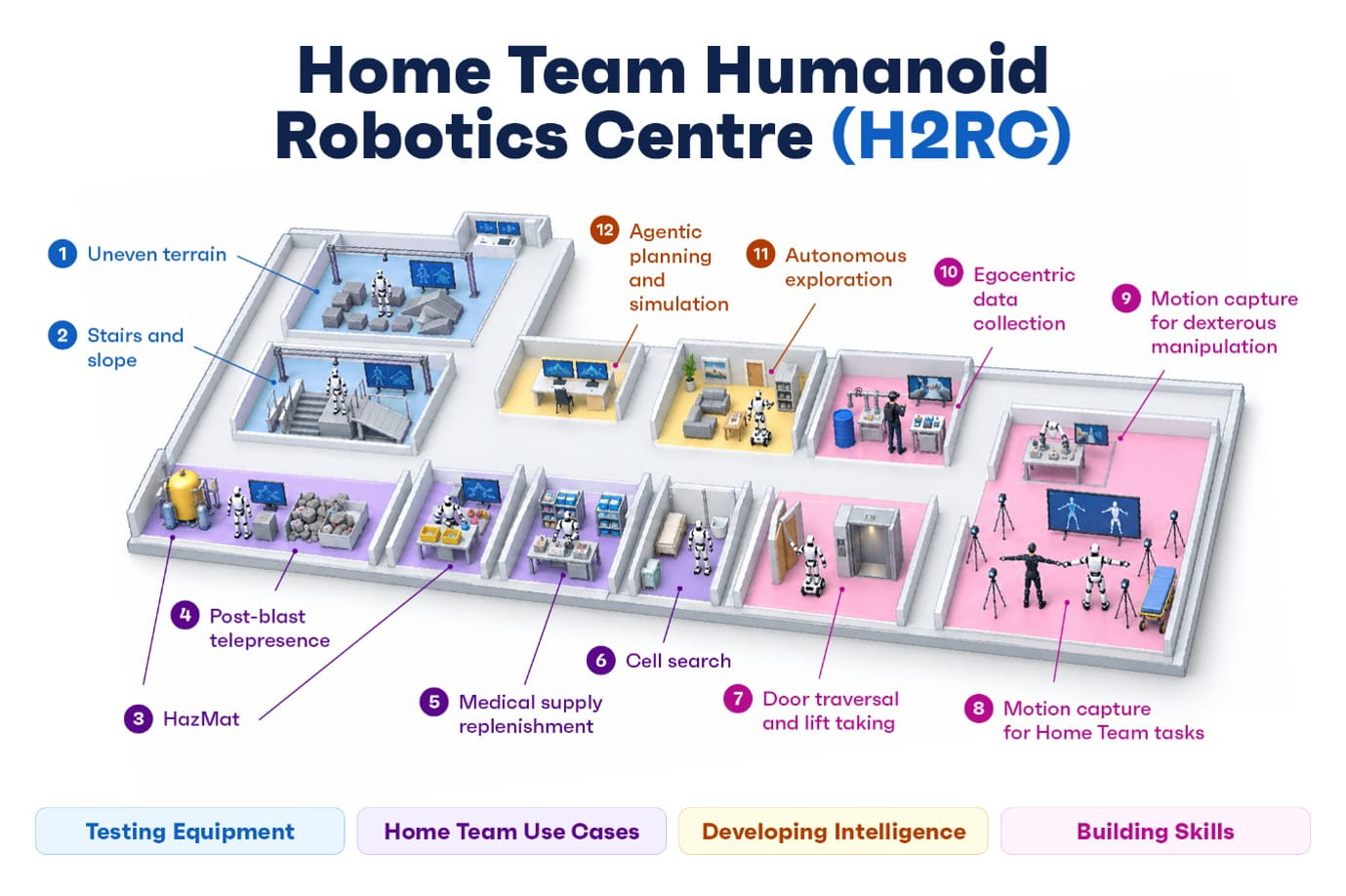 (Infographic: HTX/Nicole Lim)
And this is exactly why H2RC is needed – we need to seize the initiative to empower the Home Team by proactively training humanoid robots with not only the highly specific skills required in public safety use cases, but the adaptive intelligence to apply them reliable and safely in a variety of real-world situations.

![[SPEECH] Home Team Humanoid Robotics Centre (H2RC) Launch Ceremony - Speech by Mr Edwin Tong, Minister for Law and Second Minister for Home Affairs](/Cwp/assets/htx/images/listing-card-placeholder.png)