
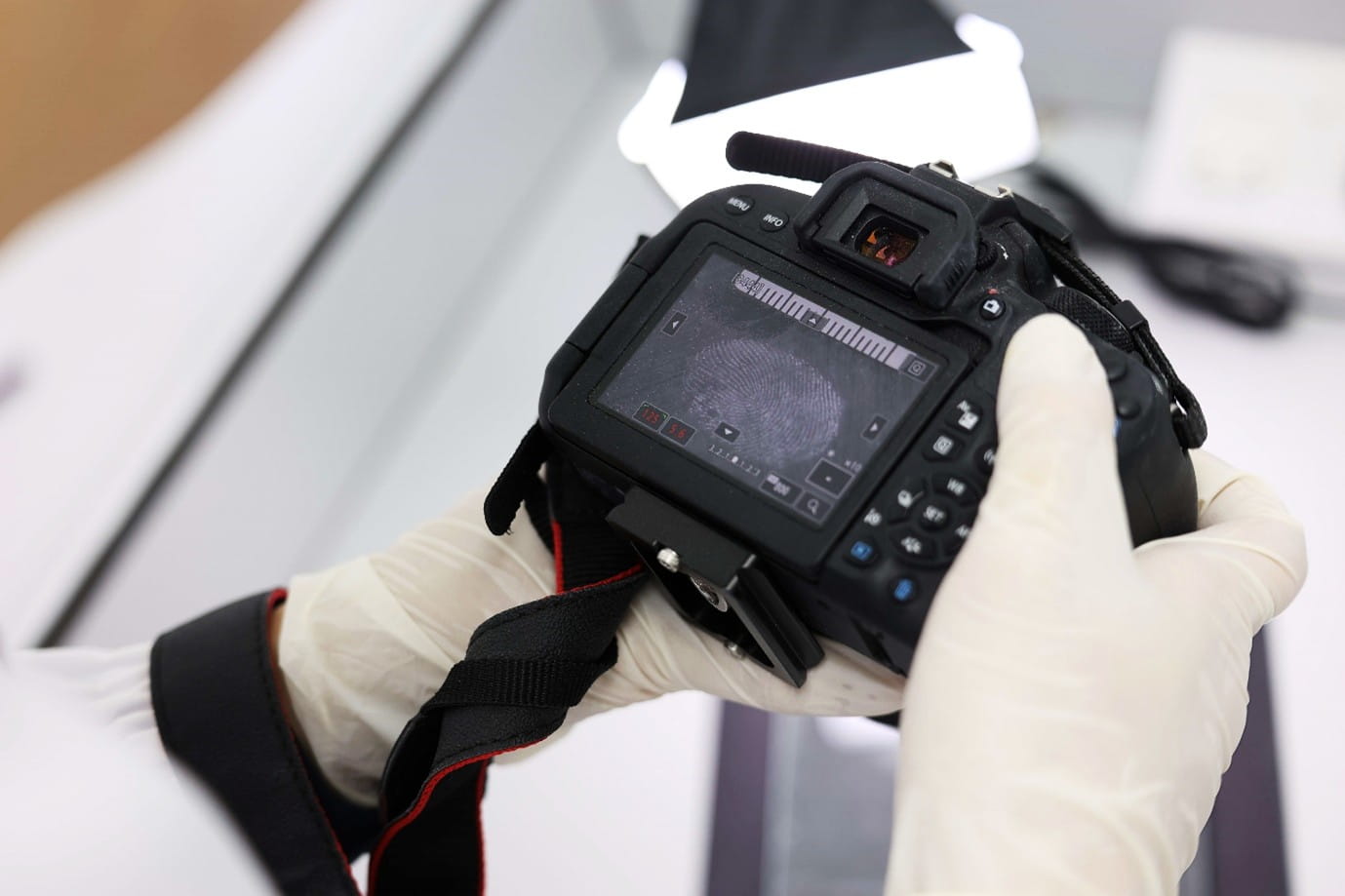
 A fingerprint viewed through a camera lens at HTX’s FIRST (Forensic Innovation and Research for Strategic Transformation) Lab. (Photo: HTX/Janna Giam)
Fingerprints: we all have them, but we rarely think about them.
Yet, these tiny ridges and swirls at our fingertips could reveal surprising information beyond our identity – including our biological sex. And artificial intelligence (AI) could supercharge the way this information is analysed.
More than identity
It’s no secret that fingerprints have traditionally been associated with one’s identity, with historical evidence suggesting that ancient civilisations used a variety of fingermark types as signatures to seal official agreements and transactions.
Babylonian clay tablets from around 519 BC featured fingernail marks as makeshift seals. During the Han dynasty (127-200 AD), contracts were formalised with finger joint tracings. There was also a case of a landlord using fingerprints to sign a rental agreement with a monk in the Tang dynasty.
Fingerprints would later become a key tool in the identification of persons in criminal investigations, when the world’s first fingerprinting systems and databases were developed in the late 19th century.
After all, fingerprints are unique to individuals, generally remain unchanged over the course of a lifetime, and are commonly maintained in databases.
 An impression of a neo-Babylonian cuneiform tablet displaying distinctive fingernail impressions, otherwise known as ṣupur. (Image: OpenAI)
But scientists have found that these marks can tell a deeper story, one that goes beyond identifying individuals.
Case in point? Sex recognition.
Chester Lim, a forensic scientist from HTX's Forensics Centre of Expertise (CoE), explained that using a traditional forensic science approach, researchers can manually measure physical features such as ridge density and thickness to determine biological sex.
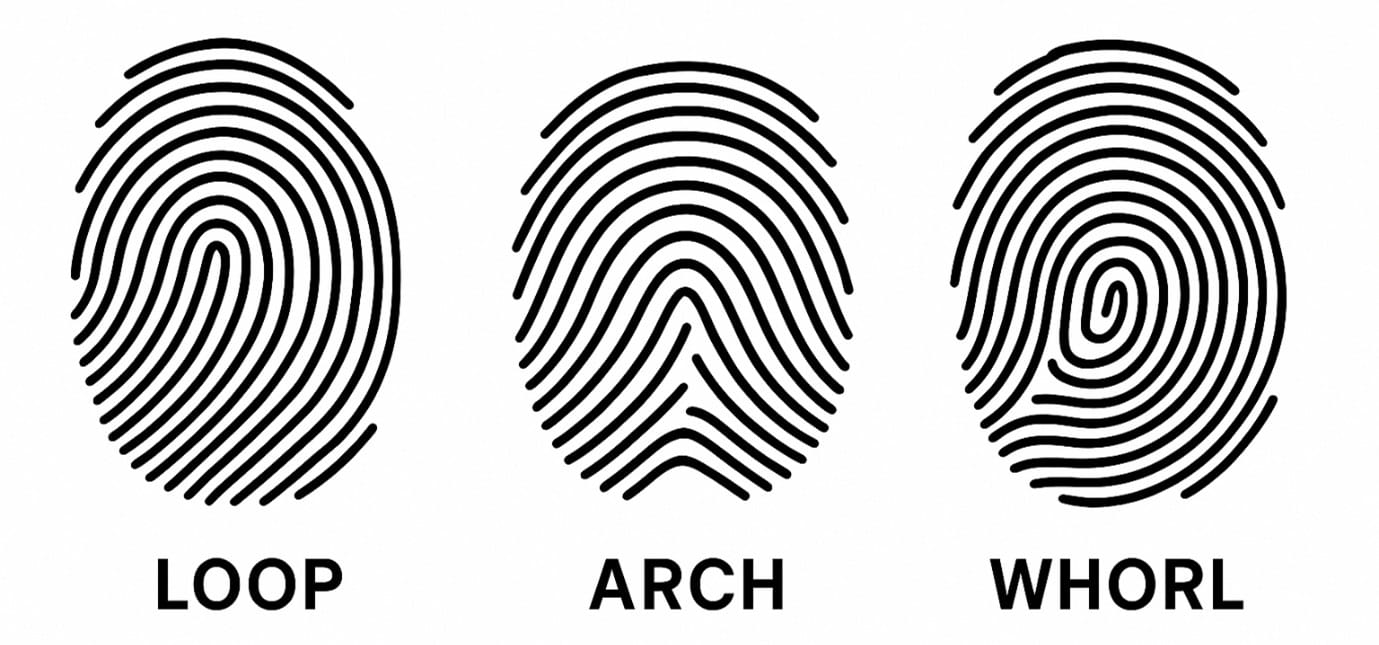 Our fingerprints are made up of ridges, which are the raised lines that form loops, arches and whorls, as well as valleys, the gaps in between. A person’s fingerprints are never the same as another, even across fingers on the same hand. (Image: OpenAI)
If the measurements turn over a high ridge density – a high number of ridges per millimeter in a given area – the print likely belongs to a female. Why?
Because females tend to have finer ridge structures with more ridges packed into an area, whilst males typically display coarser ridge patterns with wider valleys.
Such measurements are traditionally carried out using “ridge counting” methods – by counting the number of ridges within the same area across fingerprints.
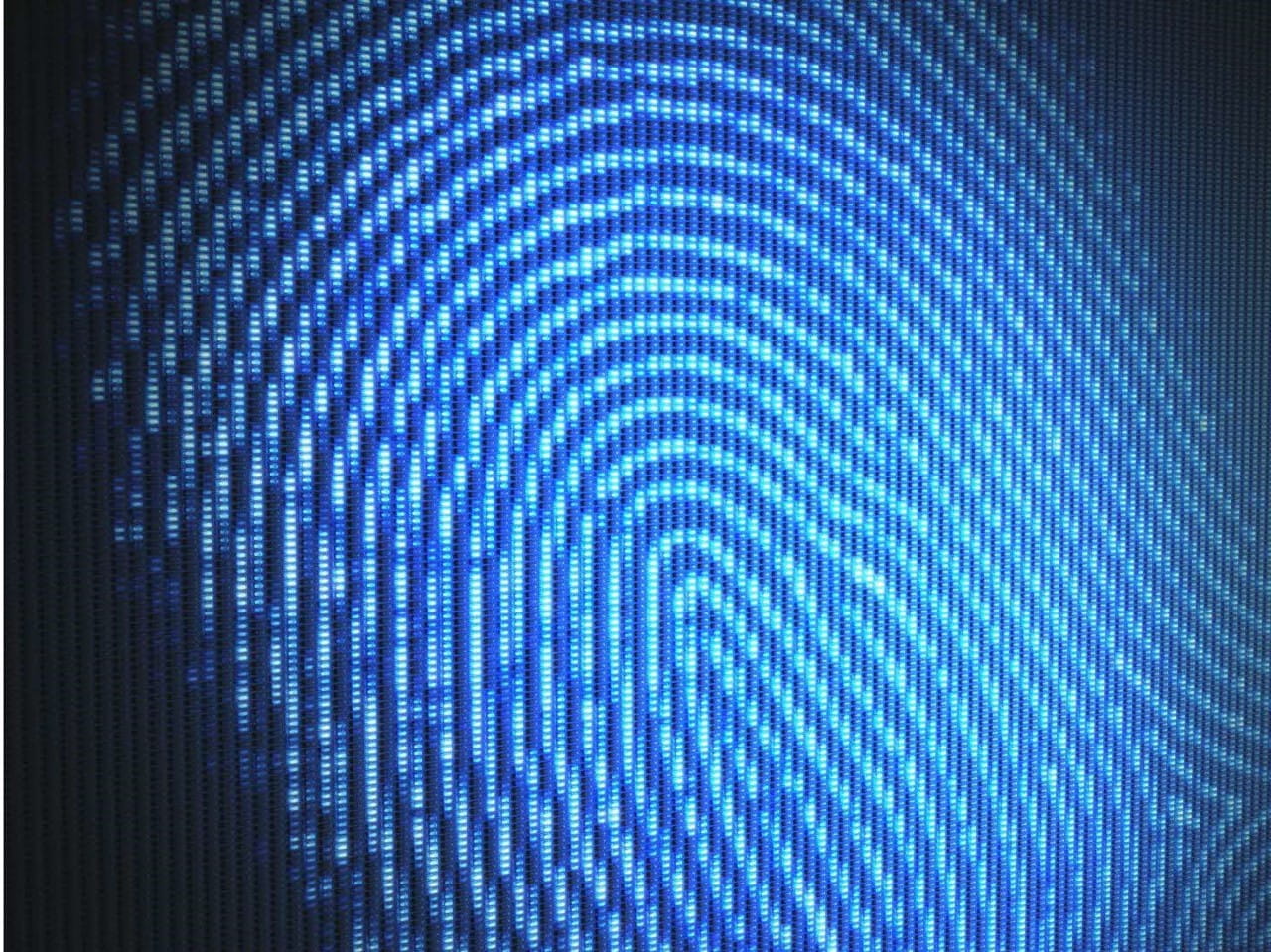 In early digital methods used to support ridge counting, a digital image of a fingerprint is counted and analysed one tiny square, or pixel, at a time. (Photo: Canva)
One fingerprint, two approaches
Ridge counting, while detailed, can be a slow and tedious method to measure fingerprint features. It also requires specialised expertise – which is why it’s no surprise that there’s interest in automating the process.
Advances in computing technology today have paved the way for a sophisticated data science approach, with one of them utilising AI – specifically, convolutional neural networks (CNNs).
What’s a CNN?
CNNs are a type of artificial neural network in machine learning, designed to analyse visual data, like photos, scans or in this case, fingerprint images. It relies on large datasets to learn sex-related fingerprint patterns, and the more images it sees, the better it can recognise subtle differences between male and female prints, or damage and noise within a print.
It does so by abstracting pixels of a fingerprint image into a series of mathematical representations, which differ significantly between sexes. Beyond ridge density, the model can also make use of other features such as fingerprint size and sweat pores.
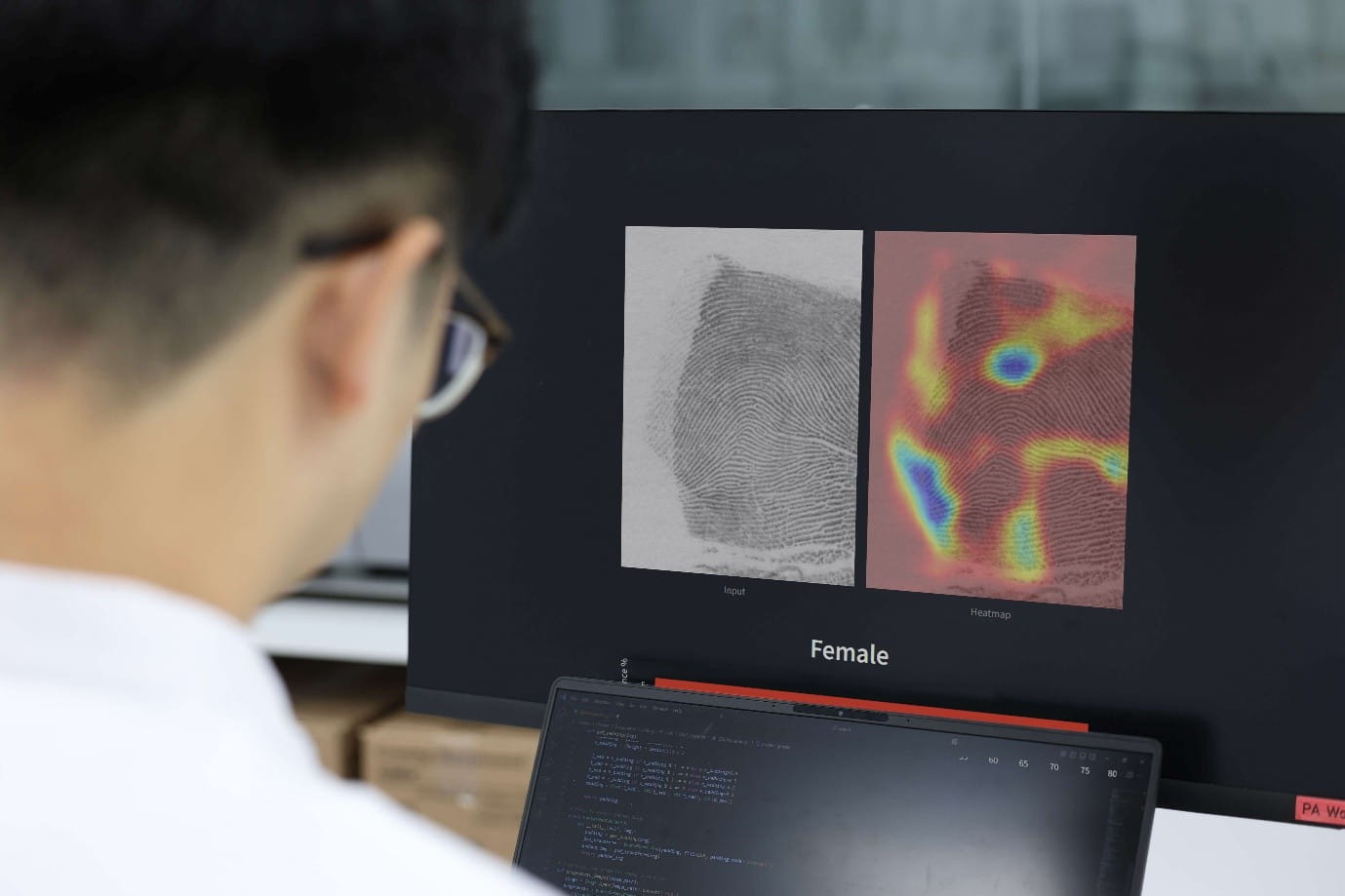 Chester Lim has poured months of research into developing a CNN-powered tool for the Home Team. (Photo: HTX/Janna Giam)
But smart as they may be, CNNs are not foolproof. Academic studies have shown that such models can wind up analysing images based on illogical reasonings.
An example? In an academic study popularised in 2016, a team of researchers developed a CNN model that could distinguish between images of huskies and wolves with high accuracy. However, the model didn’t base its decisions on the animals’ features.
Rather, its decision was based on whether the image contained snow – as wolves are often photographed against snowy backdrops.
As such, Chester said that the most ideal approach would be a marriage of the traditional and hi-tech approaches.
Science in action
With this in mind, Chester and his team at HTX’s FIRST (Forensic Innovation and Research for Strategic Transformation) Lab have employed machine learning techniques to develop a CNN-powered fingerprint analysis tool for the Home Team’s forensic investigation needs.
The tool can currently predict the biological sex of an individual though a clean fingerprint source with up to 82 per cent accuracy.
Why is this piece of tech more reliable than its counterparts?
Because it depends on “explainable AI techniques”, which articulates to the user how and why the model came to a particular decision. With the use of explainable AI, the team gets to vet the model’s decision-making process and ensure biases are not present.
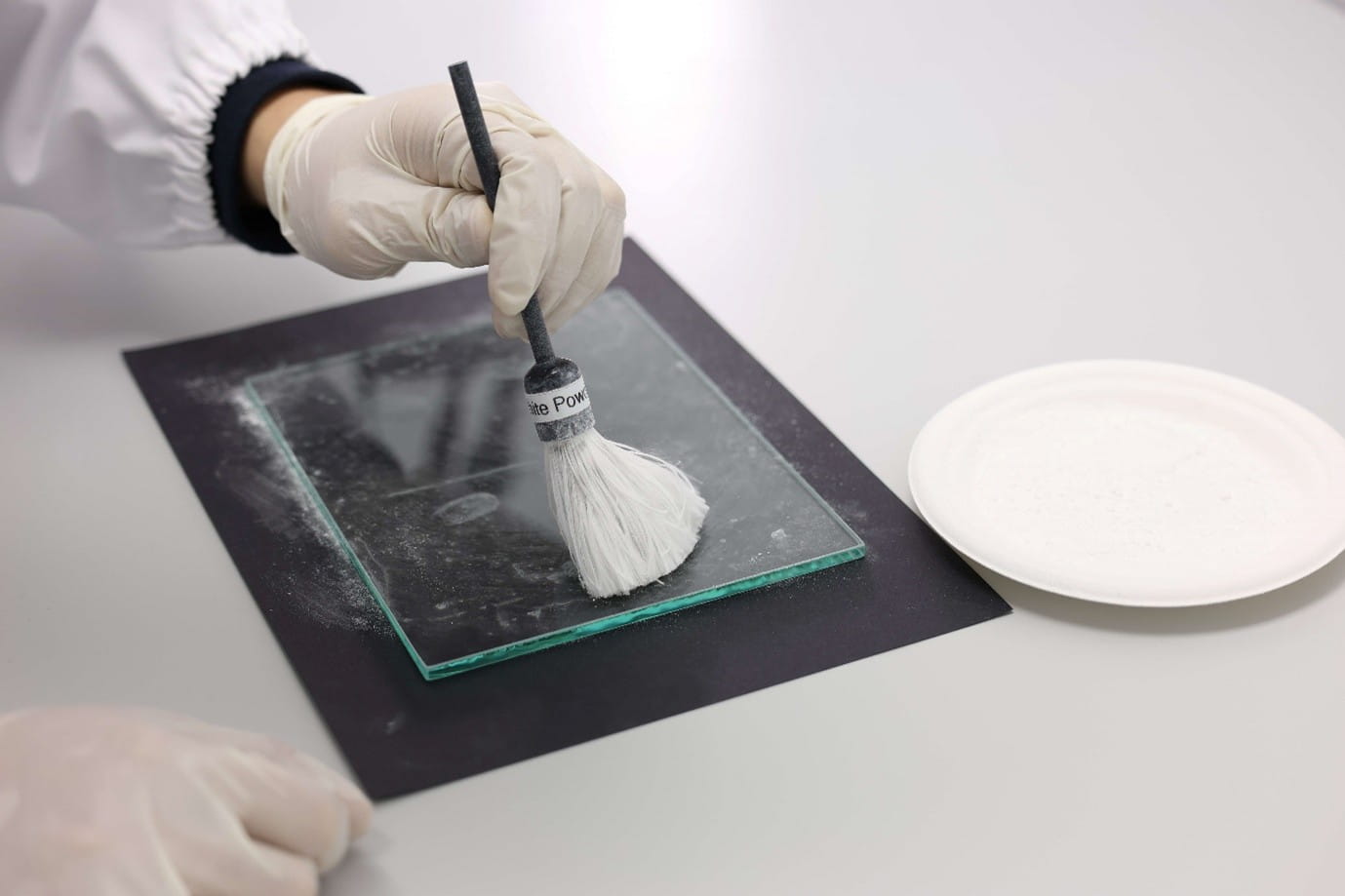 Fingerprints collected at crime scenes are often far from clean and pristine. (Photo: HTX/Janna Giam)
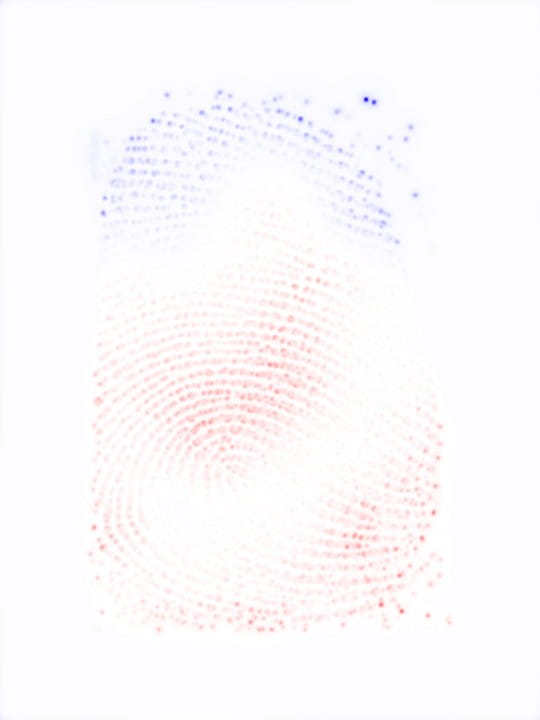 In one explainable AI technique (Concept Relevance Propagation), the model is able to display a specific layer which represents ridge density, and highlight in red areas where the density is higher. (Screenshot: HTX/Chester Lim)
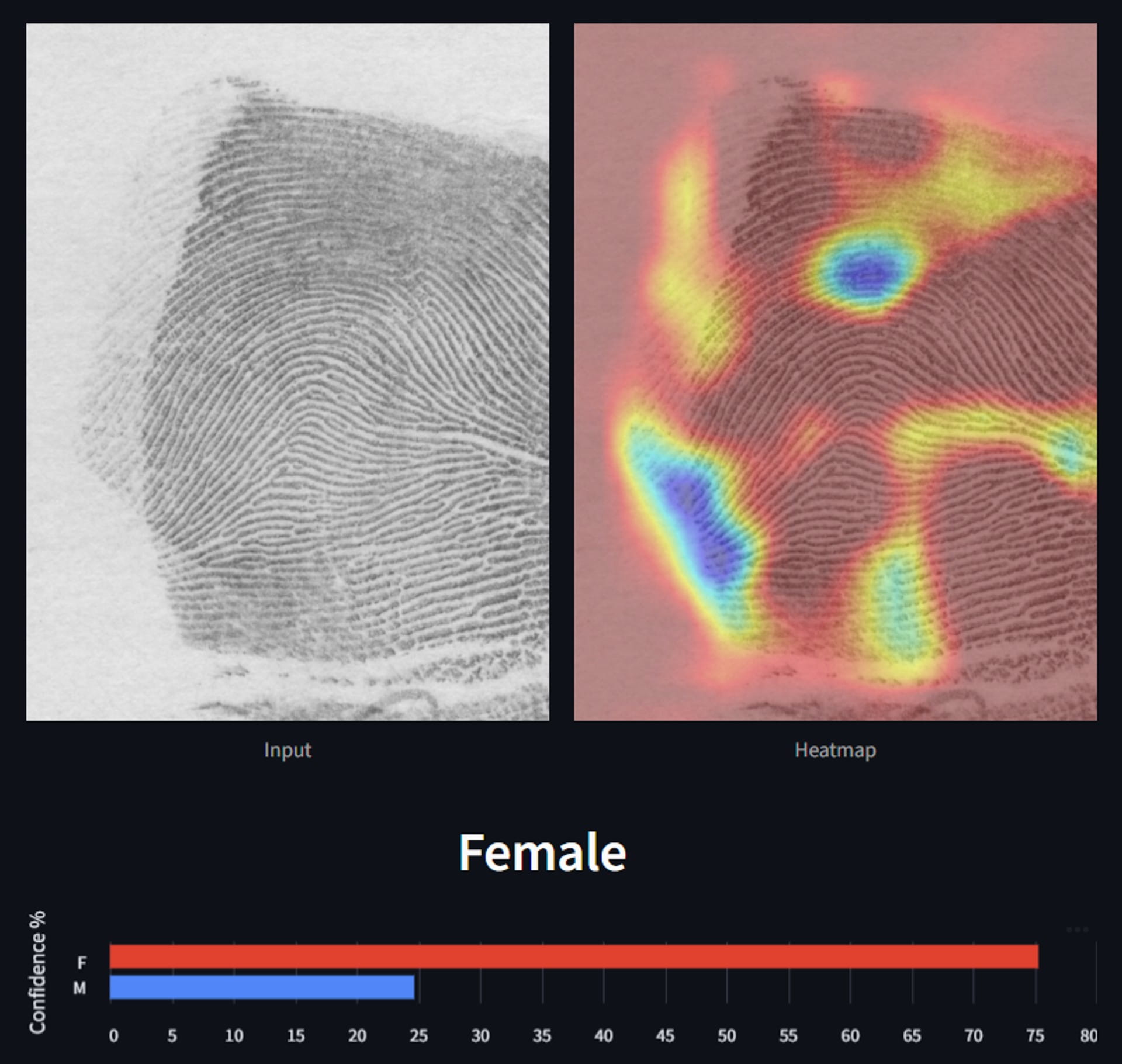 The model can also highlight specific areas of a fingerprint image which it pays attention to when attempting to predict the sex of the source. Red areas show how the model looks at clear fingerprint ridges and size, while blue areas show what the model avoids in its decision making, which could mean smudges, faint ridges, or cuts are present on the print. (Screenshot: HTX/Chester Lim)
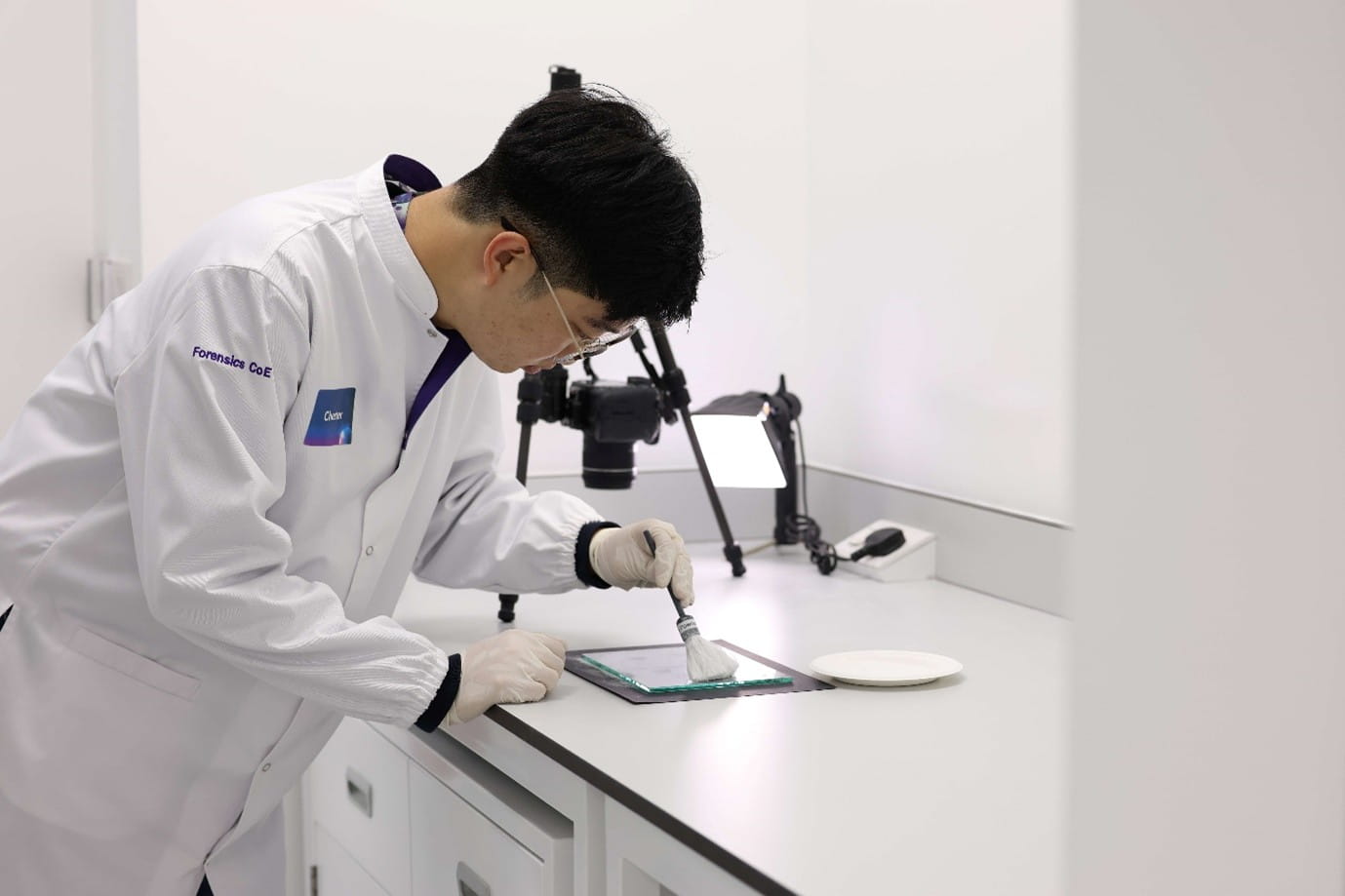 At HTX’s FIRST Lab, Chester is seen dusting a fingerprint sample that will help train the AI model. (Photo: HTX/Janna Giam)
Eventually, the goal is to deliver this advanced technological capability to the Home Team.
The team is also working to collect degraded fingerprint samples from the local population in Singapore to train the model on partial prints, which are more representative of prints found at crime scenes.
“Moving forward, we aim to provide a vital starting point for investigators to gather quick leads,” Chester shared.
“I'm hopeful that this key innovation will mark a step forward in helping the Home Team’s investigators identify persons of interest and solve crimes more effectively.”