
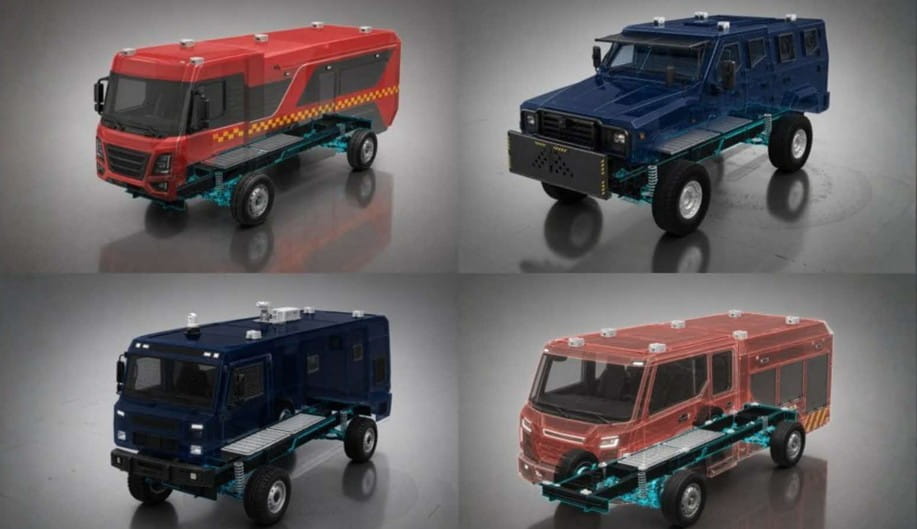
 An impression of how a common vehicle platform and common vetronics architecture can support different emergency response vehicle configurations. (Image: OpenAI)
From ambulances and fire engines to patrol vessels, vehicles are a critical part of Home Team operations. Besides transporting officers, the onboard systems also help with communications, a key element in any mission.
Keeping these platforms ready therefore means much more than just maintaining the vehicles themselves – the technologies within must also be refreshed over time.
But unlike plugging a USB device into a laptop, adding a new system to a vehicle is not always straightforward. Why? Because different platforms can have different connections, power requirements and system designs, and this means system upgrades may require additional engineering work that could take up considerable amounts of time.
To address this, HTX engineers are looking to simplify things by using common architecture and standardising key parts of future platforms so new capabilities can be integrated swiftly.
This effort is taking shape through two projects: Common Vessel Architecture for maritime platforms, led by HTX’s Marine Systems Centre of Expertise (CoE), and Common Vetronics Architecture (CVA) and Common Vehicle Platform (CVP) for land vehicles, led by HTX’s Vehicle & Weapon Systems CoE.
At sea: Common Vessel Architecture
On the maritime front, HTX is developing common designs across three main vessel classes and standardising key operating areas such as a vessel’s bridge and sensors array, while allowing each vessel class to remain tailored to its specific role.
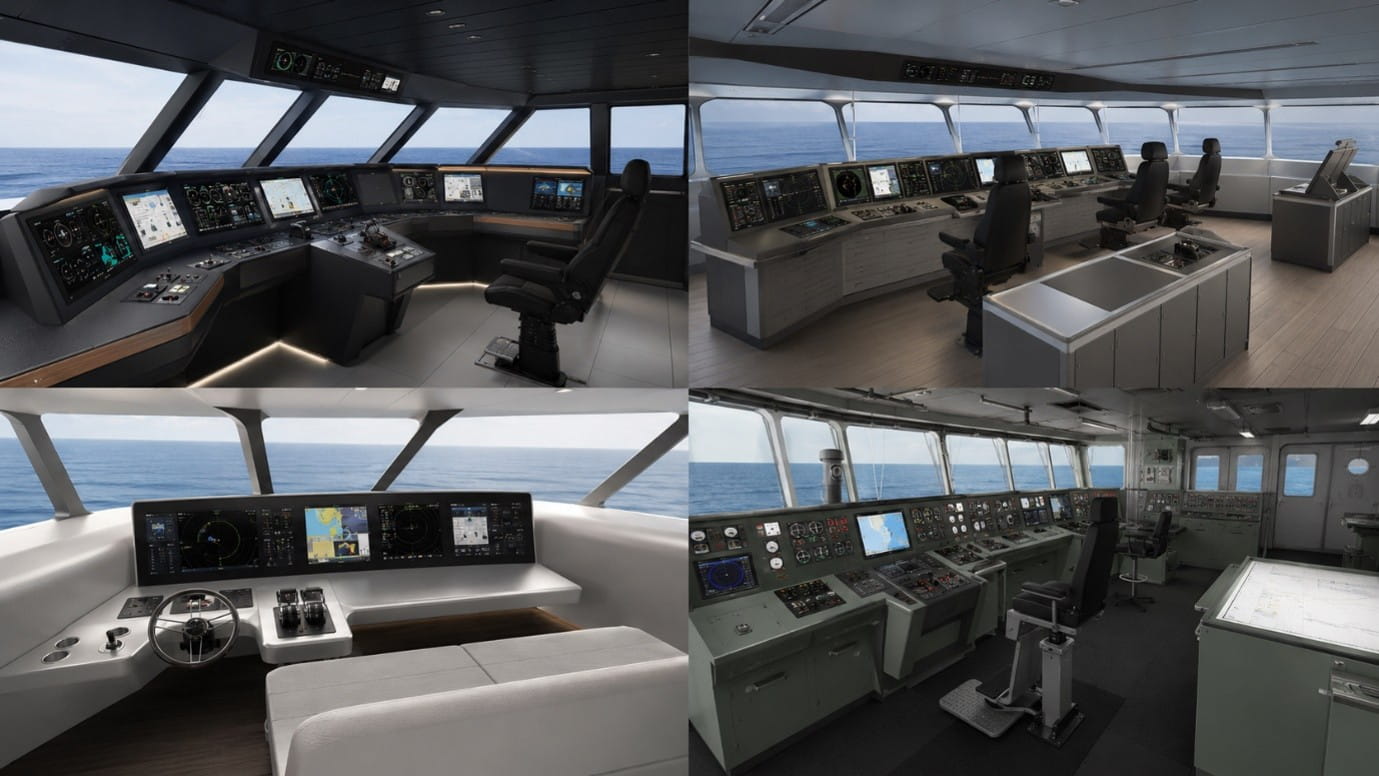 3D renderings of various bridge designs. (Image: OpenAI)
For marine vessels, new systems need to be carefully balanced against factors such as stability, available space, power supply, and integration with existing onboard systems. As such, it is important to consider future upgrades at the design stage, including providing sufficient space and capacity for new capabilities that may be introduced over the vessel’s service life.
According to Chee Yu Ming, Deputy Director, Marine Systems CoE, having similar bridge designs means officers can be trained in just one common platform instead of multiple different ones.
Besides saving on training costs, this approach also serves to optimise manpower and provide much more flexibility in deployments as officers will no longer be bound to the specific vessel class that they’ve been trained in.
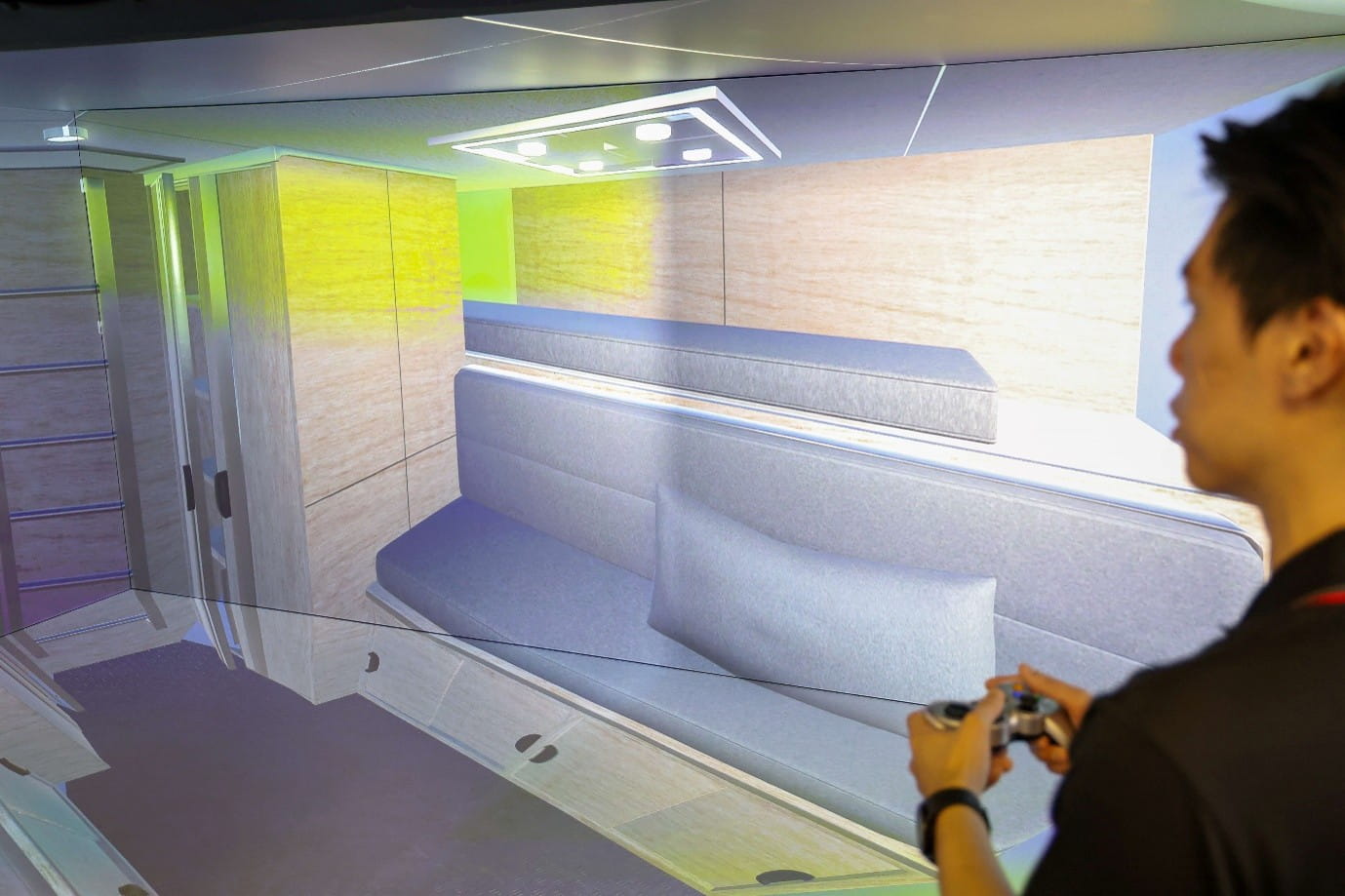 A 3D-rendered view of a boat’s interior showcased at the opening of MAST Lab. (Photo: HTX/Liv Hana Roberts)
Key to HTX’s Common Vessel Architecture project is the newly opened Marine Advanced Systems and Technology Laboratory (MAST Lab), where engineers can rapidly prototype and test ideas digitally, allowing them to refine vessel designs and assess factors such as speed and seakeeping earlier in the development process before implementing them onboard.
On land: Common Vetronics Architecture and Common Vehicle Platform
On land, HTX is studying whether future Home Team vehicles, from SUVs to larger tactical vehicles and fire engines, can be consolidated into three common platforms – heavy, medium, and lightweight. Each vehicle would remain tailored to its operational role, while its onboard systems would connect, draw power and exchange data in a standardised way.
One part of this effort is VWS CoE’s Common Vehicle Platform (CVP). Instead of developing a bespoke chassis for every new vehicle project, the Home Team could use common chassis designs for different weight classes. Building on these established designs could shorten the development of future vehicles.
This approach will become increasingly important as the Home Team shifts towards electric vehicles. This is because suitable commercial right-hand-drive electric platforms are limited, particularly for heavier vehicles. Furthermore, the Home Team’s relatively small fleet size makes it challenging for manufacturers to customise existing platforms to its requirements.
The CVP would allow these needs to be addressed from the outset, supporting new operational capabilities and national sustainability efforts. Having fewer common platform types would also simplify maintenance by allowing spare parts and technical knowledge to be shared across vehicles.
Common Vetronics Architecture
While the CVP focuses on the vehicle’s chassis, the Common Vetronics Architecture (CVA) focuses on its electronic systems like sensors, onboard computers and smart crew station displays within the cabin.
“Vetronics is akin to a vehicle’s nervous system, much like the network of nerves connecting different parts of the human body,” explained Chan Ka Keong, Lead Engineer, Vehicle & Weapon Systems CoE (VWS).
“The CVA provides a standardised way for mission systems to connect, draw power and exchange data, making it easier to integrate new capabilities as technology evolves. For the Home Team, this helps our fleets stay current for longer while reducing the need for re-engineering.
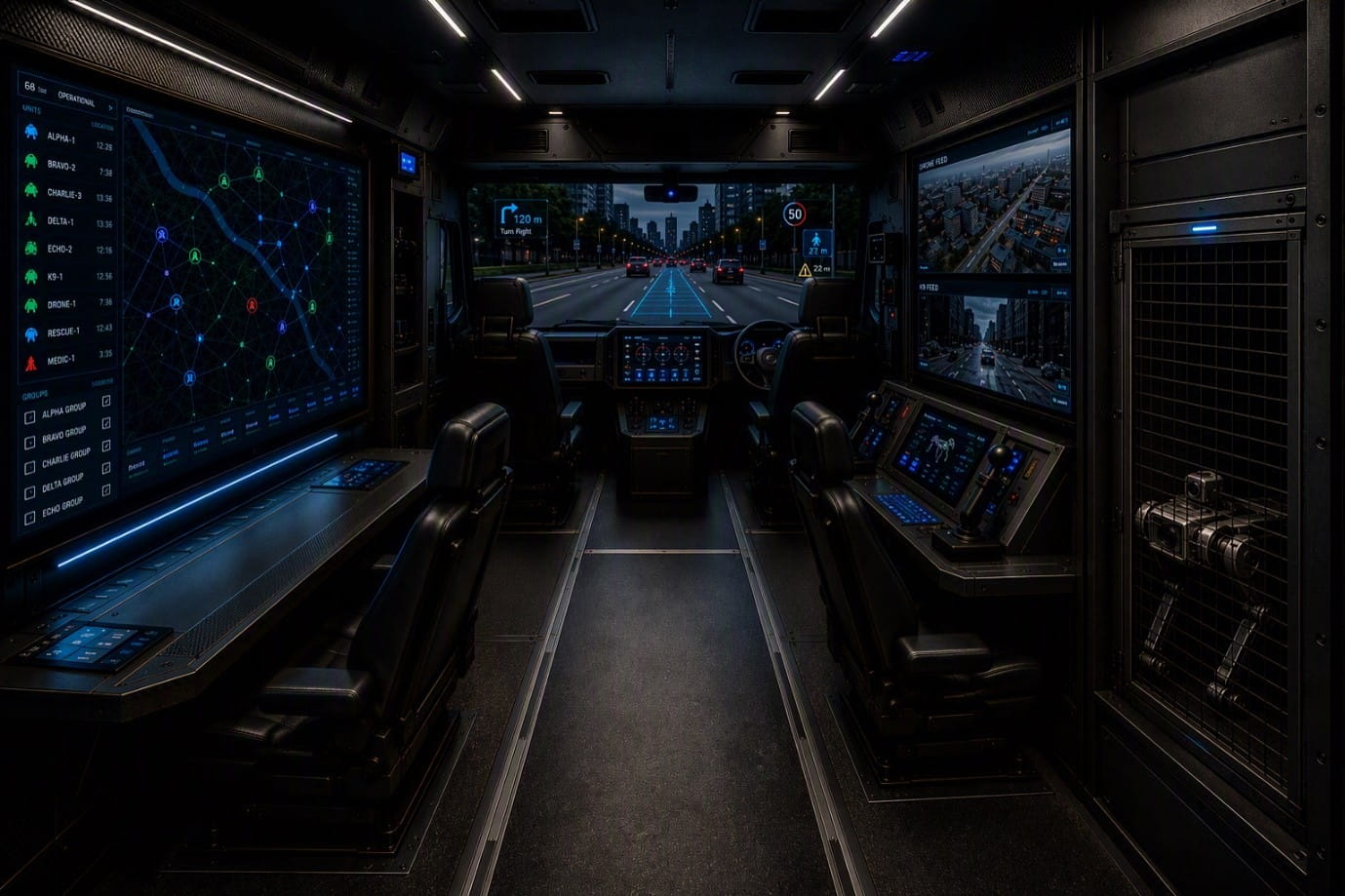 An impression of what a smart crew station could look like in future Home Team vehicles. (Image: OpenAI)
The challenge today is that vetronics are often designed differently for each vehicle. This means that adding a new device can require extensive rewiring, re-engineering or vehicle modifications.
By using common interfaces and protocols, the CVA would allow for the easy integration of compatible devices, hence allowing upgrades to be futureproof while simultaneously maintaining cybersecurity resilience for new upgrades. This in turn allows the Home Team’s vehicle fleet to adopt new technology quickly while remaining capable and secure throughout the length of their service.
Across land and sea, common architecture gives the Home Team a more efficient way to design, validate and upgrade its future fleet, reducing developmental efforts and streamlining life cycle costs.
For Home Team Departments, this means officers can train across platforms more easily, supported by familiar controls, smarter crew stations and more consistent bridge layouts. During operations, that familiarity can reduce cognitive load and help officers focus on the mission at hand.