
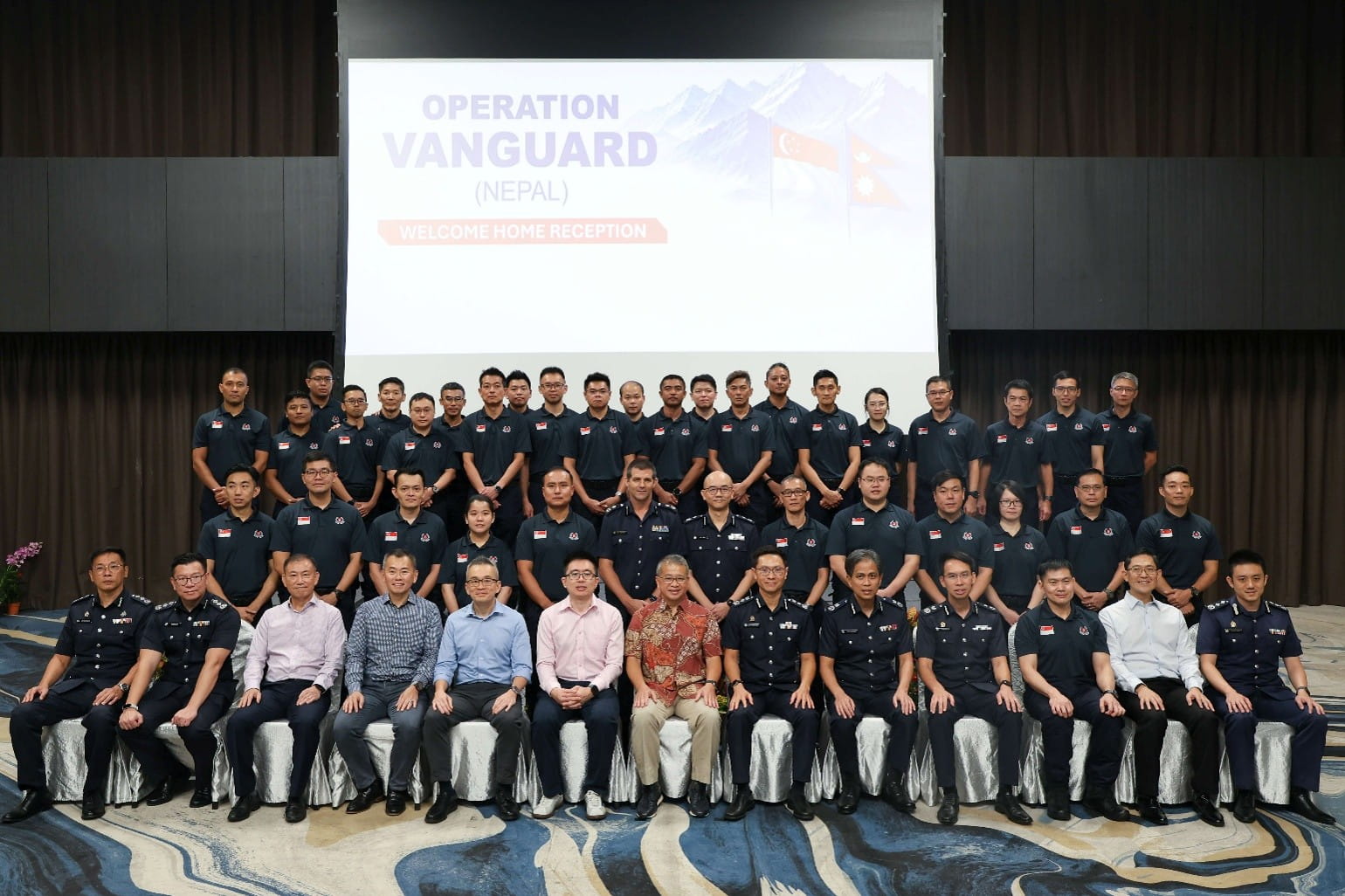
 (Photo: HTX/Alywin Chew)
The quiet Operation Vanguard send-off ceremony for the batch of Home Team officers bound for Nepal on September 4 felt crowded, but with emotions, not people.
“I guess you could say it’s a mixed bag of feelings,” said Yong Heng Wei, Officer in Charge, Fingerprint Examination Team from HTX’s Integrated Forensics Service (IFS).
“On one hand, I’m raring to go to Nepal and do my part to help. On the other hand, I’ve got to leave my family behind.”
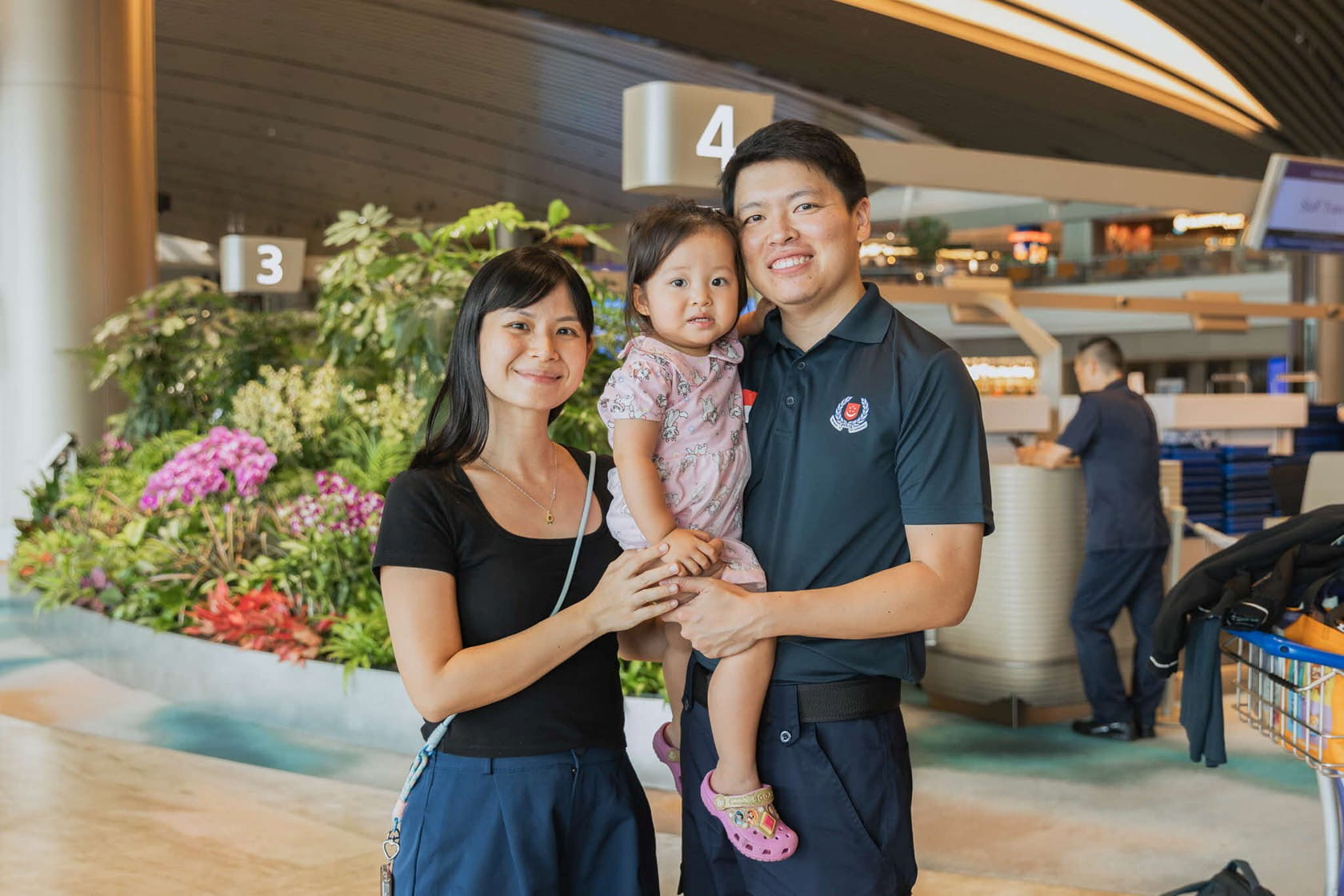 Heng Wei shared that it was a hectic two days of preparing for the trip. Besides having to attend briefings and handle logistical and administrative work matters, he also had to make arrangements to ensure his pregnant wife, daughter and dog were taken care of. (Photo: Singapore Police Force)
Heng Wei’s IFS colleague, Senior Fingerprint Specialist Tay Kai Xuan, echoed the same sentiment.
“I’d be lying if I said I wasn’t nervous. But I’m also really excited,” said Kai Xuan. “After all, it’s not every day we get to go on such missions. I think I’m very privileged to be able to help with such a meaningful cause.”
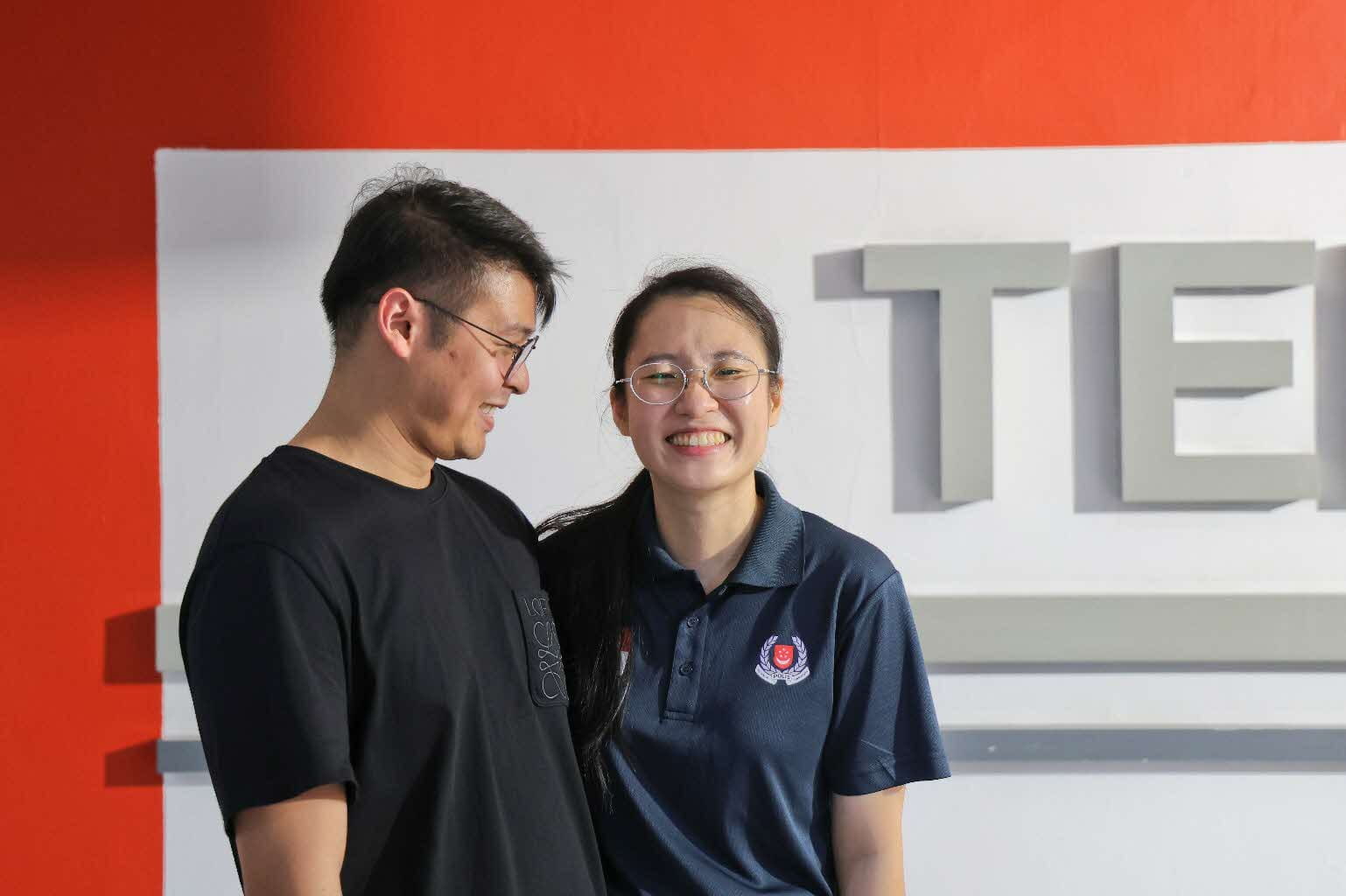 Kai Xuan and her husband. The couple will be having their Chinese wedding banquet in October. (Photo: HTX/Alywin Chew)
More than 1,300 people have died in the aftermath of devastating floods in Nepal. The floods took place after a glacial and rock collapse along the China-Nepal border on August 26. On September 1, the first batch of 19 officers from the Singapore Police Force (SPF) and the Health Sciences Authority (HSA) set off for Nepal to aid disaster relief efforts.
The two Xponents, who departed for Nepal on September 4 after the send-off ceremony, helped with Disaster Victim Identification (DVI) efforts alongside other forensic experts from countries around the world, including South Korea, China and India.
DVI efforts include collecting evidence that would lead to the identification of victims.
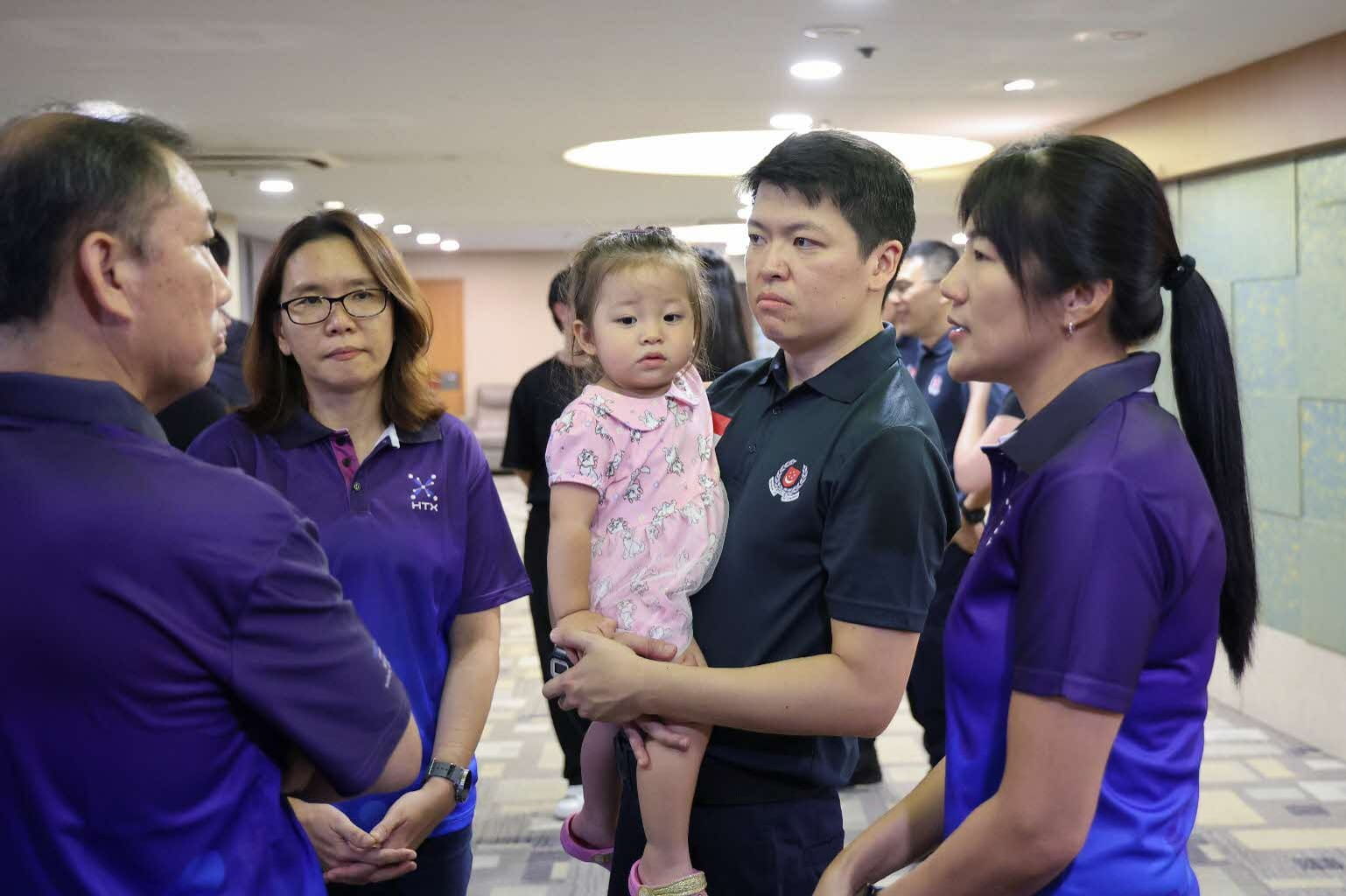 Heng Wei speaking to HTX Deputy Chief Executive (Operations) Chen Yeang Tat (left), Director IFS Teo Yee Lay (right) and Chan Hui Mei, Head, Forensics 3, before departing for Nepal. (Photo: HTX/Alywin Chew)
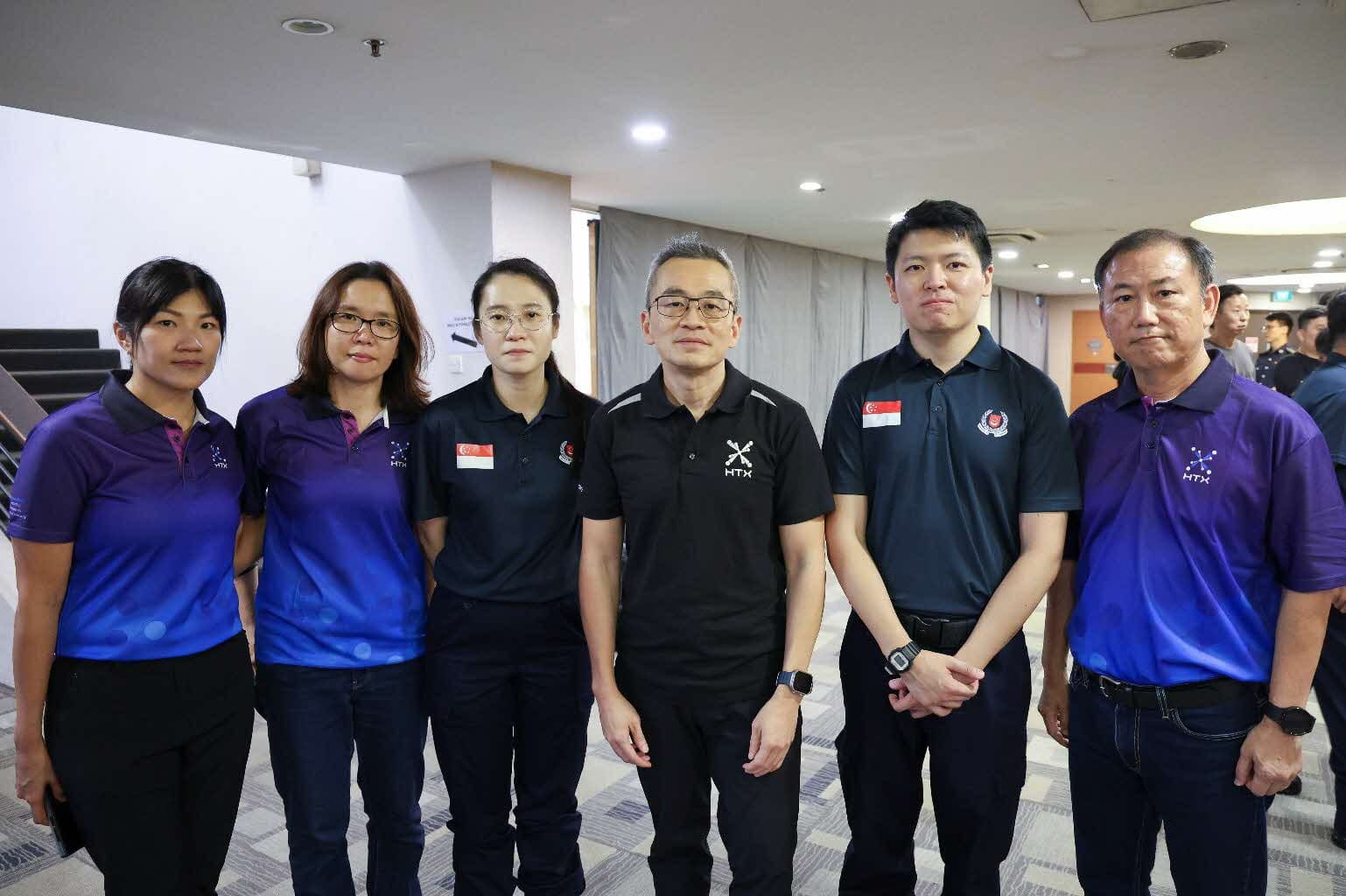 HTX Chief Executive Chan Tsan (3rd from right) and DCE Yeang Tat (right) were at the send-off ceremony to wish Heng Wei and Kai Xuan a safe journey. (Photo: HTX/Alywin Chew)
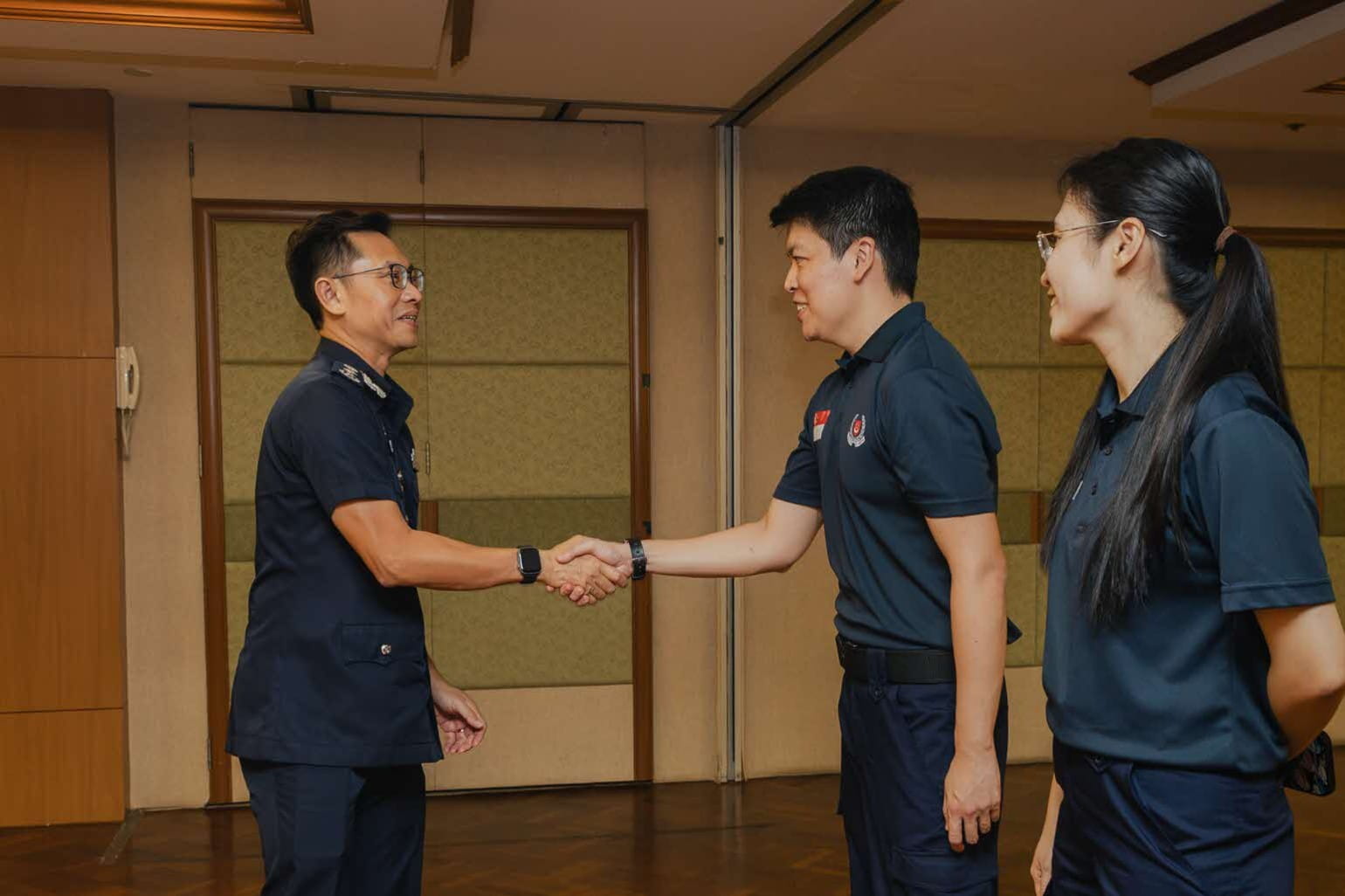 Heng Wei shakes hands with Commissioner of Police How Kwang Hwee (left) before departing for Nepal. (Photo: Singapore Police Force)
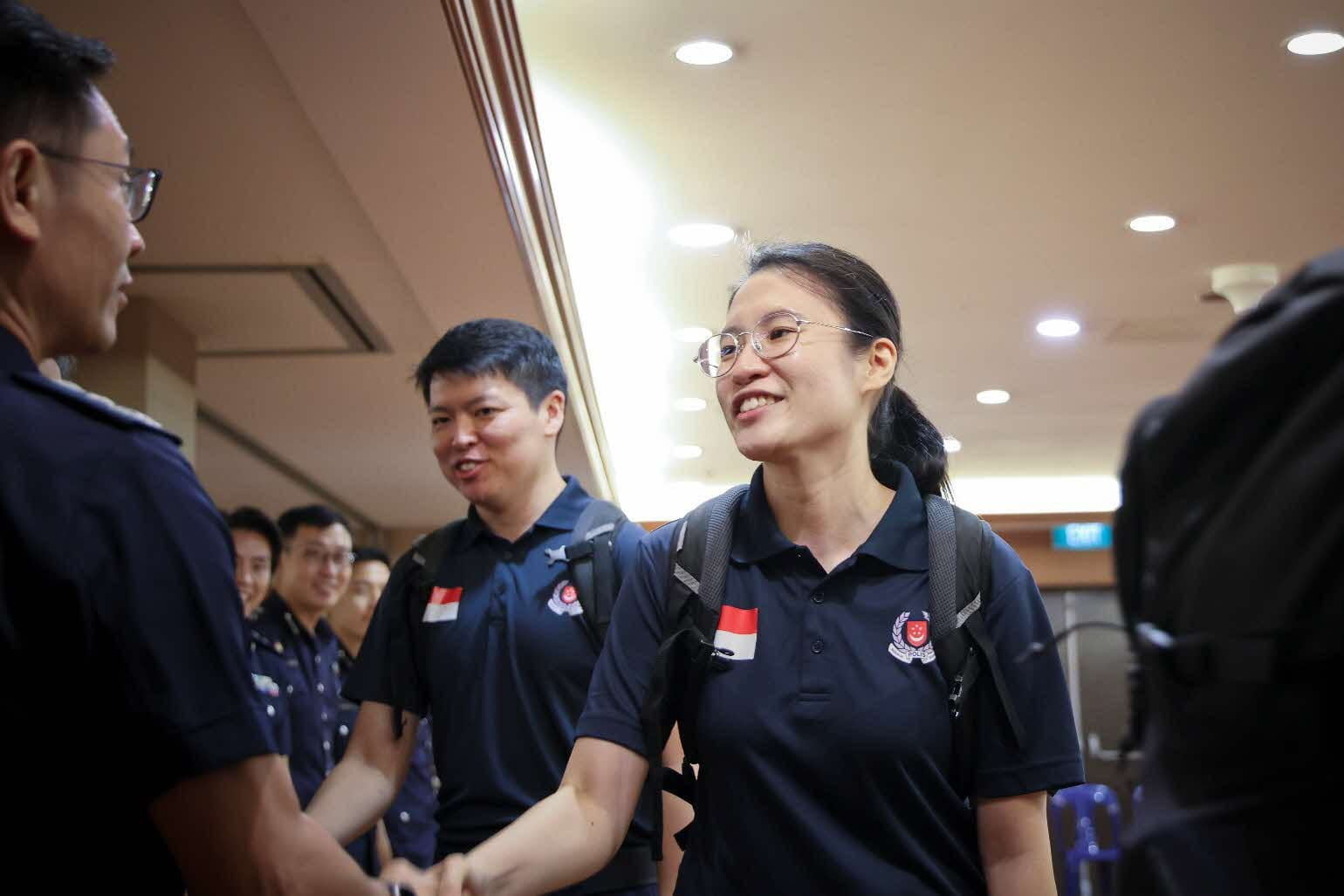 Kai Xuan shakes hands with Commissioner of Police How Kwang Hwee before departing for Nepal. (Photo: HTX/Alywin Chew)
For Kai Xuan, the timing of the deployment to Nepal was certainly not ideal - she and her husband are currently in the thick of preparations for their Chinese wedding banquet in October. The couple have also been busy dealing with home renovations.
But when the call-up was issued, there was not a sliver of doubt in her mind.
“When the disaster happened, I told my husband that there was a chance I’d get deployed. I also told him that I would definitely want to go lend a hand if given the chance,” she said.
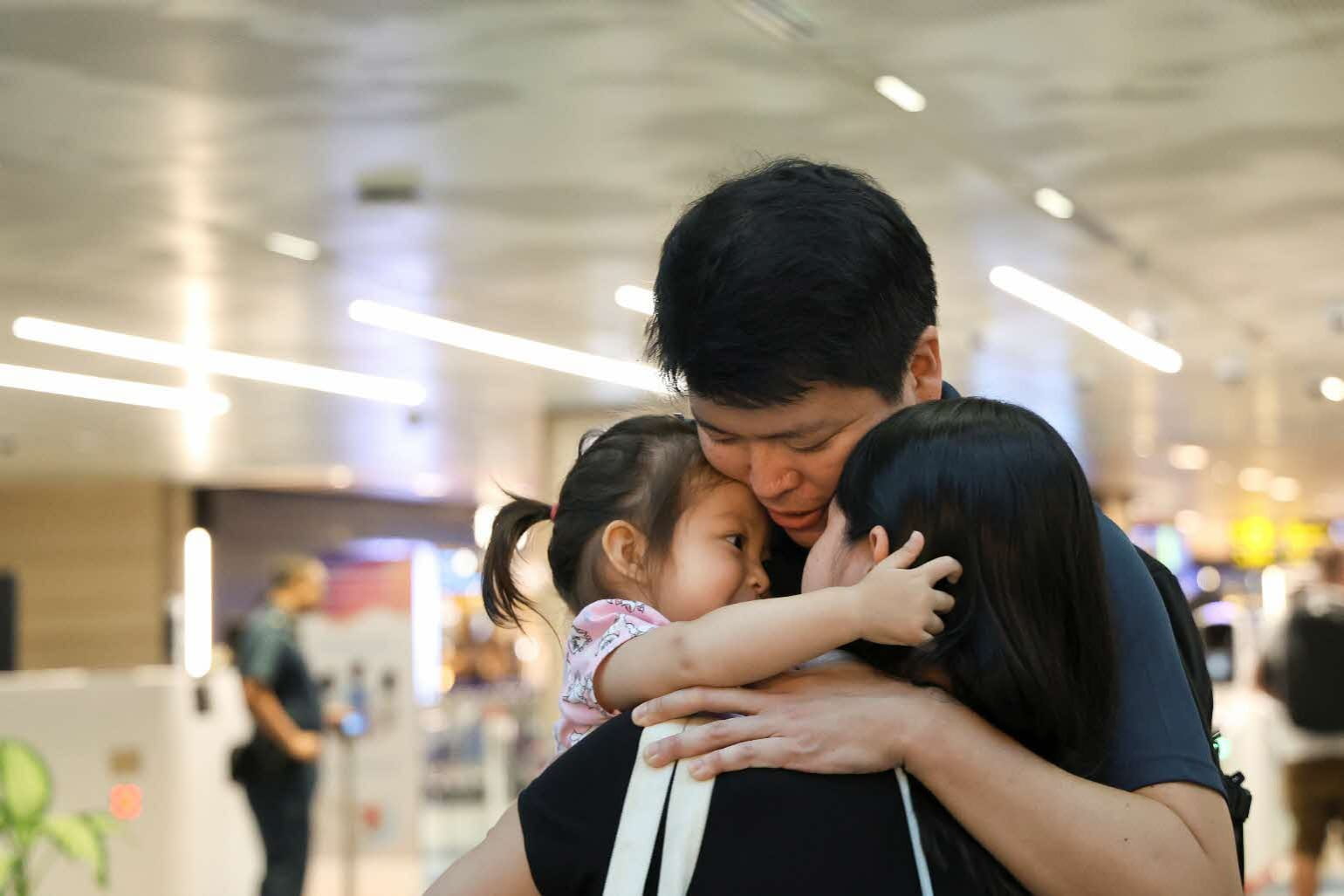 Heng Wei bids his family goodbye before making his way through the immigration clearance gates. (Photo: HTX/Alywin Chew)
While this may be the maiden overseas deployment for both Xponents, they weren’t headed into the disaster zone blind – the team’s more senior colleagues who had been on overseas deployments before provided a slew of useful tips and helped with mental preparation by showing photos from the past.
“We also spoke with both officers personally to give them a clear understanding of the operating environment and to reassure them that they had the full support of the team throughout the mission,” added Yee Lay.
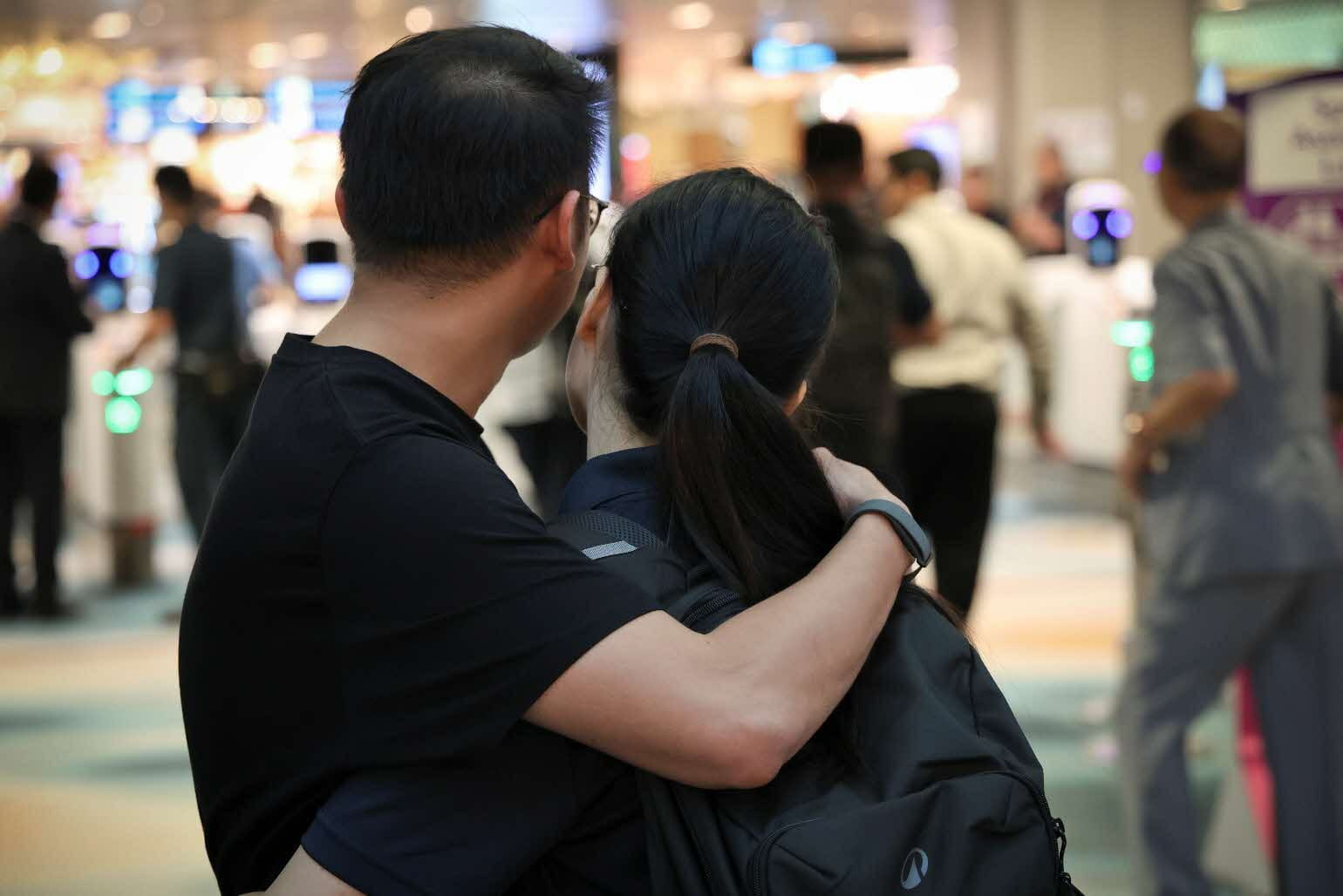 Kai Xuan shares a moment with her husband at the departure area at Changi Airport. (Photo: HTX/Alywin Chew)
Besides having to digest all this information, the two Xponents also had to go for vaccinations, settle logistical and administrative matters at work, attend briefings, as well as tend to their family matters.
When asked if she was worried for her two colleagues, Yee Lay expressed confidence in their abilities.
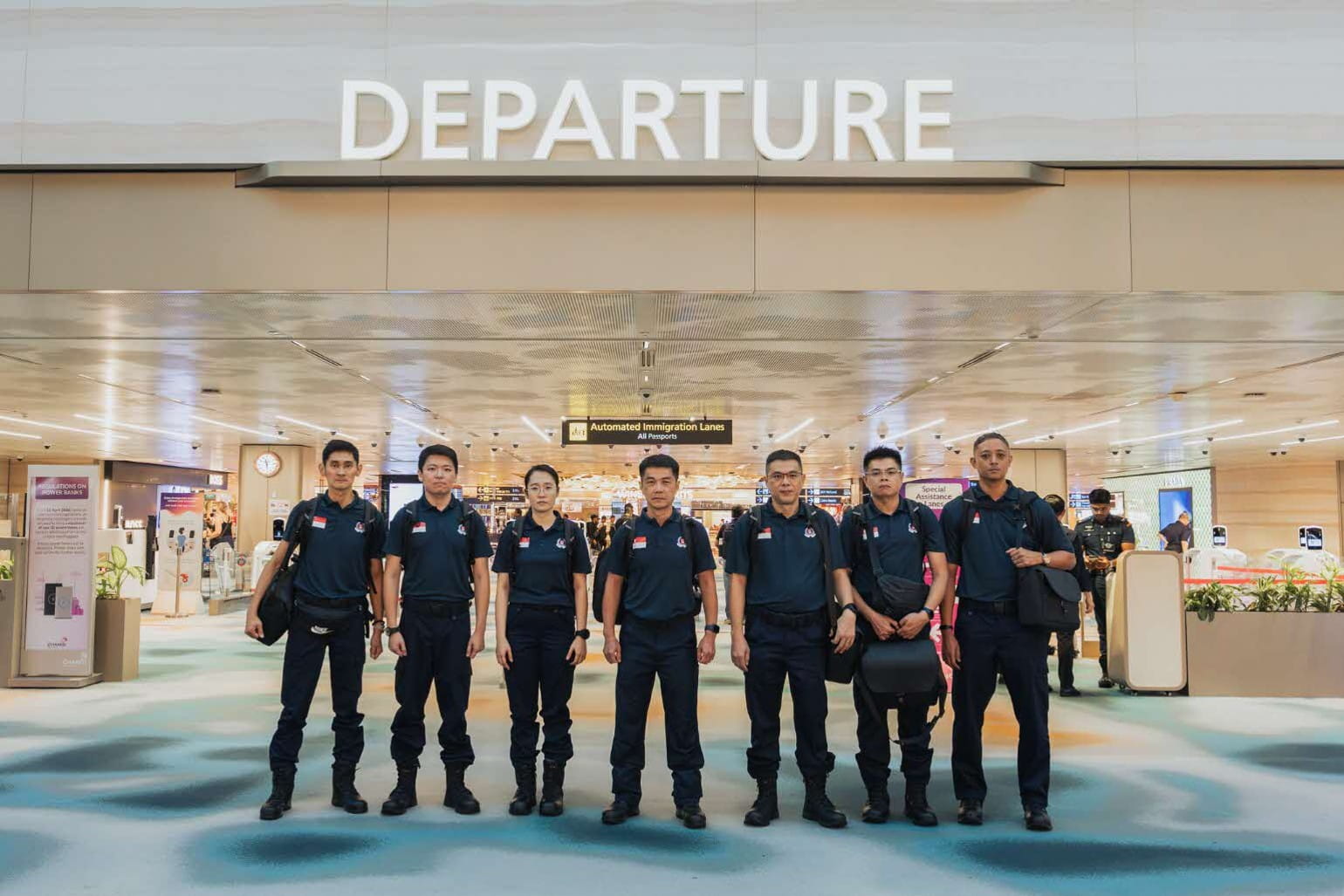 Heng Wei (2nd from left) and Kai Xuan (3rd from left) with their SPF counterparts at the departure gates of Changi Airport on 4 September. (Photo: Singapore Police Force)
“Both officers are well-trained professionals with many years of experience in fingerprint comparison work. Beyond their technical expertise, they have consistently demonstrated professionalism, adaptability, and composure under pressure,” she said.
“These qualities give us every confidence that they will uphold the highest standards of forensic work and make a meaningful contribution during the deployment, even in a challenging and demanding environment.”
As the two Xponents and their counterparts from the SPF made their way past the immigration clearance gates at Changi Airport, the smiles of some family members melted away as tears took their place.
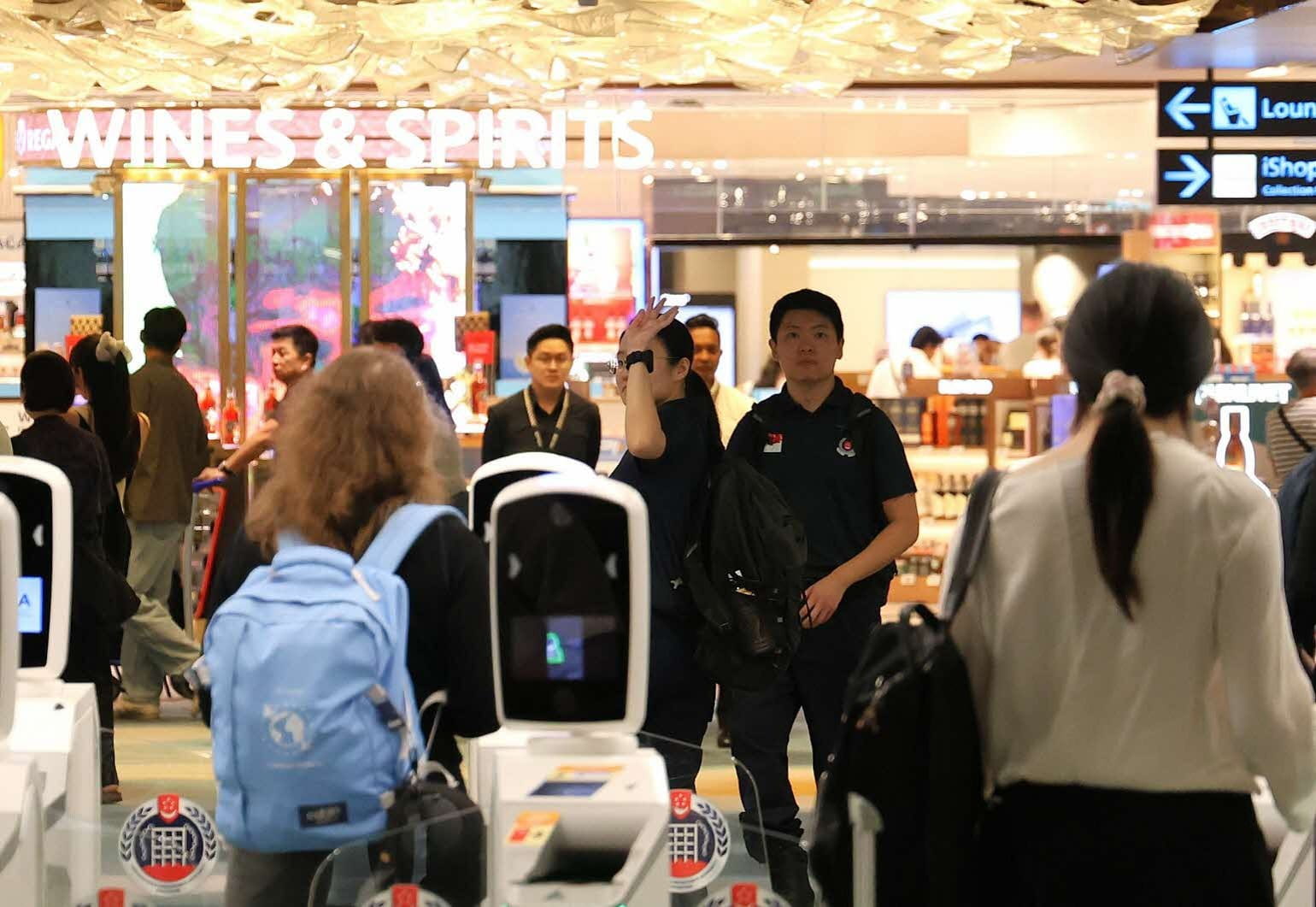 A final wave goodbye. (Photo: HTX/Alywin Chew)
But etched on Heng Wei’s face was a resolute look.
“I’m under no illusion that this mission would be easy, but I’m confident our sense of purpose will see us through,” he said.
“We’ve all been trained for situations like these. We are ready.”
An experience to remember
Kai Xuan and Heng Wei headed to Nepal well prepared to “rough things out” but were pleasantly surprised upon landing in the nation’s capital of Kathmandu.
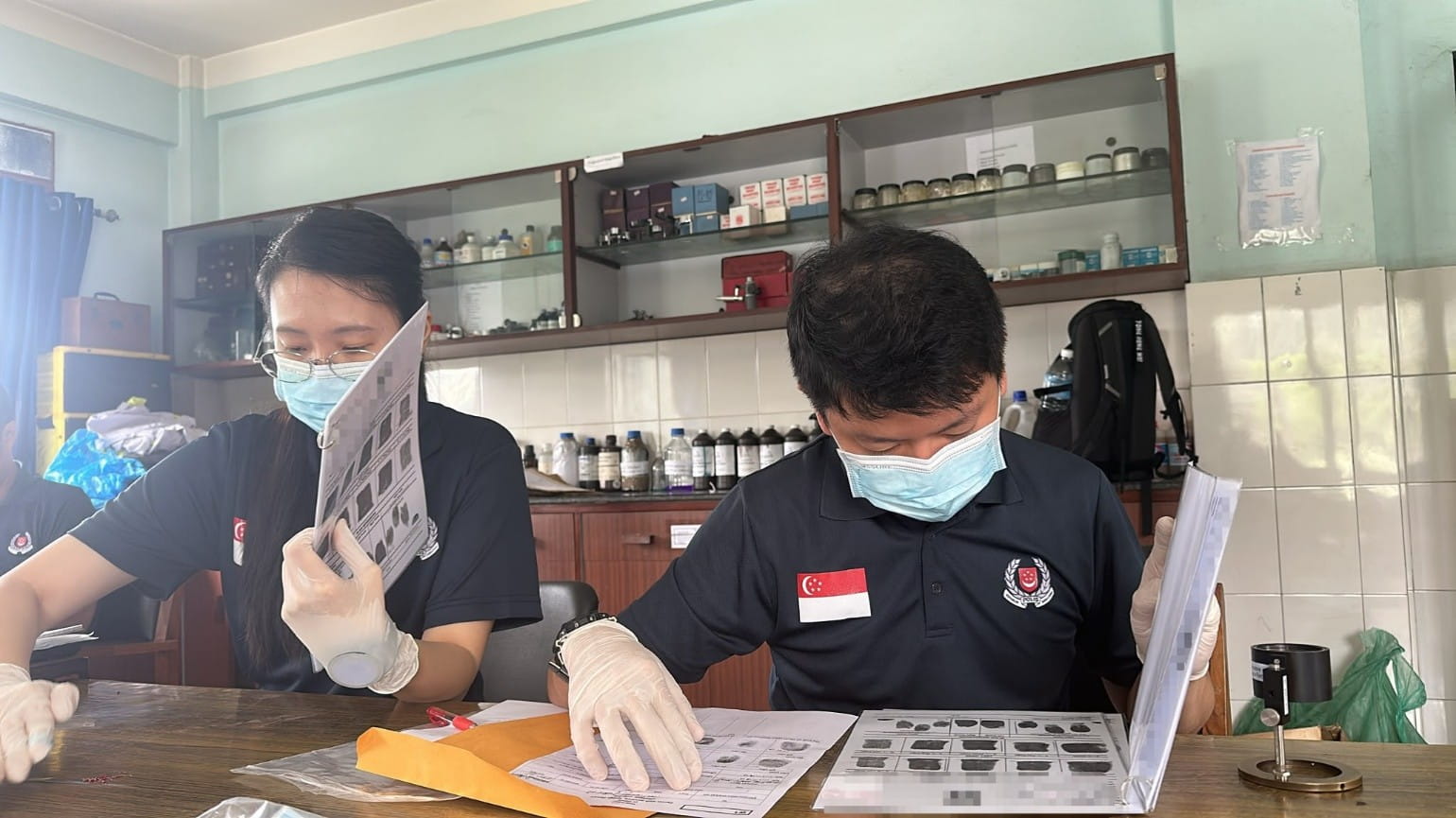 Kai Xuan (left) and Heng Wei hard at work in Nepal. (Photo: Singapore Police Force)
“I was prepared to be sleeping in a tent near the disaster site. I brought a lot of wet wipes because I thought that would be the case,” said Kai Xuan. “But we got to stay in a hotel in Kathmandu instead.”
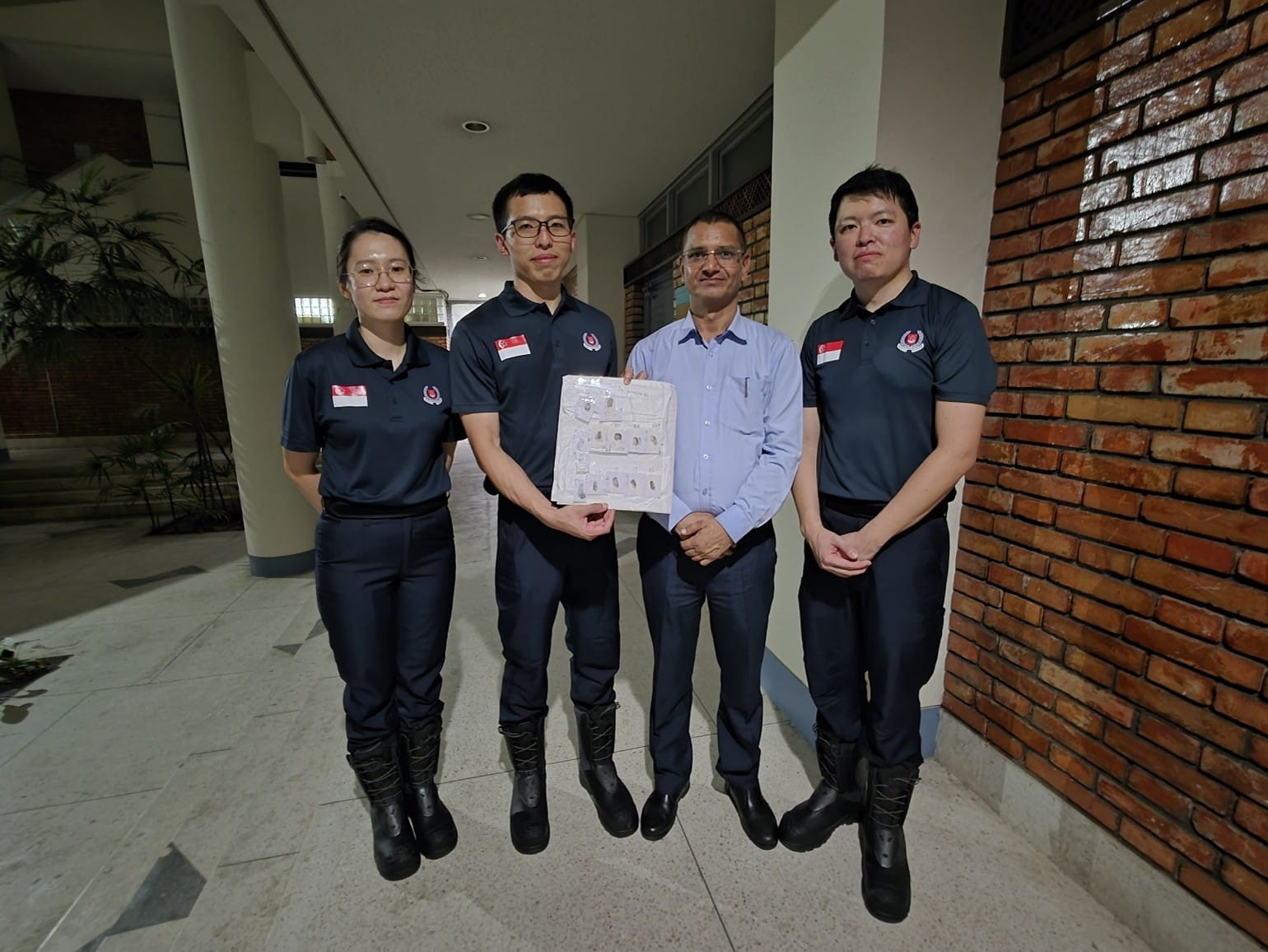 Kai Xuan (left) and Heng Wei (right) with Deputy Superintendent of Police Justin Tan, Overseas Peacekeeping and Relief Force (2nd from left) and SP Pushkar Raj Bhatt, Deputy Chief of Nepal Police Central Forensic Science Laboratory (NPCFSL) in Kathmandu. (Photo: Singapore Police Force)
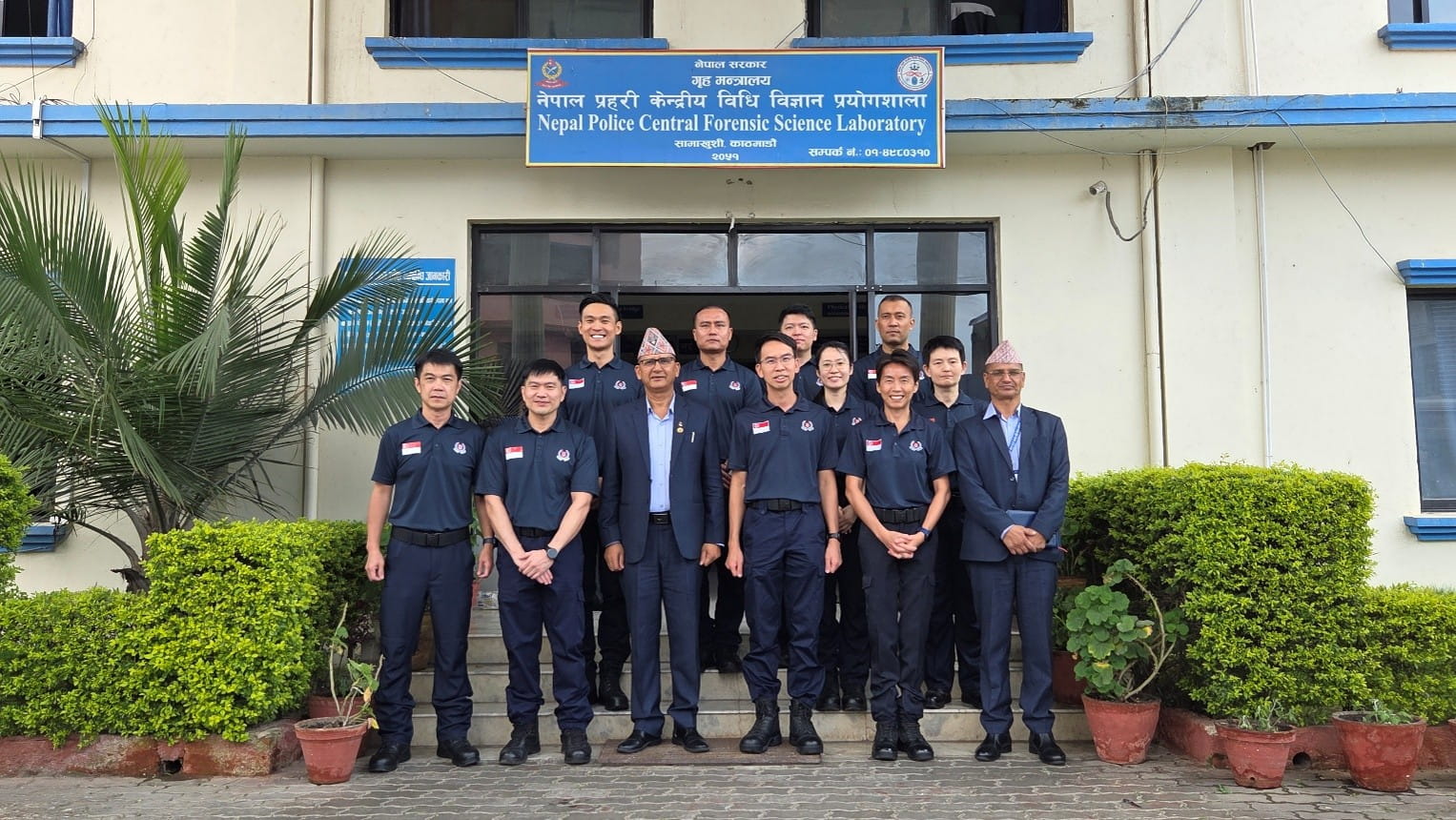 Kai Xuan and Heng Wei with members of the Operation Vanguard contingent, including Deputy Commissioner (Investigation & Intelligence) Zhang Weihan (first row 3rd from right) and 2 Deputy Director, CID, Fanny Koh (first row 2nd from right) and their Nepali counterparts in Kathmandu. (Photo: Singapore Police Force)
Being housed in a hotel didn’t mean the duo were shielded from environmental risks, though – a minor earthquake struck a few days after their arrival, startling Heng Wei as he was getting ready for bed at around 11 pm.
The duo worked every day during their two-week deployment, except for one day when the morgue was closed, helping to lift fingerprints from bodies and comparing them with those in available records. One of the biggest challenges they faced was getting good quality fingerprints due to decomposition. Moreover, the bodies of some victims also came without fingers.
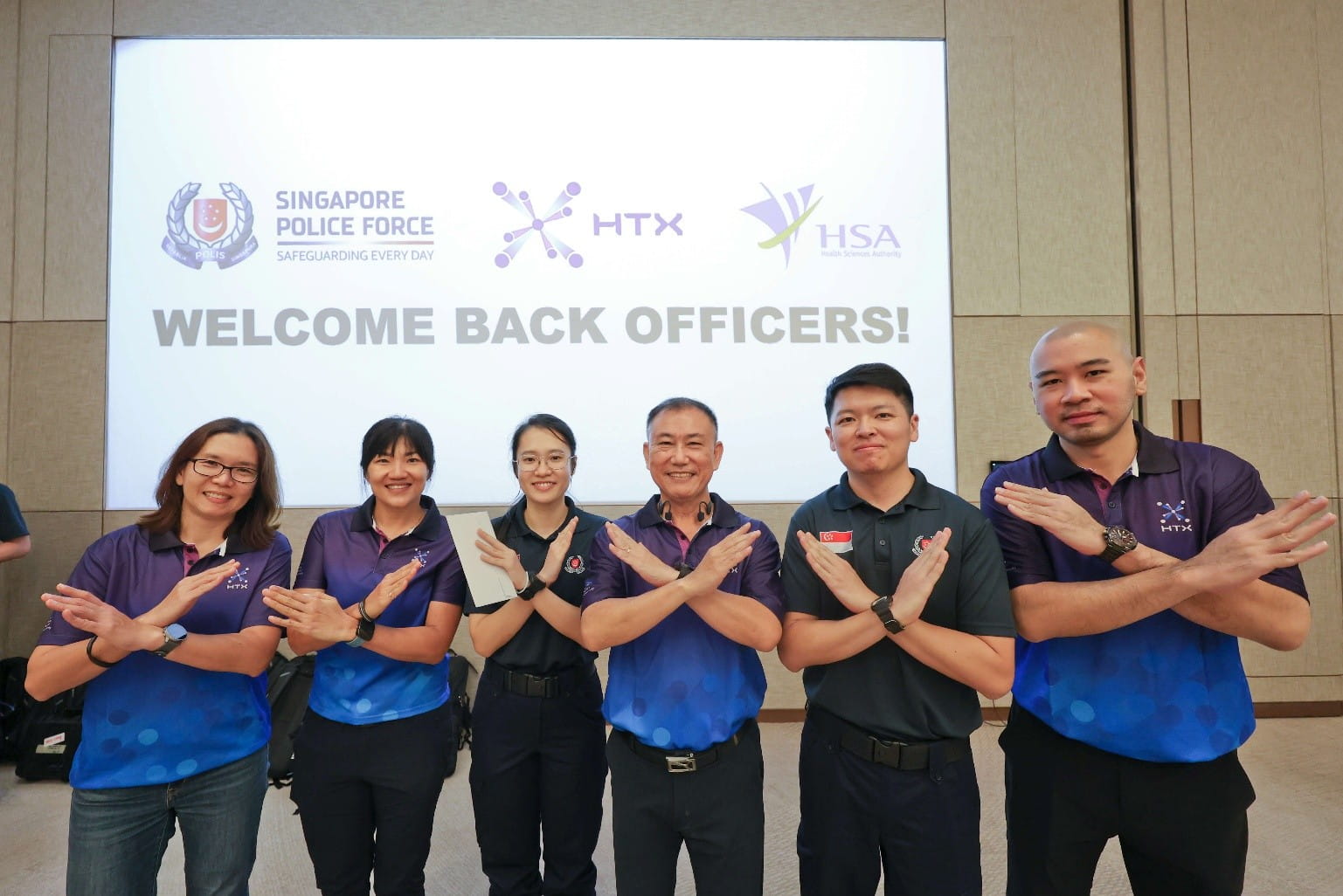 Tired but happy. Kai Xuan and Heng Wei were all smiles even after their red-eye flight back to Singapore on 19 September. (Photo: HTX/Alywin Chew)
One memorable moment from the trip, recalled Heng Wei, stemmed from the hospitable nature of the locals.
“It was touching to the Nepali public coming up to thank members of the contingent when we went out for meals. This, and the great lengths the local government went to in taking care of our needs, said a lot about how hospitable the Nepalis are,” recalled Heng Wei.
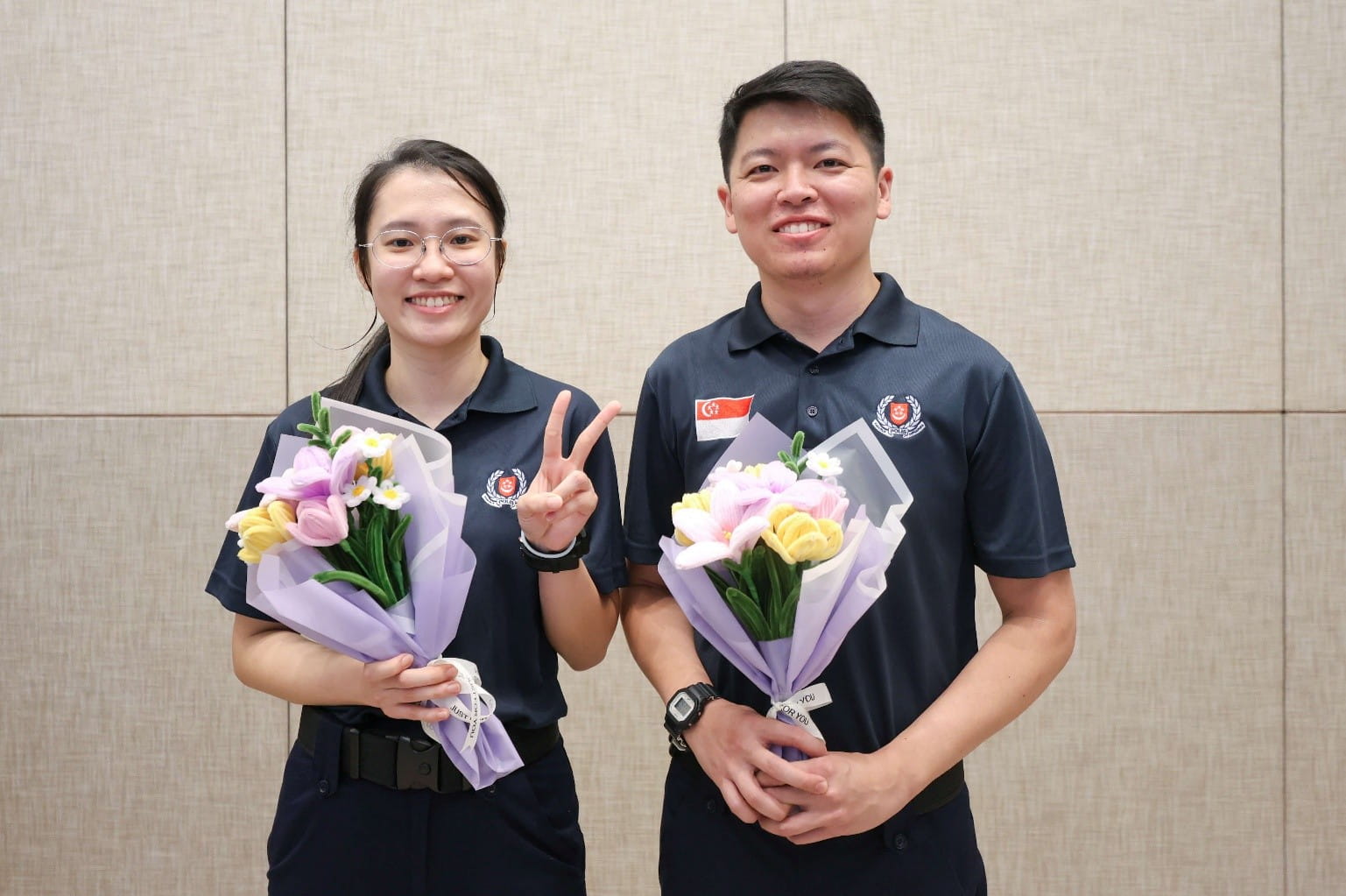 Kai Xuan and Heng Wei pose with their welcome home gifts from Director Yee Lay. (Photo: HTX/Alywin Chew)
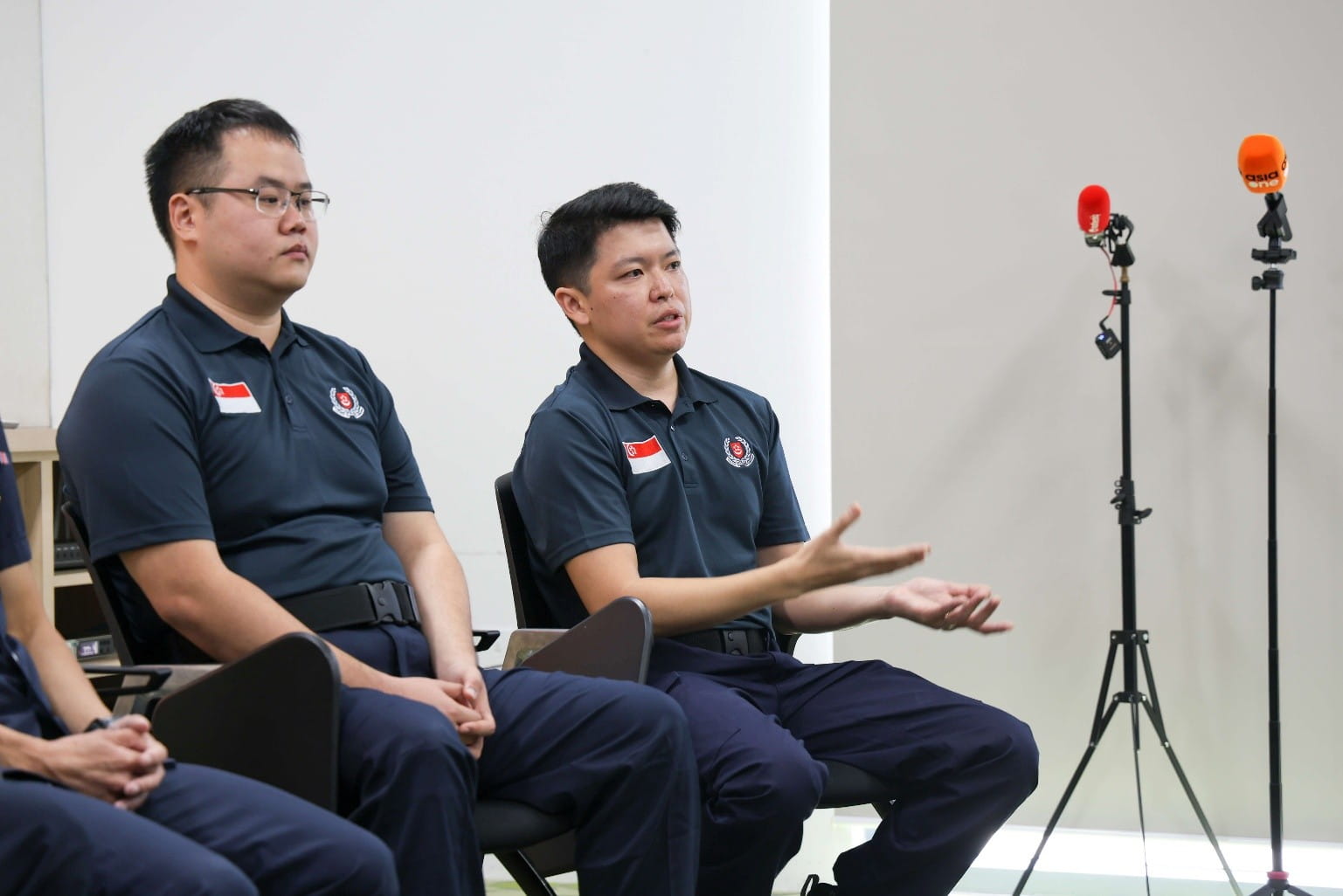 Heng Wei speaks to the media about his deployment experience at Home Team NS Bedok Reservoir Clubhouse on 26 September. (Photo: HTX/Alywin Chew)
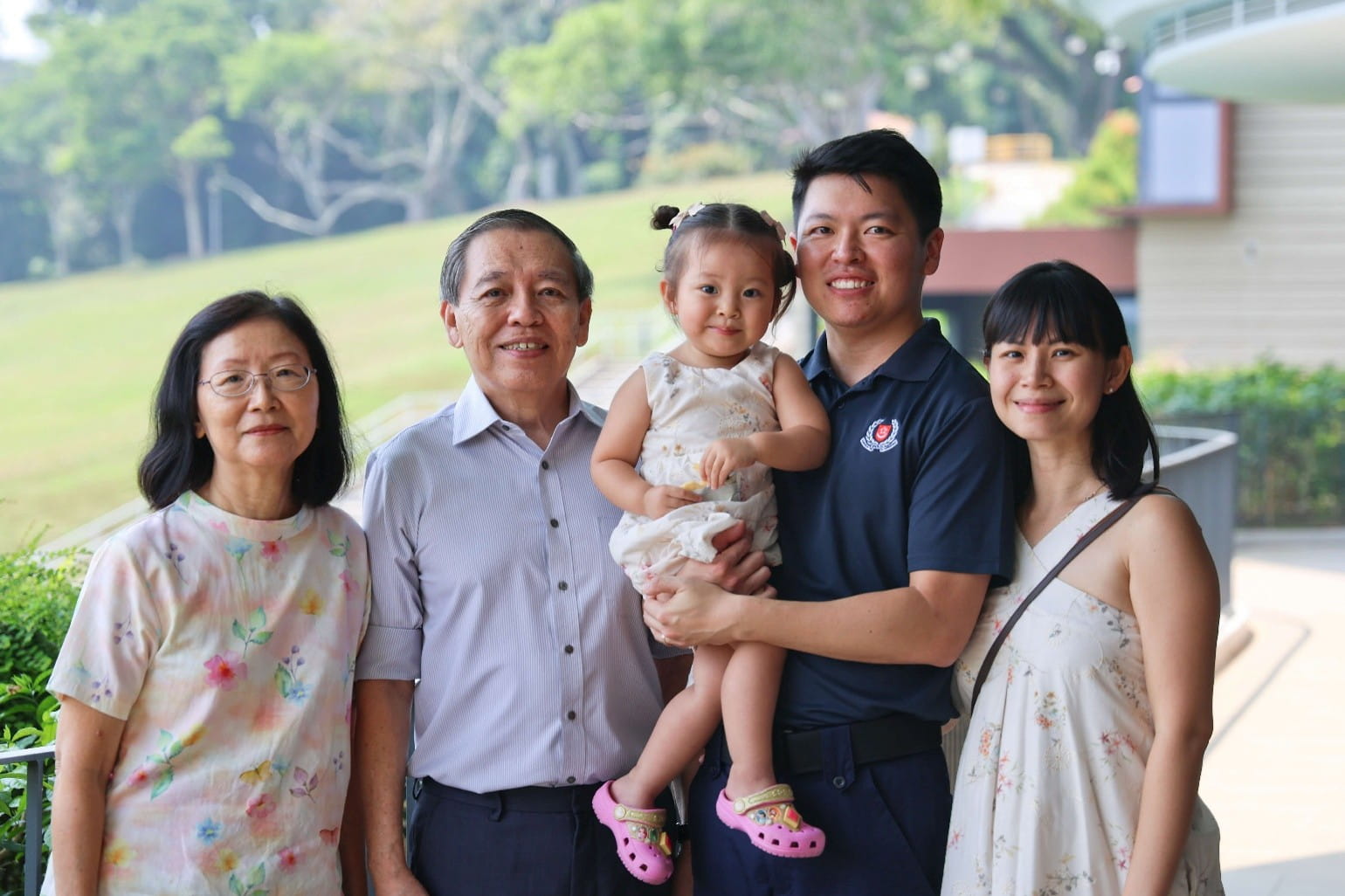 Heng Wei with his parents, wife and daughter at Home Team NS Bedok Reservoir Clubhouse, where a reception was held to welcome the Operation Vanguard contingent home. (Photo: HTX/Alywin Chew)
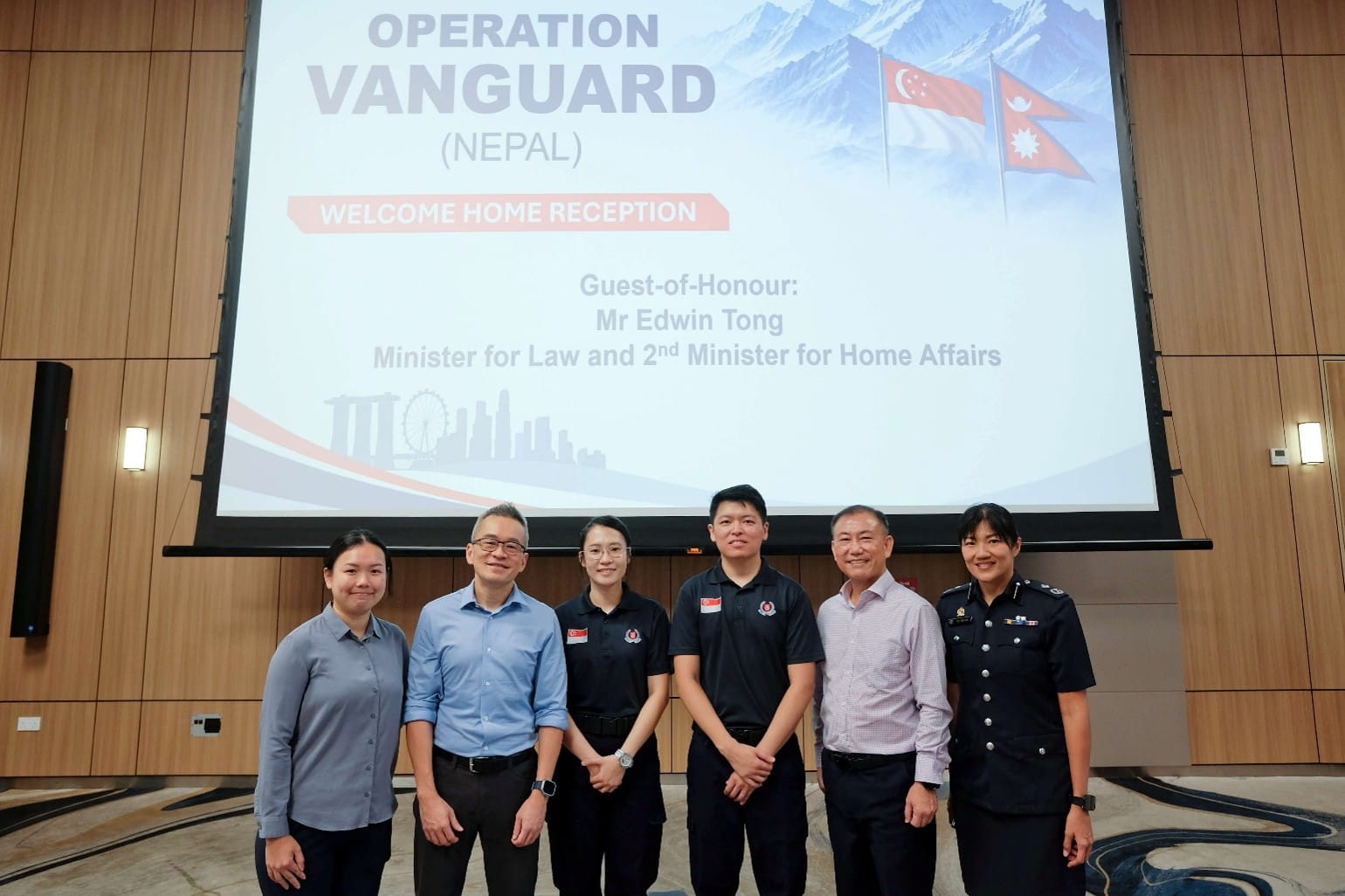 Heng Wei and Kai Xuan with HTX CE Chan Tsan, HTX DCE Yeang Tat, Director IFS Teo Yee Lay and Senior Crime Scene Specialist Han Seow Chee. (Photo: HTX/Alywin Chew)
Another memorable incident was when two families turned up at the morgue one evening staking their claim on the same body. Though the two IFS officers were already back in the hotel after completing their duties for the day, they immediately sprang into action and headed back to the lab, working through the night to resolve the dispute.
Unfortunately, the body did not belong to either family. Although neither family got the closure they needed, this incident was nevertheless poignant as it showed how much the Nepalis trusted their Singaporean counterparts to take charge of matters of such great significance, according to the contingent commander, Assistant Commissioner of Police Patrick Tan.
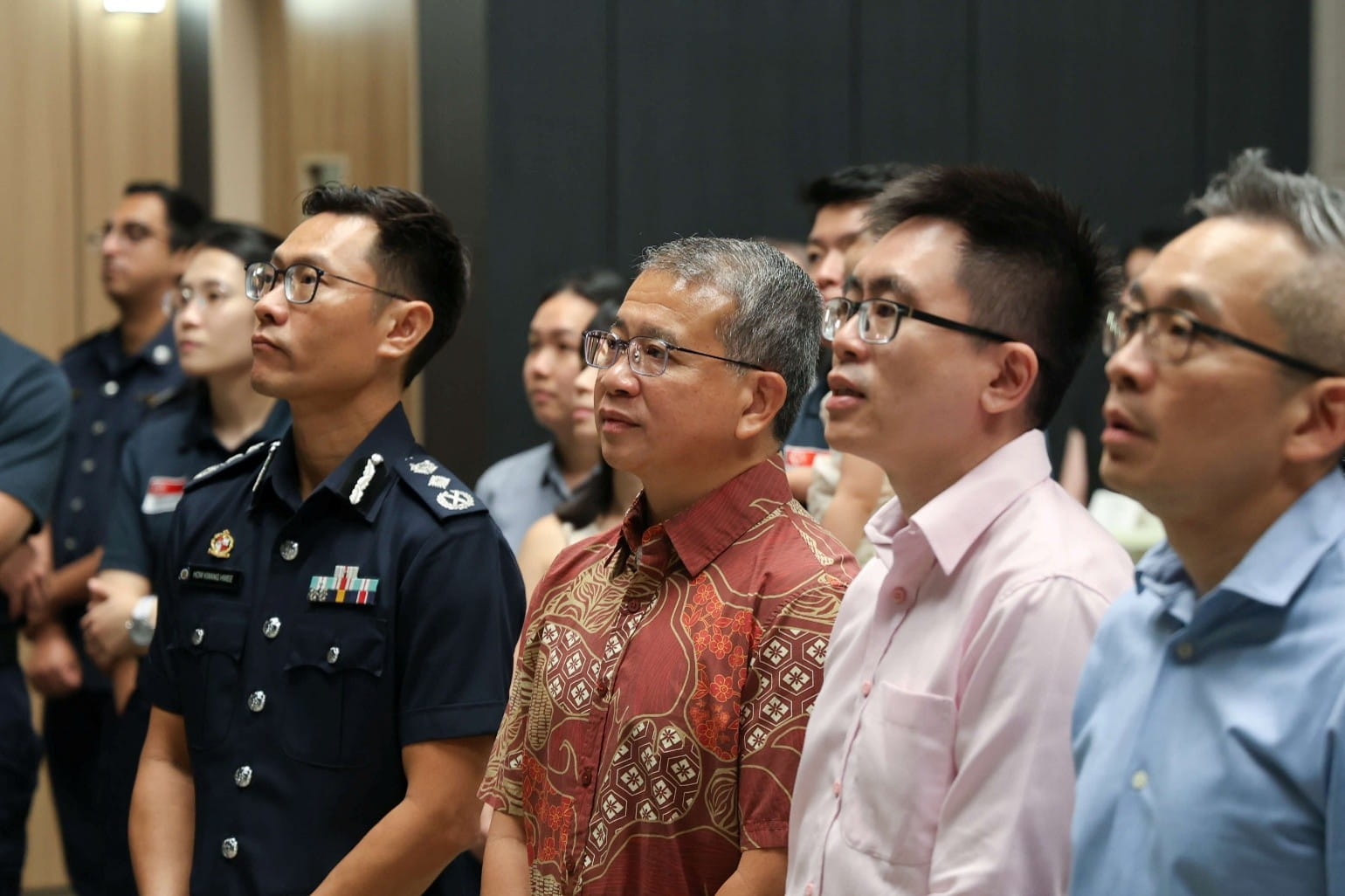 Minister for Law and Second Minister for Home Affairs Mr Edwin Tong (centre) watches a video about the Operation Vanguard deployment to Nepal alongside Second Permanent Secretary (Home Affairs) Wong Kang Jet (2nd from right), HTX Chief Executive Chan Tsan (right) and Commissioner of Police How Kwang Hwee (left) during the reception to welcome contingent home. (Photo: HTX/Alywin Chew)
Minister for Law and Second Minister for Home Affairs Mr Edwin Tong echoed this point during the welcome home reception for the contingent held on September 26.
“The Nepali authorities responded with overwhelmingly positive feedback and appreciation for all our officers. The commendation affirms not only the quality of our technical work, but really reflects our officers’ commitment and personal dedication, to the mission, to the cause and to caring for someone else,” he said.
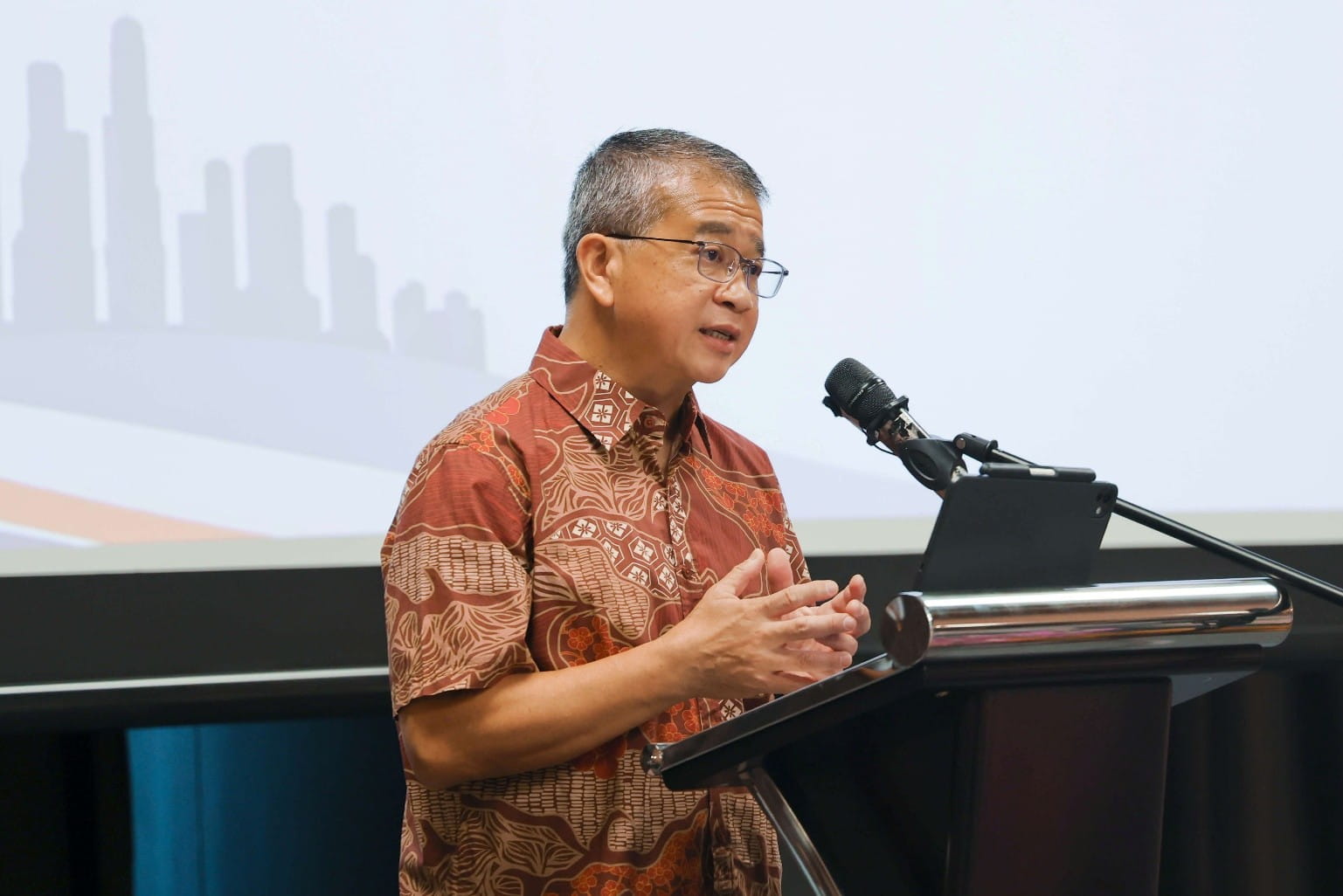 Minister Tong addresses the audience during the reception, praising the contingent for their professionalism before thanking them and their family members. (Photo: HTX/Alywin Chew)
During the reception, Minister Tong also thanked the Home Team officers who were deployed for their professionalism and sacrifices, as well as their family members for being a pillar of support as their loved ones flew the Singapore flag high.
“Operation Vanguard was really much more than just a humanitarian mission...I think what we’ve done represents the best of what we in Singapore stand for: compassion, service, and a selfless commitment to stepping up in the hour of need and service,” he said.
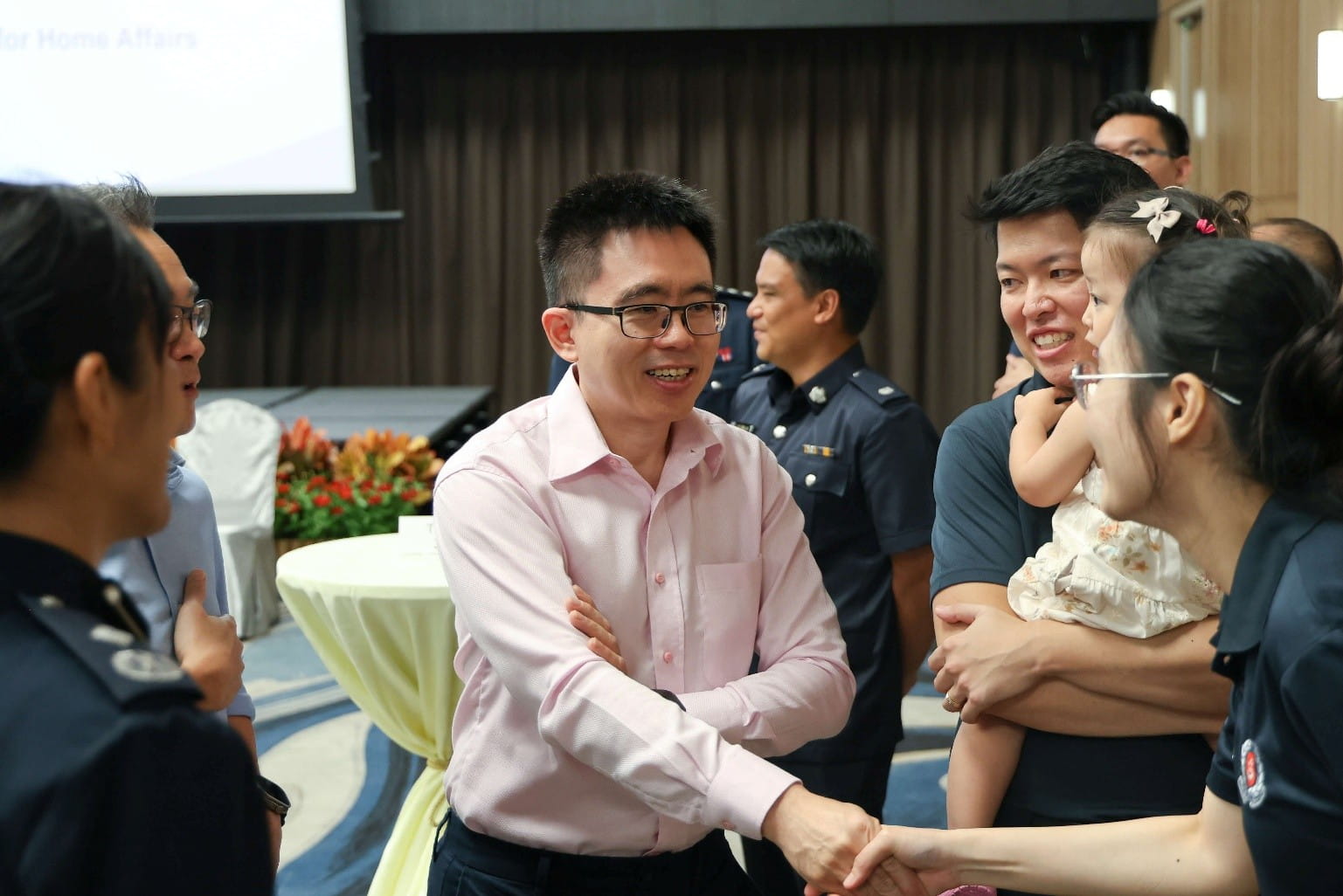 Chairman HTX and Second Permanent Secretary (Home Affairs) Wong Kang Jet shakes hands with Kai Xuan during the reception. (Photo: HTX/Alywin Chew)
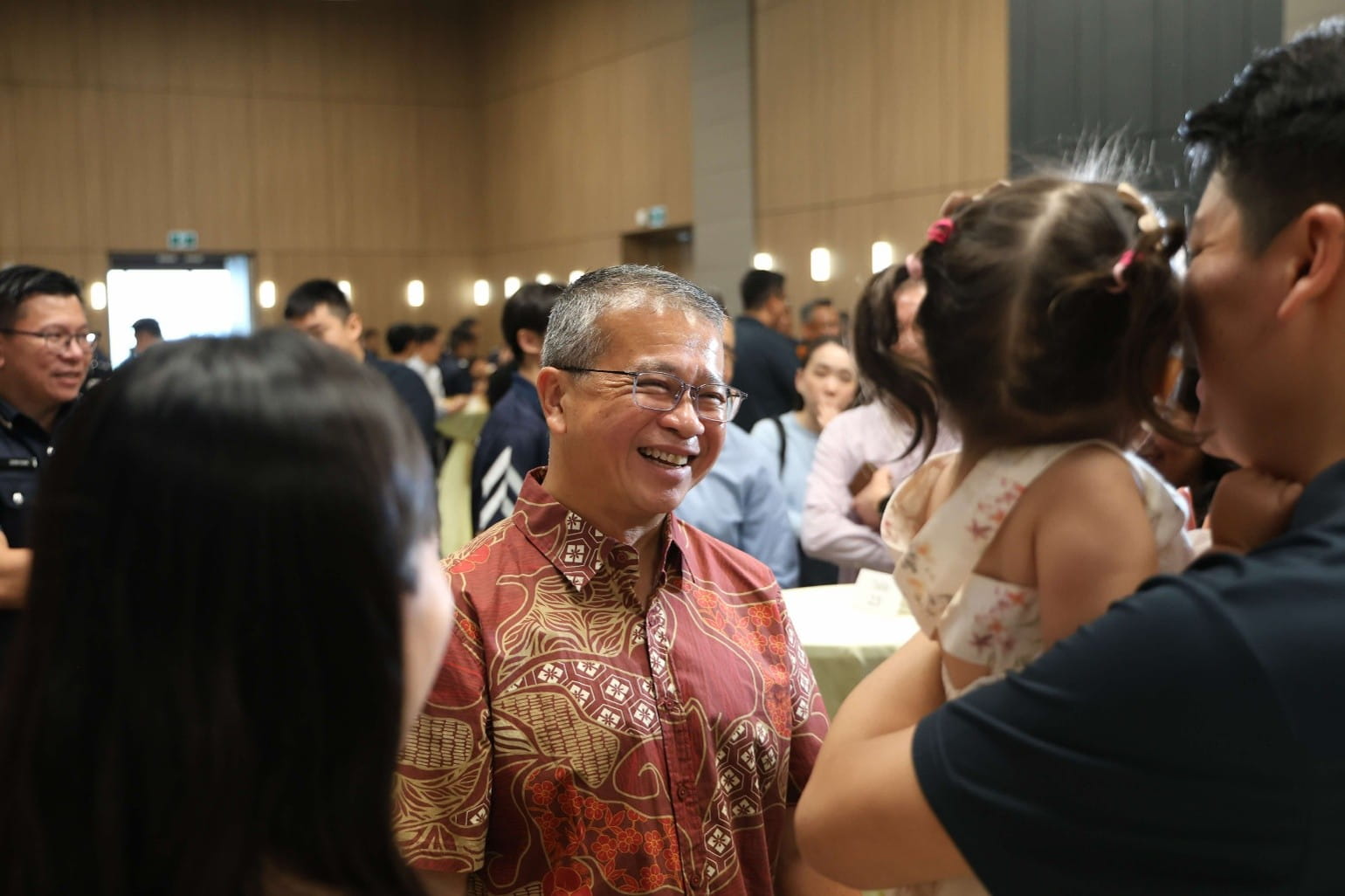 Minister Tong speaks to Heng Wei and his family. (Photo: HTX/Alywin Chew)
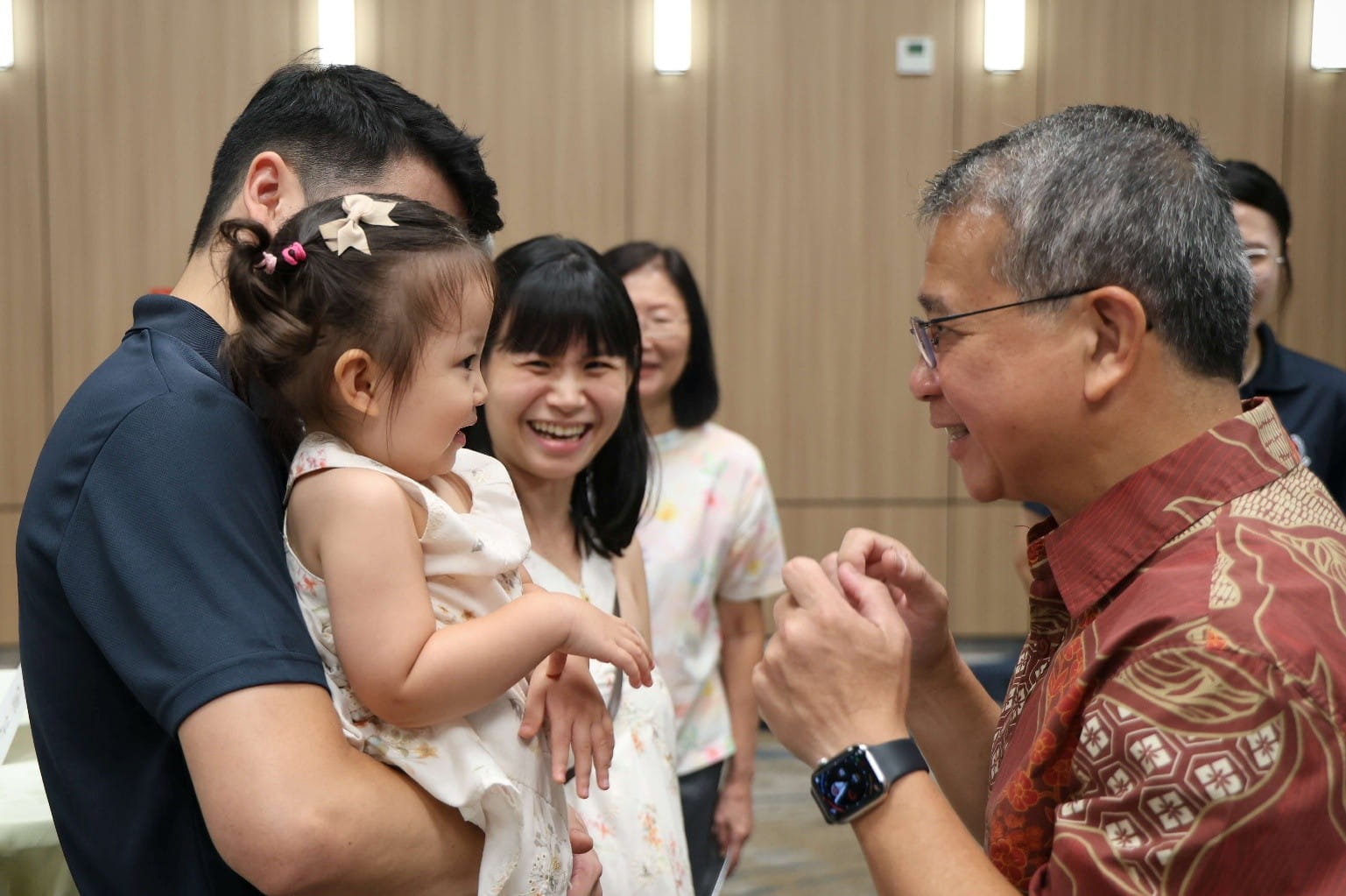 Tong shares a moment with Heng Wei’s daughter during the reception. (Photo: HTX/Alywin Chew)
Looking back at the deployment, the two officers shared that they walked away with important life lessons.
“Seeing the scenes of despair and the grieving families of those who lost their loved ones was a sobering reminder that we must treasure our loved ones and never take them for granted,” said Heng Wei.
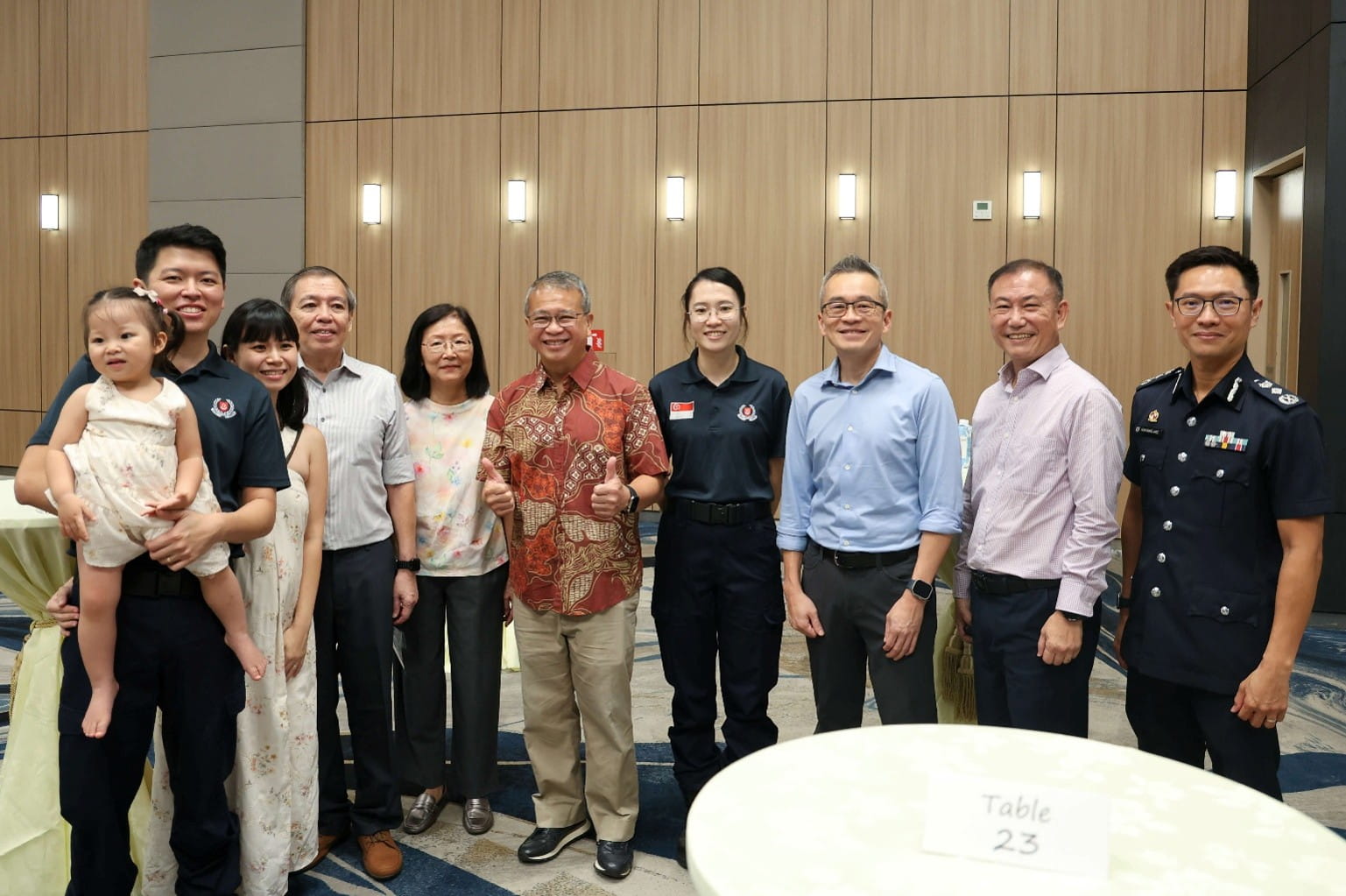 Minister Tong with Heng Wei and his family, Kai Xuan, HTX CE Chan Tsan, HTX DCE Chen Yeang Tat and Commissioner of Police How Kwang Hwee. (Photo: HTX/Alywin Chew)
For Kai Xuan, the experience served as a reminder that her job is much more than just science.
“Processing fingerprints can sometimes feel very procedural and technical,” she said.
“But when placed in a disaster scenario where identifying a person can give a family a sense of closure, I was reminded that the work I do has a very human side to it.”